Climate change will also have an impact on volcanic eruptions




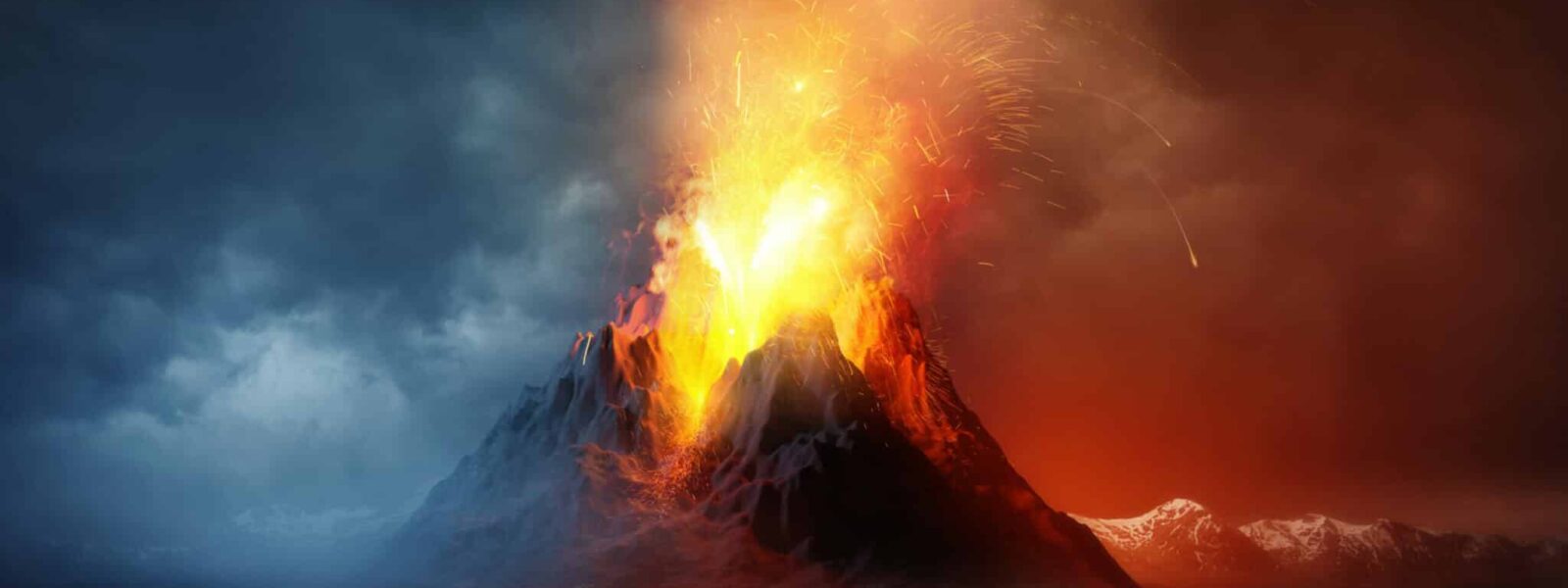
- Climate change is altering geological systems, including volcanic eruptions.
- Melting glaciers, for example, can cause magma to rise to the surface, while rising sea levels can reduce magma production at depth.
- Over time, certain volcanic regions can expect an increase in eruptions and secondary hazards (lahars).
- However, it is still difficult to attribute a particular eruption to climate change.
How does climate change influence geological phenomena such as volcanic eruptions?
Virginie Pinel. For an eruption to occur, magma must reach the earth’s surface. However, changes on the surface can encourage the production of magma at depth or facilitate its ascent1. Let’s take the latter example: magma is less dense than the surrounding rocks, so it rises to the surface thanks to Archimedes’ law of buoyancy [editor’s note: just like oil immersed in water]. If the load above the magma chamber is reduced, the magma can rise faster. This is precisely what happens when glaciers melt as a result of human-induced climate change. When a glacier decreases in thickness or width, a magma reservoir at depth can rupture and magma can rise to the surface. Especially if the volcano is already close to eruption!
And what about magma production at depth?
VP. The melting of glaciers over large areas increases magma production at depth. Conversely, for submarine volcanoes, rising sea levels linked to human-induced climate change are increasing pressure on magma chambers. This could reduce magma production.
Have these phenomena already been observed and measured?
VP. Yes, particularly through geological evidence of past volcanic activity. We are seeing changes in volcanic activity linked to past climate change. In Iceland, for example, volcanic eruption rates were 30 to 50 times higher than they are today, following major deglaciation in the past (the last of which took place 10,000 years ago). But there are also effects on present-day volcanism, particularly in Iceland, where seasonal eruptions are linked to variations in snow depth.
For several years now, attribution studies have been determining the impact of climate change on the probability of extreme weather events. What about volcanic eruptions?
Thomas J. Aubry. It’s still difficult to attribute the occurrence of an eruption to climate change. We can attribute the triggering of certain eruptions to precipitation, particularly on volcanoes whose eruptive history and magma system are well known. Precipitation – also modified by climate change – can infiltrate deep underground and react with the magma system to trigger an eruption. But for a particular eruption, it is complicated to reliably determine the dual link between eruption and precipitation, and between precipitation and climate change.
Does climate change influence the eruption once it has started?
TA. Yes, many eruptive processes are influenced. In particular, surface hydrology has a huge impact on eruptive style. If the magma encounters an ice cap or lake on its way to the surface, the eruption releases much more energy, and the volcanic plume reaches a greater height. Climate change influences this surface hydrology.
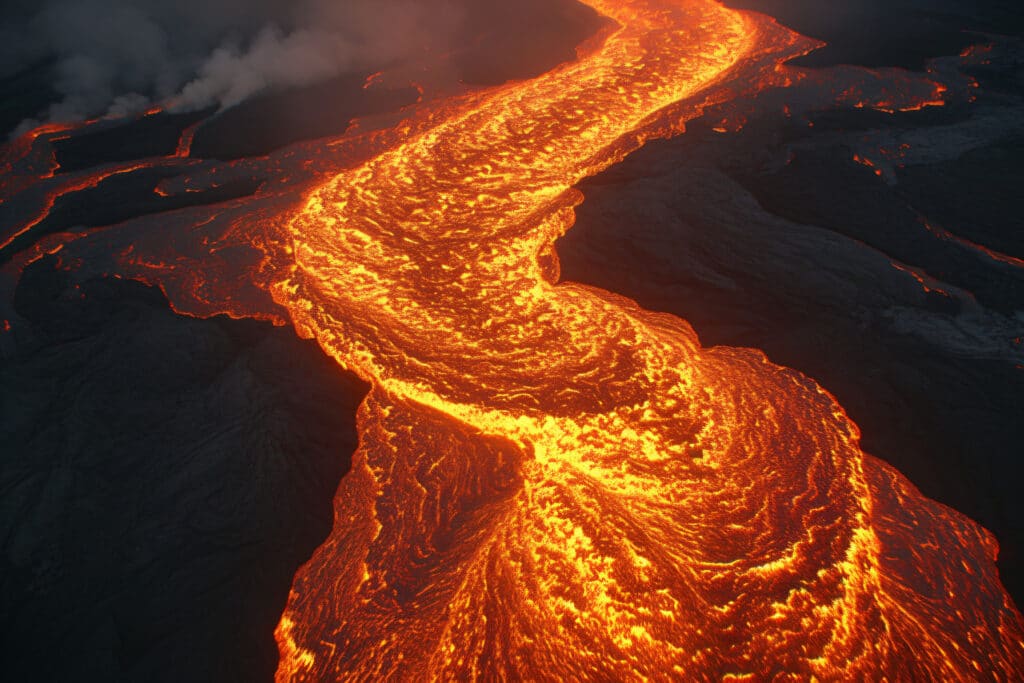
The other effect of climate on eruptions concerns the rise of the volcanic plume in the atmosphere. Its height is mainly controlled by the intensity of the eruption (mentioned above), but also by temperature and density gradients in the atmosphere. In tropical zones, climate change is modifying the troposphere – the lowest 16 kilometers of the atmosphere – in such a way that plumes rise less. Plume heights could fall by 1 to 2 km by the end of the century if we continue to emit greenhouse gases. Outside the tropics, the impact of climate change on plumes is linked to wind patterns, which vary greatly according to region and altitude.
Are certain volcanic regions more affected by climate change?
TA. We are currently working to map the volcanoes most sensitive to climate change. Roughly speaking, we know that this concerns regions where glaciers are melting fast, such as Iceland or Chile, as well as volcanoes that are heavily affected by precipitation, such as in Indonesia. A study published in 20222 shows that 716 volcanoes worldwide – or 58% of active above-ground volcanoes – will be affected by more extreme precipitation as global temperatures continue to rise. We can therefore expect potentially more eruptions.
VP. The other effect of extreme precipitation is an increase in secondary hazards, particularly lahars. Melting ice and extreme rainfall can trigger these mudflows composed of ash from former volcanic eruptions: this phenomenon contributes significantly to the number of volcano-related deaths worldwide. Many volcanic sites are affected.
Does this have any implications for volcanic risk management?
TA. In regions particularly sensitive to climate change, we believe that the frequency and intensity of eruptions will change as global warming increases. Government agencies are already addressing these changes. In the past, climate change has had a dramatic effect on volcanic eruptions. But it’s important to keep things in perspective: past climate changes were on a much larger scale, so we don’t expect to see such dramatic changes. On the other hand, one of our motivations for working on this subject is to highlight the consequences of our activities. If we don’t mitigate climate change sufficiently, we’ll go so far as to modify geological systems. I find that unbelievable…
VP. As far as risk management is concerned, the effects of climate change are also having an impact on eruption forecasting. Melting ice and changes in precipitation induce ground displacements: yet it is the ground displacements linked to volcanic processes – such as the rising of magma – that enable eruptions to be anticipated. The effects of climate change are disrupting the signals.
How widely known are the effects of climate change on volcanic activity?
TA. The effects of volcanic activity on climate are well known. It is crucial to understand the impact of natural processes on climate in order to measure the effects of human activities. The opposite has been far less studied. Only the link between deglaciation and volcanic eruptions has been widely explored thanks to geological records.
VP. The difficulty in this field of study lies in the time scale. Volcanic systems are built up over several hundred thousand years, whereas climate change takes place over a few decades. We don’t yet have enough hindsight to have a clear vision of the changes underway in volcanic activity. Nevertheless, climate change represents an opportunity for us to better understand the factors that modulate and trigger eruptions, like a life-size experiment.