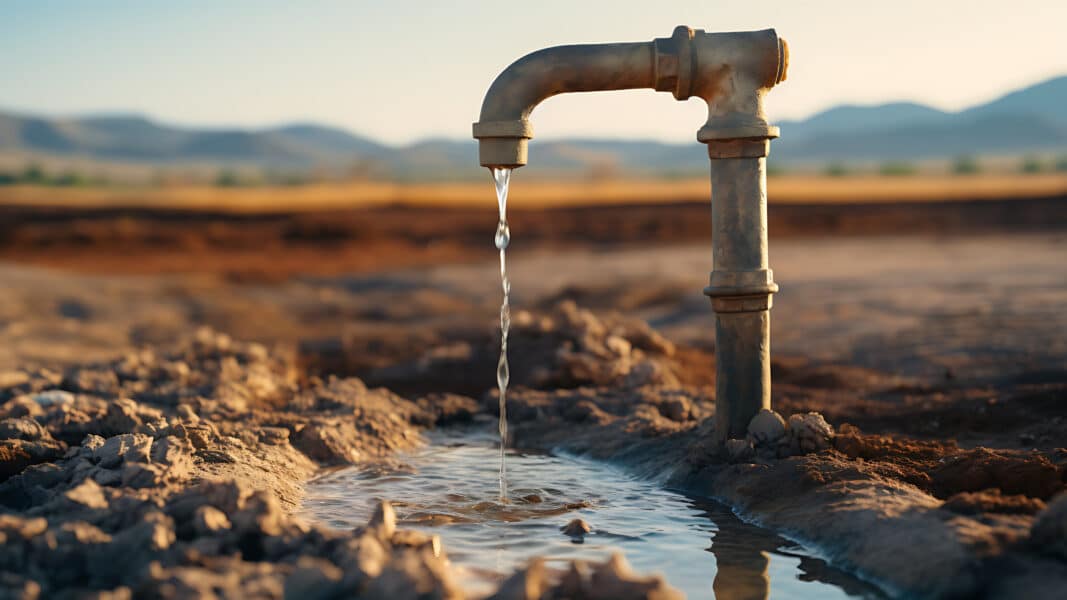




“Due to the changes currently taking place, it will be impossible to provide universal access to water without adaptation.” According to Éric Servat, director of the UNESCO ICIREWARD centre in Montpellier, there is no doubt whatsoever about this. If the Member States of the United Nations wish to honour their commitment to provide universal and equitable access to drinking water, adaptation measures must be put in place. Adaptation reduces climate risks and people’s vulnerability, mainly by adjusting existing systems, as described by the IPCC1. The following is a non-exhaustive overview of the adaptation measures that are essential to secure access to water in the face of climate change.
Multiple courses of action
The main obstacles to access to water are the lack of infrastructure and failure of drinking water distribution services. Many sections of the population – women, people living in informal settlements, in less developed countries, etc. – are more widely affected by water stress. These inequalities are exacerbated by climate change. How can we effectively improve access to water? One example is the “Eau, femmes et pouvoir de decisions” (Water, women and decision-making power) initiative. Set up in 2005 in Diatokro (Côte d’Ivoire), it has helped to reduce women’s vulnerability over the long term. This pilot project involved women and men in the management of water pumps in several villages2. By giving them the tools they need to maintain and manage the water points, the project has been a great success, as demonstrated by the creation of a UNESCO Chair for “Eau, femmes et pouvoir de decisions”. Thanks to other education and awareness-raising initiatives, the representation of women in local government has been strengthened, and the time saved by improved water supply has been reinvested in income-generating activities3.
The other priority lever for adaptation is water sobriety. For example, should we continue to use drinking water to water golf courses? 70% of the world’s freshwater is used for agriculture4. While it’s crucial to provide the population with fresh water, we also need to feed them. Today, a third of global food production comes from irrigated crops5. “We need to consider water efficiency in agriculture at the level of each region,” says Nassim Ait Mouheb. “This requires systemic thinking to guide political and governance choices”. There are a number of well-documented adaptation measures for reducing water use: reducing ploughing, mulching, changing the sowing and harvesting calendar, and choosing and diversifying crops have all proved effective.
There are a number of areas for improvement
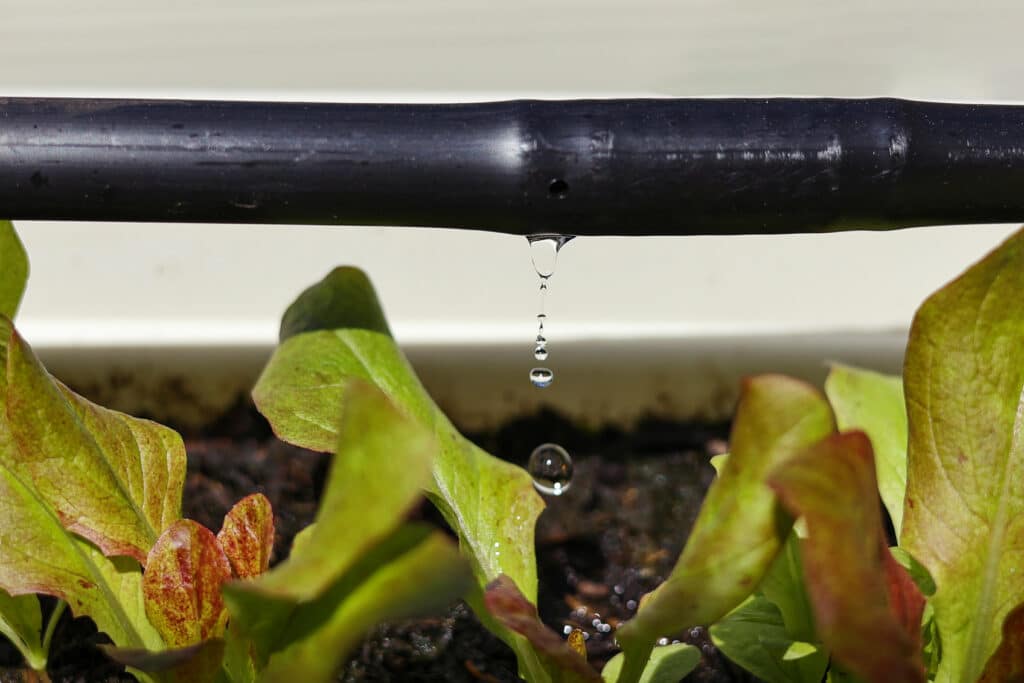
Irrigation is the most frequently implemented adaptation measure in agriculture, and the most effective. Up to 35% of the world’s agricultural production could be switched to an irrigated system, with limited impact on the environment. Although some irrigation systems are inefficient (a large proportion of the water is not used by the plant), it would be possible to reduce unused water consumption by 76% – while preserving yields – by replacing inefficient systems. Extending irrigation intervals, reducing watering times, reducing leaks, deficit irrigation… There are many ways of doing this. “Drip irrigation can achieve up to 95% efficiency,” adds Nassim Ait Mouheb. “But it can’t be used for all crops and depends on practices: in Morocco, we sometimes see low efficiency due to over-irrigation.” The system can be supplemented by probes measuring the water status of the soil to improve the precision of irrigation. “We have also found that switching to drip irrigation encourages farmers to extend their plots, and therefore has no effect on their water consumption,” points out Nassim Ait Mouheb. “Any change in practices must be accompanied by safeguards.”
Thinking about the environmental impact of adaptation measures
Access to drinking water is a major health and social issue. Faced with a shortage of fresh water, new supply methods are emerging. “Freshwater must remain the priority resource for producing drinking water, but seawater desalination is an adaptation solution in coastal areas where freshwater is not available,” explains Corinne Cabassud. “I’m thinking of certain isolated rural areas, crisis situations or deltas that are becoming salinised because of rising seas linked to climate change”. Desalination has been used since the 1960s. Between 2010 and 2019, installed capacity increased by 7% per year6. Daily production will reach around 120 million m3 of desalinated water thanks to almost 20,000 plants in 2022. It could exceed 250 million m3 per day by 20307. These plants can be found in the United Arab Emirates, Saudi Arabia, the United States, Spain, and Algeria.
But desalination is not a universal solution. The reason? Its environmental impact. Once the water has been treated, the remaining brine – containing minerals and chemicals used during the treatment process – is discharged back into the sea, affecting local biodiversity. “There are many ways of improving the situation: dispersing the brine in the open sea using suitable devices, concentrating the brine or reusing it,” says Corinne Cabassud. The main impact of desalination is linked to the amount of energy required and the corresponding greenhouse gas emissions. “In 2014, the sector consumed 100 TWh, emitting 76 million tonnes of CO2 equivalent per year worldwide,” explains Corinne Cabassud. This represents 0.2% of total CO2 emissions worldwide.
The use of renewable energies is the main means of improving the environmental impact of desalination. “In 2018, only 1% of desalination plants were powered by renewable energies,” adds Corinne Cabassud. Today, three-quarters of desalination plants use a reverse osmosis process. This requires high pressure, which could be supplied by renewable energy sources such as photovoltaic, wind or tidal power. “Thermal evaporation is another desalination process that is not widely used today,” adds Corinne Cabassud. “The energy required could be supplied by solar thermal energy, like a solar water heater, greatly improving energy efficiency compared with reverse osmosis processes powered by photovoltaic panels. This technology has not yet been perfected: at the Toulouse Biotechnology Institute, we are working to improve it.” If not combined with renewable energies, the expected growth in desalination would lead to a 180% increase in greenhouse gas emissions by 2040.
The last major adaptation measure is REUT (for réutilisation) or REUSE. The reuse of wastewater involves treating it at the end of a wastewater treatment plant so that it can be reused, rather than being discharged into the natural environment. The main advantage of this adaptation measure is that it limits the use of good quality drinking water, particularly groundwater. The application of REUT is particularly interesting for agriculture. “Wastewater has been used for irrigation for thousands of years,” says Nassim Ait Mouheb. “This water contains nitrogen, phosphorus and potassium: it enriches agricultural soils and replaces mineral fertilisers.” In France, only 1% of the volume of wastewater is reused. But this figure rises to 8% in Italy, 12% in Spain and 80% in Israel8. It is estimated that the quantities of wastewater produced each year throughout the world represent 15% of the water withdrawn by agriculture. “Some countries mix different water resources: conventional, rainwater and treated wastewater,” explains Nassim Ait Mouheb. “This is an interesting adaptation measure, provided that enough water is left in the rivers in winter and that the need is sufficient to meet the higher cost of this resource.”