The mystery behind earthquakes happening in unexpected regions




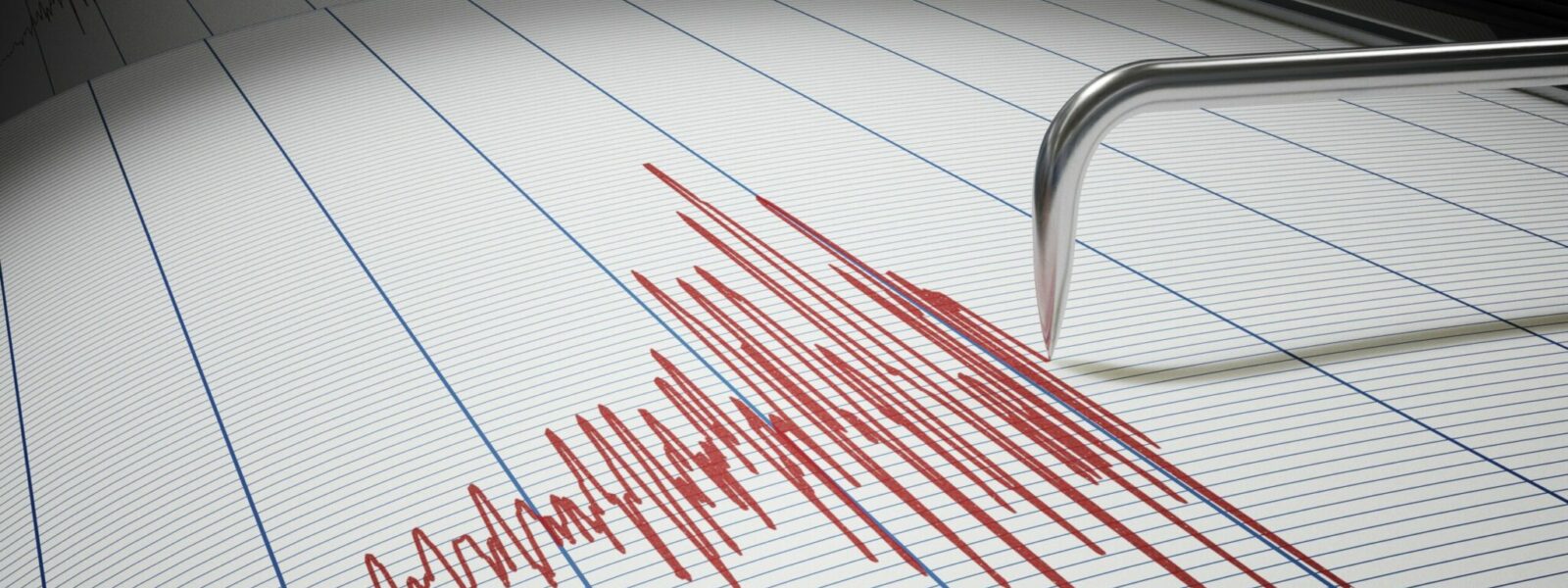
- Although earthquakes are caused by tectonic plates colliding with each other, some can also occur within the plates: these are known as ‘intraplate’ earthquakes.
- Intraplate earthquakes remain mysterious and can be triggered in unexpected places, with varying degrees of magnitude.
- Among the theories put forward to explain the origin of these earthquakes, the most recent concerns a collection of small phenomena – erosion, rainfall or glacial melting could be triggers.
- More research is needed to understand these earthquakes in order to calculate future risks.
The surface of the Earth is divided into different tectonic plates, upon which the oceans and continents rest. Over time these plates move, slide, collide or overlap with on another. Where the boundaries of the plates become deformed, pressure often builds up to the point that is suddenly released by a sudden slip along the faults – this is the well understood origin of earthquakes1. However, towards the interior of tectonic plates, far from the agitation of plate boundaries, in areas that are supposed to be calm and free of deformation, some unexpected earthquakes have been occurring. They have raised questions in the field seismology, where scientists have proposed new theories to explain the origin of these earthquakes. What could be causing this, if not traditional plate tectonics? Erosion, fluid circulation or melting glaciers are thought to be triggers…
Intraplate earthquakes
What exactly are we talking about here? These earthquakes – recorded far from the boundaries of tectonic plates – are called intraplate earthquakes. “Although they are known on all continents, they are quite disparate and we have only recorded them in a few areas of the globe,” describes Éric Calais. In 2017, an earthquake of magnitude 6.5 occurred in Botswana, in an area with no tectonic movement as far as we know. In 1811–1812, four major intraplate earthquakes (magnitude 7 or more) shook the New Madrid region along the Mississippi River in the United States. Intraplate earthquakes have also occurred in central Australia, northern Sweden and French Guiana… but also in mainland France, an area considered as “intraplate”2.
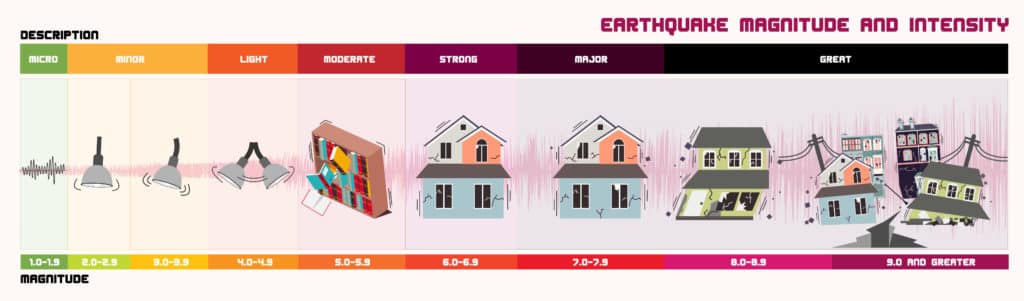
In 2019, an earthquake of magnitude 4.9 in the Rhone valley surprised the scientific community. “Before this earthquake, the seismicity recorded was relatively low: 39 earthquakes were measured between 1962 and 2018 in this area, all of low magnitude (less than 3),” explains Jean-François Ritz. The fault at the origin of this earthquake was not identified as an active fault either – meaning one with the potential to generate earthquakes. It seemed to have been quiet for 20 million years!
“Intraplate earthquakes can reach significant magnitudes, but they are much rarer than those located at plate boundaries,” explains Éric Calais. Since the first seismic recordings were made in 1974, only about twenty major intraplate earthquakes (of magnitude 6 or more) have been recorded throughout the world3. Older earthquakes are known from historical archives or from traces left in the geological landscape. “Another feature is their frequency. At the plate boundary, the same earthquake tends to be repeated at a variable frequency, for example a few hundred years in California,” continues Éric Calais. This repetitive behaviour is not observed for intraplate earthquakes: some seem to be ‘orphan’ earthquakes on faults that have been inactive for millions of years.
Understanding earthquakes to protect against them
A better understanding of these earthquakes is essential: their moderate to high magnitude makes them potentially very destructive. They affect regions that are often poorly prepared and can be triggered at very shallow depths. The Le Teil earthquake – which occurred less than 20 kilometres from two nuclear power plants – was triggered only 1 km underground4. It seriously damaged 900 buildings, injured 3 people, and caused an economic loss of several million euros.
In France, for example, a regulatory zoning system imposes earthquake-resistant construction standards for buildings. But it is based on the national seismic hazard map in which unexpected earthquakes like the Le Teil earthquake are not identified. “In recent years, the scientific community has become aware that intraplate earthquakes can occur in unexpected places and that the tectonic models on which conventional seismic hazard calculations are based do not allow this risk to be reflected,” says Éric Calais.
Intraplate earthquakes can occur in unexpected places and classical tectonic models do not allow this risk to be reflected.
Research is active in this area because the implications are significant, as a group of French scientists write: “This lack of consensus […] leads to significant uncertainties in the characterisation of seismicity and the associated seismic hazard. For a long time, the scientific community thought that plate tectonics alone explained these earthquakes. The interior of the plates would deform very slightly, at such low rates that it would be impossible to actually measure them5.”
Small phenomena, big consequences
But today a completely new explanation is being put forward. Small phenomena, very rapid on the geological time scale (a few thousand years or even tens of years), are thought to be the cause of these earthquakes6. These may be the circulation of fluids: rain that seeps into the surface; or gases or liquids that come from the mantle, several tens of kilometres down, and rise through the tectonic plate. These increase the pressure through the rock to the point of triggering intraplate earthquakes, as suggested for the Botswana earthquake in 20177.
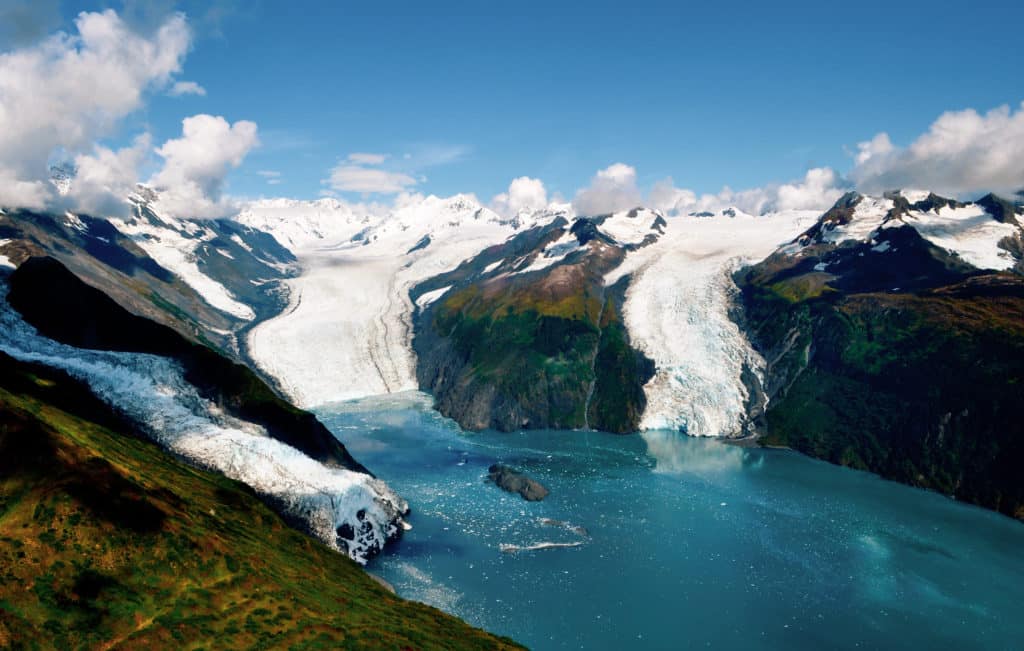
Other triggers include melting glaciers and erosion. By lightening the Earth’s surface, these phenomena cause a slight movement of the tectonic plate, similar to a rebound. For the Le Teil earthquake, the melting of glaciers at the end of the last major ice age (12,000 years ago) is proposed as one hypothesis8. “The expert report on the Le Teil earthquake9 concludes that it is possible that the extraction of rocks – also lightening the earth’s crust – at a nearby quarry contributed to the triggering of the earthquake,” adds Jean-François Ritz. However, it is clear that its magnitude is explained by tectonic forces.
“While these small phenomena are the key to the new theory, they are not the only ones at play. Although they are triggers of the earthquake, it is important to understand that it is the weak stresses accumulated – sometimes over several million years – that drive it,” adds Éric Calais. Without a trigger, these stresses remain preserved and no earthquake would occur. On a scale of millions or even tens of millions of years, the movements of tectonic plates fluctuate: some plates change direction, others break up, or stabilise… These ancient deformations that they undergo constitute this ‘reservoir of stresses’ distributed across the tectonic plate. “Our observations on the fault that generated the Le Teil earthquake suggest that melting ice or erosion can also generate regular earthquakes, but at very long frequencies of the order of 10,000 years10,” also points out Jean-François Ritz.
The fact remains that intraplate earthquakes are few, so it is difficult to quantify their behaviour. Researchers reproduce them in numerical simulations, but it is complicated to clearly identify the role of each phenomenon (plate tectonics, erosion, fluid circulation, etc.). The fallout is significant, as Éric Calais describes, “with these special earthquakes, it is very complicated to calculate future risks, especially as they can sometimes only occur once in a given location. We lack objective indicators to assess future intraplate seismicity.
In France, work is continuing around the Le Teil earthquake in search of traces of past earthquakes. “We can reasonably assume that the fault where this earthquake was triggered will remain calm for some time, but other faults exist in the area,” concludes Jean-François Ritz. “I have no doubt that a reassessment of the regional seismic hazard will be carried out in a few years’ time, we need to launch a lot more research and observations in this area and review our ideas!”