Biocomputing: the promise of biological computing



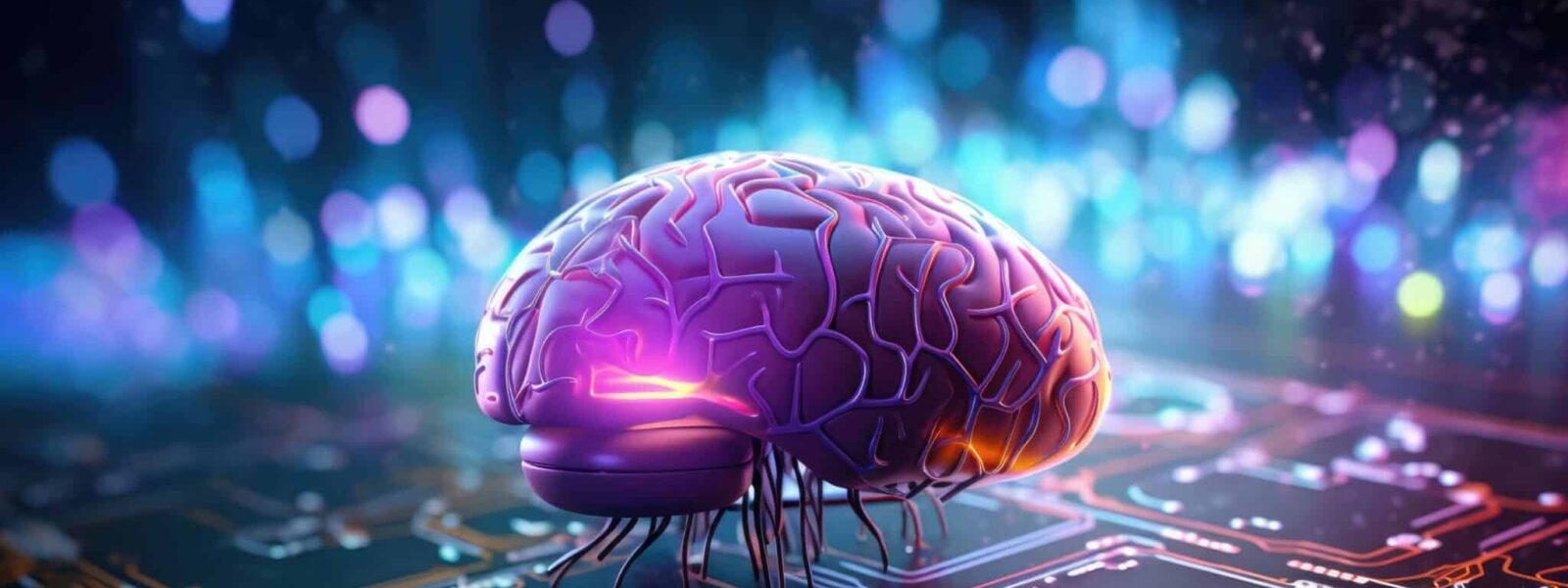
- Biological computers (or mini-brains) are 3D cultures of brain tissue and neurones that mimic the structure and main functions of our brains.
- This technology will make it possible to combine the computational performance of the best computers with the energy efficiency of the human brain.
- In the future, “bio-computers” could become invaluable tools for research, particularly the study of certain diseases.
- The development of organoid intelligence has been made possible by three technological breakthroughs: electrophysiology, AI and cerebral organoids.
Advances in neuroscience are paving the way for the construction of biological computers using neurons and brain tissue. This invention was both a breakthrough for computing and a tool for fundamental research and the study of human diseases.
They are sometimes called mini-brains. These cerebral organoids are in fact 3‑dimensional cultures of cerebral tissue. They could lead to the next revolution in computing, the birth of organoid intelligence (OI).
As a reminder, and contrary to what its name suggests, artificial intelligence (AI) does not mimic human intelligence. In fact, it works in a completely different way. Just watch it play chess: it sacrifices far more pieces than any human player1. Another difference is its energy consumption. In June 2022, the record capacity of the Frontier supercomputer, housed at Oak Ridge National Laboratory in the United States, was 1.1 exaflops (i.e. it performs up to 1.1 1018 operations per second), a performance equivalent to the human brain. Except that the human brain operates on 20 Watts, whereas the American supercomputer requires 10MW…
Three breakthroughs
Organoid intelligence (OI), on the other hand, promises to bring the two systems closer together, by reproducing the computational performance of the best computers and the energy efficiency of a human brain. This technology is being developed at the crossroads of three technological breakthroughs: electrophysiology, artificial intelligence, and cerebral organoids.
The first is essential for communicating with cerebral organoids. The challenge? Finding a non-invasive system that takes into account the multiple electrochemical signals that occur every second in the small mass of tissue in culture. Researchers at American universities are proposing the use of cage-shaped electrodes2, an initial solution for direct communication with the organoid in culture.
The development of the biological computer is still in its infancy.
The question of electrodes is also important for the development of brain tissue. Without signals, cerebral organoids cannot be constructed in three dimensions and remain inoperative. Nerve tissue has to work to function and brain mechanisms require more than a simple electrochemical signal. Memory involves the reorganisation of neuron networks and the intervention of other brain cells, such as those that make up microglia, the immune system of the brain. To develop, organoid intelligence must integrate all these parameters.
The second technological breakthrough that makes OI possible is AI. It is essential for exploring what these biological systems can do. Brain tissue cultures produce very large volumes of data, both spatialised and structured over time. Interpreting this data is a challenge that recent advances in algorithms will be able to meet.
The last technology on which the development of OI is based has yet to prove itself, and that is the one that will enable brain organoids to change scale. At present, the largest brain tissue cultures measure just a few millimetres and contain a maximum of 15,000 neurons. Making them bigger means protecting them against oxygen deprivation, to which neurons are very sensitive. To do this, they need to be perfused, to ensure that each cell is connected to a supply of oxygen and nutrients, just as the bloodstream does in vivo. Microfluidics seems capable of providing this perfusion. But this technology has not yet been transposed to cerebral organoids. This technological transfer will make it possible to go from a culture the size of a fly’s brain to one comparable to that of a mouse.
Fundamental applications
Will these systems replace our computers? Not in the near future. In 2019, a Japanese team succeeded in getting two cerebral organoids to communicate3. It is difficult to predict what will happen next, given the large number of teams working on the subject. Nevertheless, there is hope that the first OI systems will be tools for neuroscience research. Biological computers could help to explain how a brain manages to process incomplete information, for example.
They could also help to elucidate the mechanisms of dementia, Asperger’s syndrome, or other common human brain conditions. It is currently very difficult to have acceptable laboratory models for these issues. Ethical considerations, for example, naturally forbid studying the effect of a molecule that disrupts memory on humans… Cerebral organoids offer an alternative for such research.
OI also raises ethical questions in its own right: Which systems could be at risk of suffering pain? What protocols will be used to assess the intelligence of a culture? These issues need to be anticipated, and OI specialists have committed to incorporating them into the development of technical aspects by signing the Baltimore Convention in 20224. The development of the biological computer is still in its infancy.