Academic freedom: where does France stand?


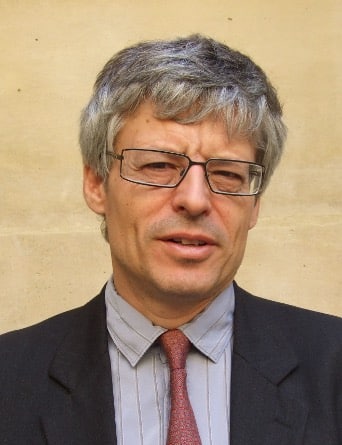
- There is no consensus on the definition of “academic freedom” in France.
- In France, abusive legal proceedings take the form of SLAPP suits, which are not intended to win the case but to intimidate or hinder a person’s actions.
- A “climate of suspicion” reportedly weighs particularly heavily on researchers speaking out “on contemporary issues related to Israel.”
- According to Olivier Beaud, French universities are not truly autonomous, as they are under the financial control of the state and weighed down by bureaucracy.
Mass layoffs within research organisations, withdrawal of grants, verbal attacks against researchers and academics, the implementation of “Gold Standard Science” which attempts to impose its standards on science from the outside… The offensive waged by the Trump administration against science and universities since January 2025, of unprecedented ferocity, is deepening the erosion of academic freedom in the United States that began in 2020. But what about France? While academic freedom still holds out, the threats are very real.
Professional freedom constrained by ethics
The first challenge for anyone examining academic freedom is that there is no agreed-upon definition of the concept in France, with the term rarely appearing in French law. The plural form is found in Article L952‑2 of the Education Code, which recognises it as “the guarantee of excellence in French higher education and research”. The same article also sets out the basis of this freedom reserved for academics: “full independence” and “complete freedom of expression in the performance of their teaching duties and research activities, subject to the constraints imposed by (…) the principles of tolerance and objectivity1.”.
So, beyond the letter of the law, what is the spirit of the text? “Academic freedom is a professional freedom that is positively defined as ‘a responsibility towards knowledge’, to quote Paul Ricoeur. It can only be fully understood by taking two elements into account: the idea of the university and academic ethics. It presupposes the attainment of academic qualifications and adherence to a methodology and standards established and recognised by peers. It is for these reasons that resistance to external interference is a natural consequence,” explains Olivier Beaud.
We can therefore consider that academic freedom has two inseparable aspects. The first, individual freedom, encompasses three freedoms granted to academics: freedom of research, teaching and expression within the scope of their duties and within the limits of scientific integrity. The second aspect, this time institutional, concerns the community, in other words the university, which must be able to govern itself. In particular, by choosing its own president or dean, recruiting its own members, and enjoying full independence from external powers “whether political, economic, religious or student-led”.
“In France, however, there is a certain tendency to invoke it indiscriminately because the concept is little known and very poorly understood. In the belief that we are protecting it, we mistakenly equate it with freedom of expression,” adds Olivier Beaud.
Very real instances of foreign interference
By implication, an infringement of academic freedom could therefore be defined as an action that, without legitimate justification, restricts or hinders the exercise of the freedoms of research, teaching, the dissemination of knowledge and scientific expression by academic staff, or the autonomy of academic institutions. Such infringements may be limited in time and place, or they may be much more widespread.
Among them are instances of foreign interference, which aim to influence, exploit or compromise French academic activities through the funding of chairs, the recruitment of researchers, or pressure exerted on nationals of the countries concerned, including students and lecturers. Senator Gattolin’s information report2, published in 2021, established that France was “already a major target of these operations”, and that they were carried out mainly by China, but also by Russia, Turkey and certain Persian Gulf states, although none could “boast of the resources and scale of the Chinese strategy”.
Even more visible are convictions, deprivation of liberty (“particularly in Iran, Russia or Tunisia” according to a report3 on academic freedom commissioned by France Universités and authored by Stéphanie Balme, published in October 2025) or the denial of access to research sites for researchers abroad.
The very fact that these abusive lawsuits – historically brought against civil society activists, whistleblowers or journalists – are now targeting academics is telling in itself.
In France, abusive legal proceedings tend to take the form of SLAPP suits—legal actions brought not to win the case, but to intimidate or hinder the actions of a person expressing themselves in public debate. A ministerial inquiry4 has been recording cases involving academics and researchers since 2022: 10 in 2022, 8 in 2023 and 5 in 2024. These figures may be underestimated, due to a lack of systematic reporting.
Whilst the figures speak for themselves, the very fact that these abusive lawsuits – historically brought against civil society activists, whistleblowers or journalists – are now targeting academics is telling in itself. “Generally speaking, they are brought by politicians or private companies. But in recent years we have also seen lawsuits between academics: Didier Raoult, in particular, has sued several of his peers for defamation after they criticised his work, such as Karine Lacombe. He lost all cases,” explains Olivier Beaud.
Political interference against a backdrop of controversy
Any political interference, even of a symbolic nature, in university life also warrants attention. In early 2021, Frédérique Vidal, then Minister for Higher Education and Research, announced before the National Assembly her intention to commission “an assessment of all research being carried out in our country,” having previously stated on Cnews5 that “Islamo-leftism is infecting society as a whole, and that universities were not immune”. Aside from the sheer scale of the undertaking, this initiative bore a striking resemblance to an attempt by the government to exert control over one of the university’s core domains: the sovereign choice of its research. Frédérique Vidal’s statements caused an outcry in the scientific community and the media and sparked endless controversy. The investigation “to date, has never been launched”, states the Balme report.
To be legitimately concerned about the reckless behaviour of students is one thing; to interfere in the internal management of a public higher education institution is quite another.
We also recall that Gabriel Attal, then Prime Minister, saw fit to intervene during a board meeting at Sciences Po Paris in March 2024. Following an unauthorised pro-Gaza demonstration organised on the university campus, a student member of the Union of Jewish Students was reportedly denied access, according to Le Monde6. “This intervention was a clear violation of academic freedom, in its institutional aspect,” comments Olivier Beaud. “To be legitimately concerned about the reckless behaviour of students is one thing; to interfere in the internal management of a public higher education institution is quite another.”
During the same period, certain local authorities, such as the AURA and Île-de-France regions, also decided to make the granting of public subsidies conditional upon the adoption of a “republican” charter or “in defence of French values and secularism”, which “implies that universities are, de facto, failing to fulfil their legal and civic obligations,” according to the Balme report.
Stigmatisation and public accusations
The tense climate that has prevailed for several years may also have contributed to increased stigmatisation or public criticism of academics by various pressure groups, which can extend well beyond the university. A “climate of suspicion” is said to weigh particularly heavily on researchers speaking out “on contemporary issues related to Israel,” according to the Balme report, which cites an example of a public accusation of anti-Semitism levelled against a researcher’s work by other researchers. How does this supposed climate translate into tangible actions? And more broadly, are accusations against researchers and lecturers frequent? Are they on the rise? What types of accusations are made? Who makes them? In the absence of an official census, or of extensive peer-reviewed scientific literature, it is difficult to form a precise picture of the phenomenon and its scope.
One figure may, however, give an initial idea of its scale. In 2025, 277 lecturers and researchers submitted requests for functional protection, a mechanism that allows any public servant to ask their administration to protect them if they are implicated due to their duties. This measure remains, however, rather vague: there is no guarantee that all these requests relate to breaches of academic freedom, nor that every breach gives rise to such a request. The lack of data could, however, be rectified in the coming years: a draft bill on academic freedom, still under discussion in both chambers, provides for the creation of a dedicated observatory within the HCERES.
Another grey area is the proportion of lecturers and researchers who, in this context of diffuse and multiple pressures, choose not to exercise their academic freedom to the full. The Gattolin report had already warned of increasingly frequent self-censorship in academic circles for fear of damaging relations with foreign partners. “During interviews, many academics told us that they question the limits of what they can legitimately say or write, even when they know they have the right, or indeed the duty, to do so,” notes the Balme report. How far does this self-censorship go? Here again, it is impossible to say, for whilst the subject is beginning to be analysed in the United States, it has yet to be studied in France.
Internal threats
Finally, there are the threats we perhaps think about the least: those arising from the university system itself. “The main threats are not ideological in nature. That may change, of course. If the far right were to come to power, we would be at great risk of experiencing what the United States is going through today… But today, the most dangerous threats are structural, financial and administrative,” argues Olivier Beaud. “In France, universities are not truly autonomous, as they are under the financial control of the state and weighed down by bureaucracy. The LRU [Editor’s note: the Act of 10th August 2007 on the freedoms and responsibilities of universities], which was intended to improve the situation, has only made it worse. Another scourge, imposed by university presidents: the transfer of administrative tasks to lecturers and researchers.”
Little by little, the system is thus leading to its own erosion. Weakened, it may struggle to cope with the external threats that may lie ahead. Some, such as the Balme report and France Universités, therefore argue for the constitutional enshrinement of academic freedom. “In practice, this would amount to placing its protection in the hands of the Council of State, which wrongly views academics as mere civil servants,” says Olivier Beaud. For the legal expert, the urgent priority is therefore not to enshrine academic freedom in the constitution or even to legislate on it, but to better protect the status of academics—currently governed by a simple decree that the government can amend at will—by adopting an ordinary law that could draw inspiration from the organic law protecting magistrates. Such security would then help academics to defend their own freedom.