

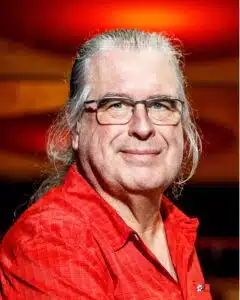
Charles H. Bennett and Gilles Brassard have been awarded the A.M. Turing Award “for their essential role in establishing the foundations of quantum information science and transforming secure communications and computing.” Gilles Brassard is a computer scientist at the University of Montreal in Canada, and Charles Bennett a physicist at IBM Research in Yorktown Heights, New York, in the United States.
The A.M. Turing Award, often referred to as the “Nobel Prize of computing,” is awarded by the Association for Computing Machinery1 (ACM) and is worth one million dollars. It is named after Alan Turing, the British mathematician who laid the mathematical foundations of computer science, and is sponsored by Google.
Many of us use classical cryptography in our daily lives — for example, to transfer sensitive information such as bank details — and it has become crucial for modern computer and communication networks. The information being sent is kept secret thanks to an encryption algorithm combined with a “key” that the sender uses to scramble the message into a form that is incomprehensible to an eavesdropper. The receiver of the message then uses the same key with a decryption algorithm to read it. However, this standard encryption has one major drawback: both parties must know the key, and it must be established securely.
Quantum key establishment
This is where quantum cryptography, or quantum key establishment, comes in. This Quantum Key Distribution, or QKD as it is known, is a misnomer according to the inventor Gilles Brassard himself, who believes that the term should be Quantum Key Establishment. This process exploits the quantum properties of particles and enables secret keys to be established using standard communication fibres (or even satellites). These keys are then used in conventional encryption processes. QKD is inherently secure and allows keys to be changed frequently, making cryptanalysis much more difficult, or even mathematically impossible if the keys obtained via QKD are as long as the messages to be transmitted.
It was in 1984 that Charles Bennett and Gilles Brassard published the first method for establishing secret keys encoded in such quantum states. In their now famous “BB842” protocol, they represented a bit of information by the polarisation state of a single photon — “0” when the photon was polarised horizontally or at 45°, for example, and “1” when it was polarised vertically or at −45°. In this process, the sender transmits a string of polarised single photons to the receiver. By then carrying out a series of measurements and, following a public discussion, they are able to establish a shared key and verify whether any information has been intercepted by a malicious third party along the way.
Charles Bennett and Gilles Brassard drew on the work of the late physicist Stephen Wiesner carried out in the 1960s3. Wiesner had realised that the quantum nature of particles such as photons — which had previously been regarded as a potential obstacle to applications — could in fact be put to good use.
Quantum teleportation
Their next breakthrough came in 1993, when they introduced the concept of quantum teleportation4 in collaboration with other colleagues, including another Quebecker, Claude Crépeau. This is a way of transferring a quantum state from one entity to another without actually sending a particle in that state.
Quantum teleportation is a fundamental building block of quantum computing and quantum communication and is based on quantum entanglement. This apparent (but not real) “spooky action at a distance”5, to quote Albert Einstein himself, allows two particles that have interacted — one owned by a sender and the other by a receiver — to share a quantum state and thus remain linked in a way that is impossible in classical physics. It holds no matter how far the particles are from each other. Entanglement can therefore be used as a way to transport quantum information from the sender to the receiver.
This process bears the catchy name of teleportation because the state of the particle at the sender is destroyed by the measurement process before it can appear intact at the receiver.
In more detail, quantum teleportation begins when the sender and the receiver share a pair of entangled particles (for example, photons). The sender then interacts their half of the entangled pair with a third particle whose state is unknown. They then measure the outcome of this interaction and communicate it to the receiver via a classical channel. Armed with this information, the receiver can then reconstruct the state of the particle with the unknown state that has been teleported. This process bears the catchy name of teleportation because the state of the particle at the sender is destroyed by the measurement process before it can appear intact at the receiver.
Quantum teleportation was demonstrated experimentally for the first time in 1997 when researchers succeeded in teleporting the polarisation of a photon. Since then, they have managed to teleport the spin states of atoms, nuclei and trapped ions, to name just three examples. In 2022, a physicist was awarded the Nobel Prize in Physics, among other things, for his experimental demonstration of this process.
Visionary ideas
Quantum teleportation has allowed for the development of secure communication systems and in the future will be used to transfer information within a quantum computer as well as to transmit data from one device to another. The ultimate goal is to build on the work of Charles Bennett and Gilles Brassard to construct quantum networks and a quantum internet capable of transmitting quantum information between cities and beyond, much like today’s internet, which is used to transmit classical information.
As well as quantum cryptography and communication, their work has also had an impact on algorithm design, the development of fault-tolerant quantum computers and mathematical physics. “Bennett and Brassard fundamentally changed our understanding of information itself,” said ACM President Yannis Ioannidis in an ACM press release6. “Their insights expanded the boundaries of computing and set in motion decades of discovery across disciplines. The global momentum behind quantum technologies today underscores the enduring importance of their contributions.”
“Charles Bennett and Gilles Brassard’s visionary insights laid the groundwork for one of the most exciting frontiers in science and technology,” adds Jeff Dean, Chief Scientist at Google DeepMind and Google Research, in the same press release. “Their work continues to influence both fundamental research and real-world innovation. Google is proud to support the ACM A.M. Turing Award and honour the pioneers shaping the future of computing.”