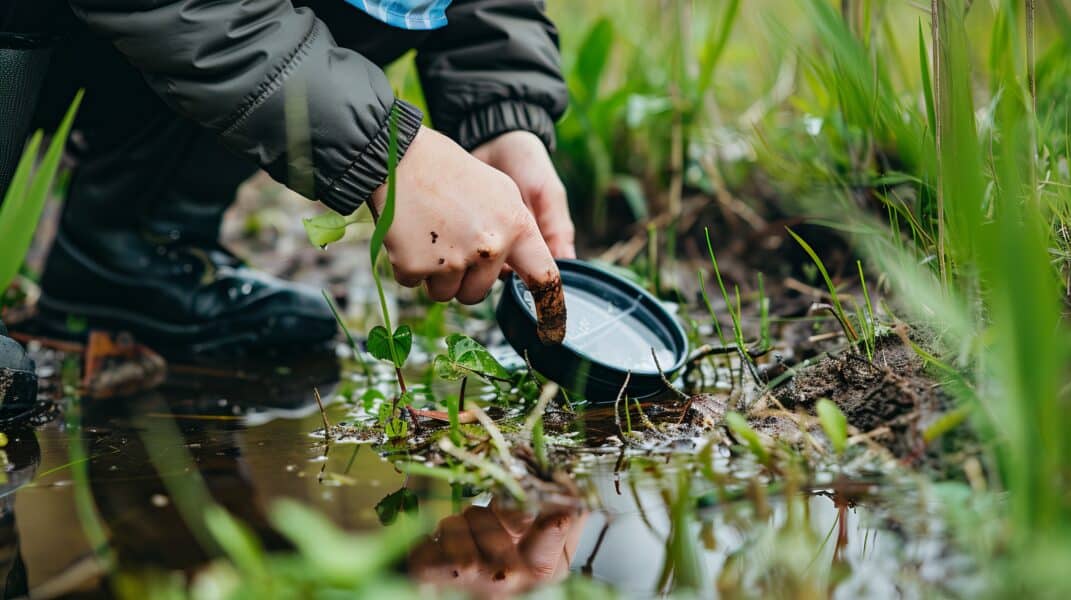


Scrutinising insects on windscreens, identifying birds in gardens… Participatory research projects are on the rise. What sets them apart? They involve scientists and civil society actors in the production of scientific knowledge. In 2025, the Éthique en commun committee issued a detailed opinion on the subject1.
Does participatory research change the general public’s perception of how scientific knowledge is produced?
Yes, certainly, as participants in these projects often change their perception of science. Some studies show that their trust increases in a reasoned and sustainable way thanks to a better understanding of the scientific method, and of the uncertainties and limitations inherent in all scientific work.
The relationship between society and science is complex. It is characterised by a shift between fascination and mistrust, as the Covid-19 crisis has so clearly illustrated. But the rise of misinformation – on health and climate issues – seems to reveal a real divide between scientific institutions and a section of the public.
Why is it so important to build public trust?
Advances in our understanding highlight the need for us to change our behaviour in many areas, such as climate science. However, the publication of scientific reports highlighting the dangers of our lifestyles is not always well received.
What role can participatory science play in building this trust?
Citizen science offers a direct experience of the knowledge-production process; no other form of scientific communication can fully replicate this.
Scientists at the National Museum of Natural History have carried out a butterfly survey based on active citizen participation. Their study shows that some participants not only learnt to identify species but also changed their practices by significantly reducing the use of pesticides in their gardens following this experience2. Similarly, when residents of an urban neighbourhood take part in measuring temperatures on their streets, they become both producers of scientific data and direct witnesses to climate change.
Participatory research is not a passing fad or a mere data-collection technique. It is an invitation to fundamentally rethink the relationship between society and science, which has for too long been viewed as a one-way flow – from the specialist to the layperson.
Conversely, does participatory research influence the production of scientific knowledge?
Originally, it was seen as a means of overcoming the difficulties of data collection in certain disciplines, such as the natural sciences. For entomologists, it would simply be impossible to carry out certain research without a network of volunteers.
However, our report highlights several milestones that have legitimised and amplified a progressive institutional movement: the creation of the Charter for Participatory Science and Research in 20173, the introduction of the ‘Science with and for Society’ label, and so on. We see the same dynamics at an international level, as demonstrated by the United Nations’ recognition in 2024 of every human being’s right to participate in science4. Scientists are changing their attitude: today, it is no longer possible to evade the public’s questions.
How does this translate in practice?
Contemporary challenges are becoming increasingly complex, encompassing a wide range of factors – social, economic, technical and environmental. Remaining confined to a research laboratory is not enough to grasp this complexity. Participatory research brings to light issues linked to citizens’ concerns.
This not only enables the production of actionable knowledge, useful for transforming the world, but also helps to combat a well-documented structural bias. Indeed, scientific agendas are largely shaped by industrial interests, and certain topics remain in the blind spot of research. I am thinking, for example, of geoengineering, a highly exploratory subject but one supported by very wealthy foundations. Participatory research breaks through this logic.
Is participatory research fundamental to the proper functioning of democracy?
Yes, it is fully part of a movement towards the democratisation of research. I am currently working on promoting domestic electric cooking in Africa as an alternative to the use of wood and charcoal. The use of these traditional fuels has harmful impacts on health, agricultural productivity, biodiversity and the environment in general. Yet, so far, scientists have not succeeded in raising sufficient awareness among either the public or decision-makers about the scale of this problem. Involving citizens in research projects on this issue would not only help to raise collective awareness but also to better document the impacts, particularly on the most marginalised communities. Such an approach could also help to persuade decision-makers to make this issue one of their priorities for action.
By providing evidence linked to citizens’ concerns, participatory research can also help shift decision-makers’ perceptions. Thus, as the Ethics Committee’s report highlights, participatory science and research contribute to the ongoing development of the public interest and the proper functioning of democracy.
Does participatory research also pose risks to democracy or science?
Yes, we have identified several categories of risk. The first is that of mutual exploitation. On the one hand, scientists may be tempted to form opportunistic partnerships with organisations in order to raise funds, without genuinely involving those organisations in the project. On the other hand, interest groups may use participatory research to obtain scientific backing for a predetermined position. The proliferation of research projects at the local level can also fragment the research agenda.
It is also essential to take certain precautions with regard to the communities involved. Participatory research can sometimes reproduce, or even exacerbate, pre-existing inequalities. This is particularly the case when people from disadvantaged backgrounds do not have a firm grasp of the linguistic codes or scientific concepts used in discussions. Their views may then be dismissed by researchers, even though they offer genuine insight into their lived experiences and environment.
Particular care must be taken in the Global South, where power imbalances create a significant risk of the appropriation or plundering of knowledge. Indigenous knowledge constitutes a resource in its own right. It is therefore essential to establish mechanisms guaranteeing its recognition, protection and the equitable sharing of benefits arising from its use.
Finally, participating in a research project takes time. However, for communities that are already vulnerable, the time spent on research may represent a loss of income or a missed opportunity for work. It is therefore necessary to consider appropriate forms of compensation and recognition for participants.