Scientists have identified neurones that transform touch into social bonds



- Attachment theory assumes that physical contact with someone we care about strengthens our social bond with them.
- Experiments have shown that an infant attaches to its mother not for her nutritive input but rather for the comforting contact she provides.
- In humans, the force of this "pleasant" physical contact is in the range of 3-10 cm/sec and from a heat source approaching human body temperature.
- However, some contacts may cause an aversive reaction, due to other stimuli or a pathological condition.
- A better understanding of how we develop social bonds would allow us to better support people who have difficulties in this respect.
What could be warmer and more comforting than the touch of someone we care about? Touching a person to whom we are attached gives us pleasure and brings us closer to that person. But is it the pleasure that strengthens the attachment, or is it the attachment that causes the pleasure?
Attachment theory has a long history in psychology, and Harry Harlow can be considered one of its precursors. Through experiments1 that were already controversial at the time, he managed to refute a rather persistent preconception of the era: that infants develop attachment to their mothers through breastfeeding. By separating baby monkeys from their mothers at birth, he discovered that between two maternal substitutes – a stiff wire doll with a bottle of milk, and a softer cloth doll that was artificially heated – the monkeys chose the one that was comfortable and warm to the touch, rather than the one that would satisfy their vital need for food.

From this experience, the English psychologist John Bowlby developed “attachment theory”2. This theory states that an infant attaches itself to its mother not for the nourishment she provides, but for the comforting touch she gives. This theory may date back to 1969, but psychologists have found it to be increasingly credible in light of numerous experiments. The upshot is that for a child to develop socially and emotionally, he or she must have at least one figure who cares for him or her continuously and consistently – a figure for whom he or she will develop an attachment.
Amaury François, a researcher at the Institute of Functional Genomics in Montpellier, and his team decided to go beyond the psychological boundaries of this theory by delving into the biological component3. To do this, they focused on the possible influence of the sensation of pleasant touch in strengthening our social relationships. “A network of neurons in humans, discovered by the Swedish neurologist Åke Vallbo4, which is responsible for this sensation of pleasant touch,” he explains. “These are called C‑Tactiles. Our experiment consisted of discovering its equivalent in mice to test its effects on the development of social relationships. In doing so, we were therefore able to validate the influence of the C‑LTMR network (the equivalent of C‑Tactiles in rodents) on the socialisation of mice.”
A pleasant sensation of touch
“What we discovered is that, in both mice and humans, there is a network of neurons specific to social touch, innervating the skin and sending information to the central nervous system (not itself part of it) when it is activated,” explains Amaury François. “It’s activation only occurs under very specific conditions. In general, in humans, these touches are made at a certain speed (between 3 and 10 cm/sec), from a heat source that is close to the temperature of the human body. These are stimuli that almost all of us find pleasant, consciously, or unconsciously.” No wonder infants feel so good in their mother’s arms.
So, in mice the equivalent of this network (called C‑LMTR) has been identified. Using this, the research team designed a paradigm to test its influence on the development of social relationships. “For a group of mice genetically modified to have a deficiency in this network, the results are clear,” says the researcher. “The group of mice in question no longer seems to interact normally with their fellow mice, they favour isolation.” One element of this result intrigued the researcher: the animal with the defective network does not flee from others, it simply finds no interest in coming into contact with them.
The pleasant sensation of touch is thought to be a motivating factor in socialisation.
It is important to note that this network of neurons is not the only one to be activated during direct contact. “The C‑LMTRs are present for the emotional value, and their activation is enough,” says Amaury François. “The question of the influence of others may still arise. We believe that this network functions somewhat like the reward system. This pleasant sensation may be a motivating factor in socialisation.”
The evidence for attachment theory
We can therefore establish a direct link between contact with others and our attachment to them. “It is this comforting aspect of the warm, gentle touch that we feel that gives us the motivation, and the desire to reproduce it. Which is, in the end, pretty much what Harry Harlow had observed. Since all these experiments on attachment theory, nothing significant had been done,” recalls the researcher. Today, we have additional answers to these questions, which allow us to better ensure the proper social development of a child.
However, this experiment does not answer all the questions that this theory raises. “We studied a neural network that only sends information to the brain,” adds Amaury François. “The point is to understand how this information is translated in the brain so that it is perceived as pleasant, but also to understand why certain contacts, although they respect the conditions of pleasant touch, cause an almost opposite effect.”
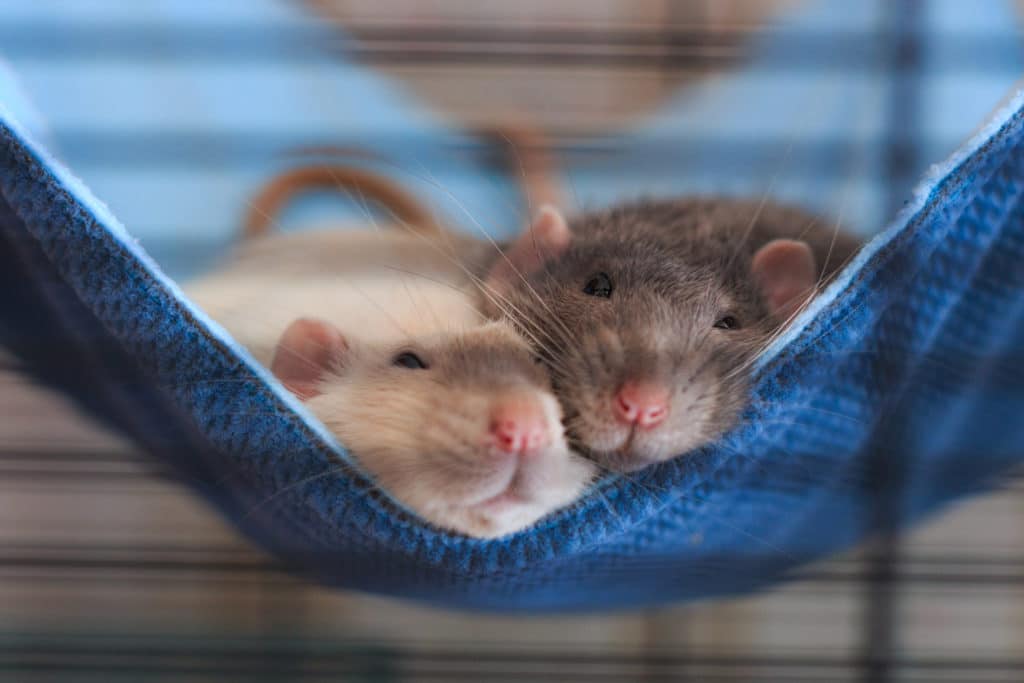
After all, if a stranger comes up to you in the street and caresses you, your reaction is likely to be one of aversion. For the researcher, the explanation would come from other stimuli, which are not necessarily perceptible. “In the mice’s cages, one factor that we couldn’t influence was odours,” he says, “because you don’t see them and perceive them in the same way as mice. Smell can be associated with pleasure/comfort with a place or an individual, also helping with attachment.”
A faulty network can always be redeveloped
This network is normally innate in humans. However, it is not fully formed at birth, it must develop. As the genetically modified mice show us, if this network does not function as it should, the individual will tend to favour isolation. But the effect can also be observed in mice with hypersensitivity. “In a neutral context, the activation of this network is pleasant. In a pathological context, its overactivation will provoke contact adverse behaviour,” says Amaury François. The reaction is therefore even stronger than for a lack of activation. This time, the mouse will avoid social contact and will have an interest in isolation.
In a pathological context, hypersensitivity will provoke contact-averse behaviour.
“This reaction is particularly evident in people with autism, which makes the situation all the harder for the individual and their parents. As contact is rejected by the child, the parents are unsure of how to interact with the child. And all this will have a serious impact on the child’s social development,” he admits.
This discovery therefore opens the way for a multitude of different research projects that will one day allow us to better understand how and why we develop social bonds with others. And, given their proven importance, perhaps it will also allow us to better support people who have difficulties in this area. “When the difference is at the developmental level, and there is a problem with neural network, there will certainly be gaps. But it is not too late to develop and adapt to them,” concludes the researcher.
Pablo Andres
Further reading
For more details on the research: https://doi.org/10.1126/sciadv.abo7566