The birth of academic freedom in the United States



- Academic freedom emerged in the United States at the turn of the 20th century with the Edward Ross case and his stance on Chinese immigration.
- The American Association of University Professors (AAUP) drafted the landmark declaration, which consists of three dimensions: freedom of research, freedom of teaching, and freedom of expression outside the university.
- This declaration also specifies that a researcher may be judged only by his or her peers, and not by administrative superiors.
- Between 1950 and 1960, amid the Red Scare, the Supreme Court ruled in 1957 in the case of Sweezy v. New Hampshire, affirming that imposing restrictions on university intellectuals would jeopardize the very future of the country.
- Academic freedom thus remains a living right, constantly negotiated among researchers, institutions, the state, and society.
Academic freedom originated out of a fundamental question: how can we ensure that researchers and teachers are able to carry out their intellectual work freely, in the face of the financial, political or institutional pressures exerted on universities and research institutions?
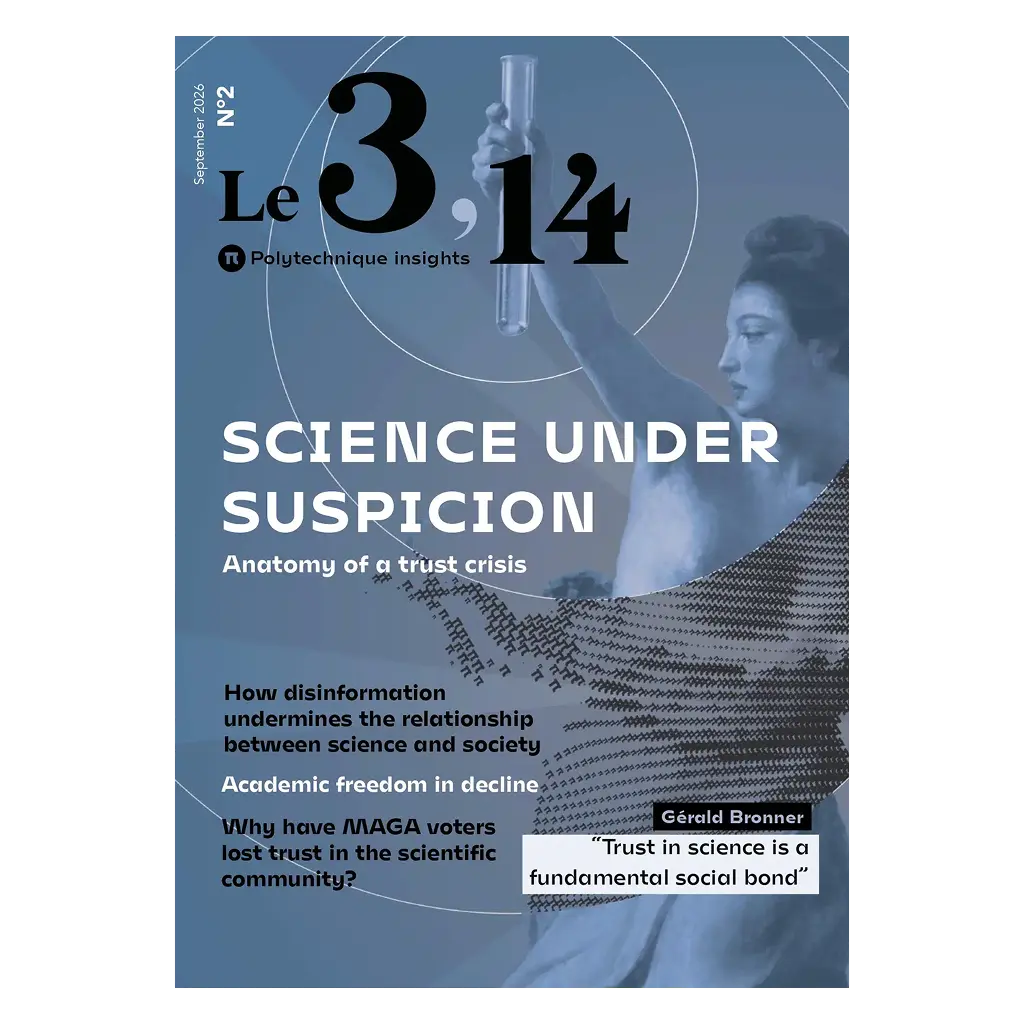
This article has also been published in our magazine 3.14 « Science under suspicion ». Download it here.
The Edward Ross Case
The issue emerged in the United States at the turn of the 20th Century, when major industrialists and financiers began to play an increasingly prominent role on university boards of governors. In 1900, the Edward Ross affair illustrated the problem: this Stanford economics professor, having taken a stand in favour of restricting Chinese immigration, was dismissed at the request of Jane Stanford, whose family had built its fortune on Chinese labour. The American Economic Association took up the cause and introduced the concept of academic freedom to the United States for the first time; a concept that already existed in Germany.
Under the presidency of John Dewey, it was the American Association of University Professors (AAUP), founded in 1915, that formalised the principle in a landmark declaration, which distinguished three dimensions: freedom of research, freedom of teaching, and freedom of expression outside the university walls. It also established the cardinal principle of peer review. As such, a researcher may only be judged by their peers, and not by their administrative superiors, much like a judge whose decisions cannot be challenged by the person who appointed them. In return, the researcher must express themselves with dignity and restraint.
A question arises from the outset: can a professor speak on subjects outside their field of expertise? As early as 1915, the President of Harvard answered yes, when refusing to sanction a pro-German lecturer during the war. In 1940, the AAUP specified that any professor speaking as a citizen must be free from institutional censorship, provided they exercise appropriate restraint and do not speak on behalf of their institution.
Association of American Universities
The legal dimension took on new significance between 1950 and 1960, against the backdrop of the witch-hunt against communists. In 1953, the Association of American Universities considered expelling professors who were members of the Communist Party. The debate was heated. Some saw membership of a party demanding ideological discipline as an infringement on academic freedom itself, whilst others feared that this accusation might be used to expel professors for mere intellectual disagreements.
The Supreme Court ruled in 1957, in the case of Sweezy v. New Hampshire, that academic freedom is constitutionally protected by the First Amendment, which guarantees freedom of speech. For the first time, the Court affirmed that imposing restrictions on university intellectuals would jeopardise the very future of the country. This decision culminated in 1967 with the Keyishian v. Board of Regents ruling, which characterised the classroom as a ‘marketplace of ideas’ and established that the nation cannot tolerate laws imposing orthodoxy in teaching.
Academic freedom does not apply solely to individuals. It also protects universities as institutions, particularly in their right to choose who teaches, what is taught and how. But conflicts can arise between a professor and their university. In such cases, judges may intervene, often relying on peer review to reach a decision. Contemporary issues illustrate this complexity: trigger warnings, diversity statements required of job applicants, or the growing funding of research by private companies seeking to control the results or maintain their confidentiality; practices deemed incompatible with the university’s mission of disseminating knowledge. Academic freedom thus remains a living right, constantly negotiated between researchers, institutions, the state and society. Today it is under greater threat than ever from the rising political pressure on American universities.
Further reading