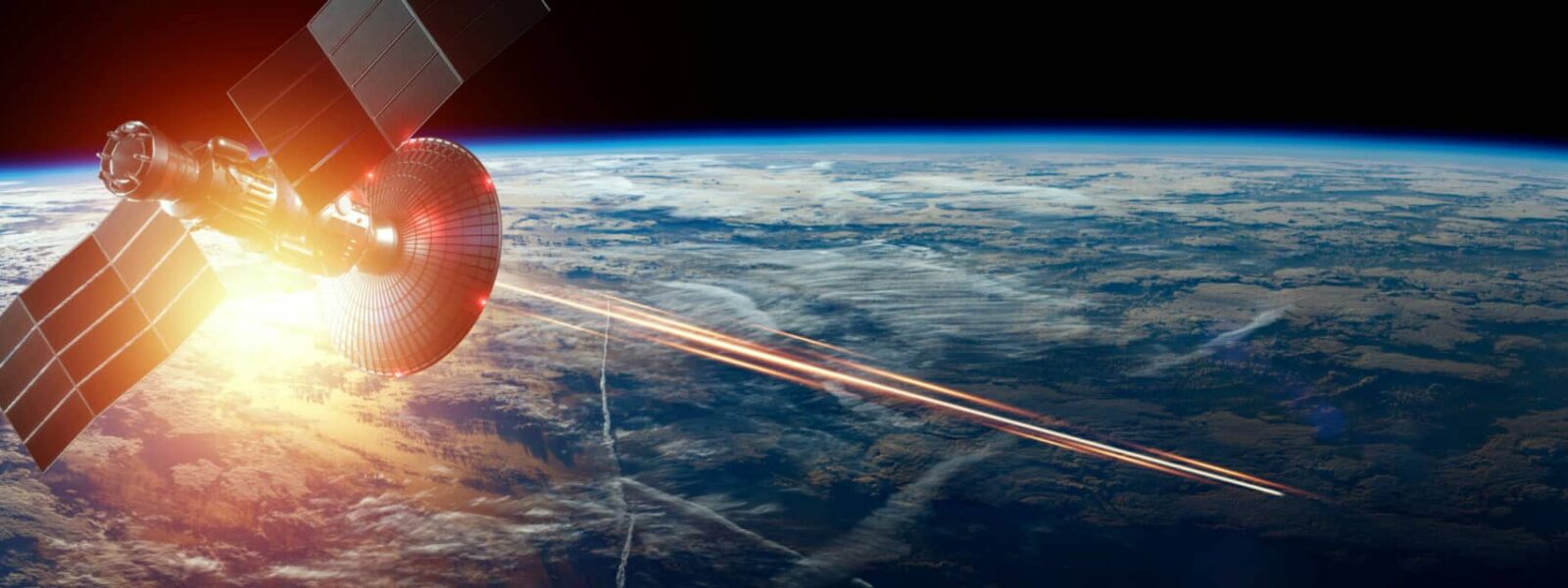
Space security: the impossible consensus between powers



In previous decades, space was a domain handled among a mere handful of key players such as the United States and the Soviet Union. But this is no longer the case; multiplicity of actors in outer space (private companies, new states), both in number and diversity, has accentuated the challenge of global governance. What are the rules? And how can we enforce them?
Space: a fragile zone
Finding a consensus among the many stakeholders in the current climate has become nearly impossible. Moreover, we are seeing increased use of space assets in conventional military operations for communications, as well as position, navigation, timing functions, to name a few. In earlier decades, use of space by militaries was primarily for strategic functions1 such as arms control and treaty verification, and early warning. Add to that the arrival of new technologies such as on-orbit satellite servicing2 that are typically used for remote satellite inspection, refuelling and repair – meant to extend the life of a satellite or to clean up junk in space. Even though these belong to the category of peaceful use of space, tensions in global geopolitics and intensification of competition among major powers have driven suspicions about their use.
Still, regulation3 of these new technologies4 and activities have not been developed and given the state of major power relations, it is unlikely that there will be much progress on this in the immediate future. Even though the US continues to maintain the lead in almost all aspects of space technology and competition, China’s growing capacities and its desire to rewrite the rules and norms in space has made space governance more difficult.
Defining rules: a problematic exercise
The global rule-making exercise has become challenging for several important reasons. That the major powers cannot agree on what the most important challenges are in the space security domain is a major impediment in developing consensus on the next steps. Countries like China and Russia argue that the arms race and placement of weapons in outer space are urgent issues. Whereas the US and several other countries perceive the growing development and deployment of counterspace capabilities—technologies that can deny advantages that come from the use of space—as a more serious danger.
Hence, space is no longer “a sanctuary5 from attack and space systems are potential targets at all levels of conflict.”
It could also be said that there is a philosophical difference between these two groups of states about future governance of space. Western states perceive enormous benefits in pursuing political but non-legal instruments. They do not have sufficient confidence in other powers to pursue legally binding measures given the state of multilateral negotiations6 and so they argue that less binding agreements may be the first step in building trust and confidence in each other. But countries such as China and Russia continue to reiterate that legally binding measures are the only means to secure space.
The world is moving away from a “sanctuary” view of outer space towards the “space control” or even the “space high ground” schools of thinking. The latter considers that “space has the ability to be the critical factor7 in determining the outcome of a battle.”
Far from a consensus
Some of the recent global proposals for space governance include the draft Treaty on the Prevention of the Placement of Weapons in Outer Space sponsored by Russia and China; the Threat or Use of Force against Outer Space Objects (PPWT), originally proposed in 2008; the EU-initiated International Code of Conduct for Outer Space Activities (2010); the 2013 UN Group of Governmental Experts on Transparency and Confidence Building Measures (TCBMs); the 2018–19 GGE on further practical measures for the prevention of an arms race in outer space (PAROS) and a more recent UK proposal on space security. But there has been no progress on any of these initiatives. The First Committee of the UN General Assembly voted in early November to establish an open-ended working group on safe space standards8. The formation of this group, scheduled for 2022, is worth watching.
Why do we need new measures urgently? The existing legal measures, especially the Outer Space Treaty (OST) of 1967 have been useful in maintaining the sanctity of outer space but the Treaty and the associated agreements including the Registration Convention, Rescue Agreement and Liability Convention have many gaps and ambiguities. For instance, the OST is silent on weapons other than weapons of mass destruction (WMD). The fact that only the placement of WMD is prohibited by the Treaty is a big lacuna and the treaty cannot address contemporary challenges such as those presented by counterspace capabilities.
A critical dialogue
Recent developments should bring some urgency to the global governance debates. Russia’s ASAT9 test, France’s10 Space Force Command, Germany’s11 military space commander center, Australia’s12 own version of a space command13, and India’s Defence Space Agency are all a recognition of the growing security-domination of outer space, and the changing dynamics of space security. Russia came up with its own Russian Space Forces even earlier in 2011 and China established the Strategic Support Force (PLASSF) in 2015, integrating the People’s Liberation Army (PLA) space, cyber and electronic warfare capabilities, making a more potent force to deal with.
The critical point here is to note that without multilateral negotiations, states will be compelled to pursue their own means of securing their interests in space, by demonstrating their counterspace capabilities including anti-satellite (ASAT) weapons to developing dedicated military space institutions, all of which could only heighten the potential for conflicts in space.
Contributors
Rajeswari Pillai Rajagopalan
Dr. Rajeswari (Raji) Pillai Rajagopalan was the Technical Advisor to the United Nations Group of Governmental Experts (GGE) on Prevention of Arms Race in Outer Space (PAROS) (2018- 2019). She joined ORF after a five-year stint at the National Security Council Secretariat (2003-2007), Government of India, where she was an Assistant Director. Prior to joining the NSCS, she was Research Officer at the Institute of Defence Studies and Analyses, New Delhi. Rajeswari Pillai Rajagopalan was also a Visiting Professor at the Graduate Institute of International Politics, National Chung Hsing University, Taiwan in 2012. As a senior Asia defence writer for The Diplomat, she writes a weekly column on Asian strategic issues and has authored or edited nine books including Global Nuclear Security: Moving Beyond the NSS (2018) and Space Policy 2.0 (2017). She has published research essays in various peer-reviewed journals and has contributed essays to international newspapers such as The Washington post.