Far above our heads, satellite constellations are multiplying at a staggering rate. The most considerable of which are constantly expanding their networks even further – namely Starlink by SpaceX for the United States and Qianfan by Shanghai Spacecom Satellite Technology (SSST) for China. These equipment deployments, as well as on a larger scale the development of space projects, raise crucial legal questions. In the event of a collision between satellites, for example, who is at fault? But also, can an entity lay claim to mineral resources on the Moon or Mars? Or how do we regulate the ambitions of private actors and those of certain States? To answer these questions, Lucien Rapp, specialist in space law and professor at the University of Toulouse-Capitole, as well as at HEC Paris, shares his expertise.
#1 There is an international space law
TRUE
Today space activities are also included in this legislation. This international law is based on several founding legal texts, the principal one being the Outer Space Treaty of 19671. These provisions were certainly marked by the context of the Cold War, but they remain very current. This treaty, signed by all the major space powers of the time – France, the US, the USSR and the UK – establishes a set of rules in the exploration and use of space.
First, it preserves outer space [Editor’s note: the zone beyond Earth’s atmosphere] as a sanctuary by opposing any claim of sovereignty and keeping it free of nuclear activity. It invites States to organise activities that fall under their jurisdiction and control. It makes them responsible for their operations and those of their nationals in space and on Earth. In addition, it protects astronauts by making them “envoys of Humanity.” This treaty is not alone, as it is accompanied by four other treaties negotiated between the end of the 1960s and the mid-1970s.
In total, these five conventions and their principles constitute a solid legal foundation, accepted by all and whose authority is yet undisputed.
#2 Space belongs to no one. It is somewhat of a “sanctuary”, which implies that States are politically and legally responsible
TRUE
The Outer Space Treaty opens with three statements: the commitment of signatory states to explore and use space including the Moon and other celestial bodies “for the benefit and in the interests of all countries, regardless of their stage of economic or scientific development”; the somewhat contradictory proclamation of the freedom to do so for States that have the means to do so, and the prohibition of any national appropriation by proclamation of sovereignty. The text adds “neither by use nor occupation, nor by any other means,” as if it were “the prerogative of all mankind” (in the French version).
The Outer Space Treaty is structured around states, each of which is deemed politically and legally responsible.
And if we remember Neil Armstrong’s beautiful words during the Apollo 11 mission (“that’s one small step for [a] man, one giant leap for mankind”), these principles nevertheless strike a discordant note in the current climate, where there is regular talk of the possibility of private appropriation of mineral resources extracted from space, the installation of nuclear power stations on the Moon, and the establishment of safety zones around space objects.
The Outer Space Treaty is generally described as a “state-centred” treaty, meaning that it is structured around states. Under the Treaty, each state in the space club is considered responsible in two senses of the term: politically, because it must organise its activities and those of its nationals; and legally, because it undertakes to bear the consequences of its actions and those of its nationals. This explains why, with the development of private activities in the space sector and the number of states in the space club, we have seen an increase in the number of space laws. In France, Parliament adopted the Space Operations Act of 3rd June 2008, the LOS, which now serves as an international reference for many states.
#3 One can freely exploit the mineral resources of the Moon or Mars
UNCERTAIN
In the absence of a specific ban, there is no objective reason to oppose it, and we must accept that the rules will evolve to definitively regulate the status of this type of activity. The real question that needs to be asked of the experts is what these resources are, whether they are of economic interest and for what uses, at what cost and with what technologies they can be extracted, stored, refined, transported, etc. These questions appear to be entirely open.
#4 According to these rules, the Outer Space Treaty therefore prohibits private property
FALSE
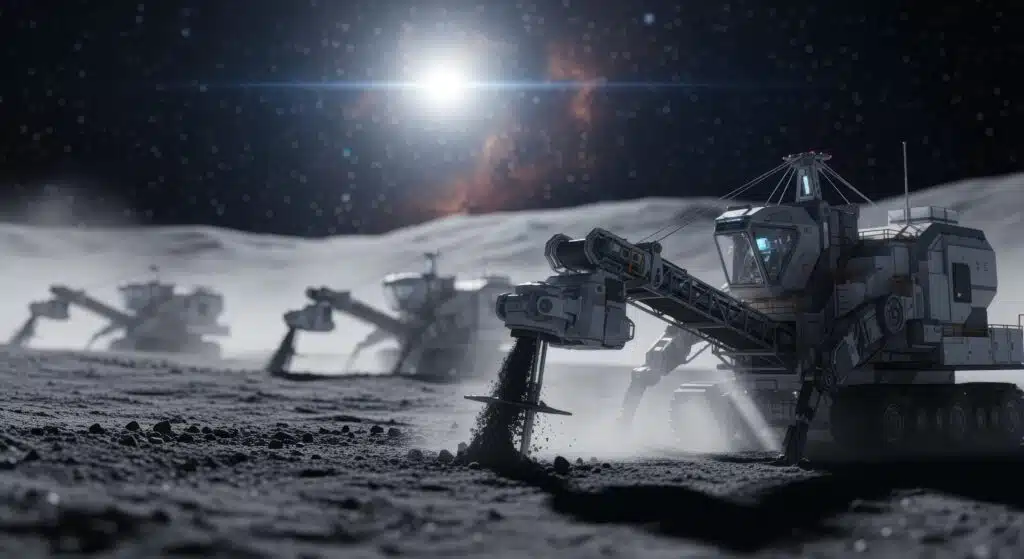
Sovereignty and ownership are often confused. The treaty prohibits claims of sovereignty by a state but says nothing about private ownership other than the cryptic phrase as mentioned above: “neither by use or occupation, nor by any other means.” It is this loophole that the United States, with the Artemis Accords, and other spacefaring states after it, have rushed to exploit to set a precedent and establish a customary rule.
During the Summer, this issue returned to the international spotlight with American and Sino-Russian plans to install nuclear reactors on the Moon to generate electricity for future residents. This installation defies both the letter and the spirit of the Outer Space Treaty and, even more so, the international convention that protects the Moon. Add to this that the sensitive nature of the energy source used requires the establishment of safety zones, which amounts to the appropriation of portions of outer space by the States concerned or their nationals.
#5 The Artemis Accords establish private property in space
UNCERTAIN
The Artemis Accords are an innovative legal instrument designed by the US authorities, NASA in particular, and whose signature is a prerequisite for other states to cooperate with the United States on the Artemis programme and, more generally, on the peaceful exploration of space. They take the form of a unilateral, apparently non-negotiable text setting out a set of new principles, some of which significantly supplement or modify the international regime for space activities as defined by the Outer Space Treaty. Among these principles is that of private property in space.
However, the Artemis Accords specify that they are consistent with general international law and international space law and that the commitments they cover are not binding, which leaves some doubt as to their true legal scope.
#6 Space is denuclearized but already militarised
TRUE
Yes, this is one of the current challenges facing international space law. Space activity is inherently dual use, serving both military and civilian purposes. This is true of the technologies, it is true of the industry, and it is also true of the uses to which they are put.
Hence the export controls to prevent the proliferation of weapons, the gradual ban on anti-satellite missiles, and the efforts currently being made to combat cyber threats, from jamming broadcasts to spy satellites. The NIS2 directive, which is currently being transposed in France through a bill known as the ‘Resilience’ bill, is a step in this direction, as is the EU Space Act.
#7 Space will become a terrain where armed hostilities take place
UNCERTAIN
Space is not officially a theatre of hostilities, but it is already heavily militarised. Civilian and military satellites coexist there, with the latter’s activities obviously being anything but peaceful. It is to be hoped that this situation will remain unchanged and that it will not change in the near future. It seems that most states are aware of this.
#8 The International Court of Justice settles space conflicts, including private ones
FALSE
We have an international judge, the International Court of Justice. But this judge only settles border disputes between states; outer space, by its very nature, cannot give rise to this type of dispute. As such, I am not aware of any decisions that have been made in this regard.
However, we cannot rule out the possibility that difficulties may one day arise, particularly in the management of the frequency spectrum or orbital positions, which are becoming increasingly contested and whose international regime involves delicate coordination procedures. Although not subject to international litigation before the International Court of Justice, this type of dispute between States, between States and operators, or between operators may be subject to international arbitration.
#9 The boundary between airspace and outer space is clear
FALSE
We know how to define airspace both in the part reserved for air traffic (as established by the ICAO) and in the part corresponding to upper airspace, where sophisticated balloons or drones, known as HAPS, currently operate. However, none of the relevant treaties, namely the Chicago Convention on International Air Transport and the Outer Space Treaty, have established any boundaries.
This is all the more problematic given that the Chicago Convention establishes the principle of complete and exclusive sovereignty of States over their airspace, whereas, as I have pointed out, the Outer Space Treaty prohibits any proclamation of sovereignty by States. Arbitrarily, the famous Von Karman line, at 100 km, is used as a convenient boundary.
#10 Satellites must be registered
TRUE
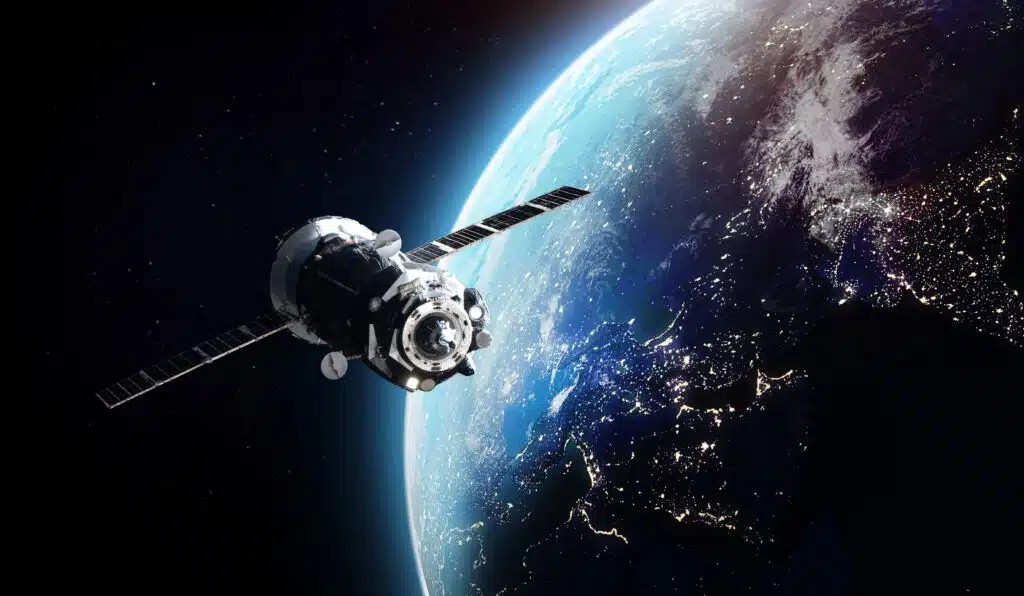
Like aircraft or ships, they depend on the sovereignty of a State and are attached to it. And it is because they are attached to it through registration that the ‘launching’ State can exercise jurisdiction and control over them and agrees to assume international responsibility for them with regards third parties and other States. All of this is very consistent.
I mentioned earlier the prohibition of any appropriation. Space objects (artificial bodies in outer space) are an exception to this rule because they are attached to the jurisdiction of a State. The question remains, however, whether all launched space objects – many of which are still operational – are actually registered. Unfortunately, this is not the case. The future European regulation (EU Space Act), the text of which was made public on 25 June 2025, establishes a European register of space objects, the URSO, which will list all objects launched by European operators as well as by non-European operators pursuing activities on the territory of the Union.
#11 Contracts and technical standards are important in space law
TRUE
Contracts between operators and national space agencies, as well as between operators themselves, are now an independent and important source of legal rules. For many, they sometimes conveniently fill gaps left by national or international legislation.
The adoption of international technical standards is essential for the development of space activities.
A textbook example is the contracts concluded between operators for services provided in space, such as refuelling or, more generally, maintenance of operational satellites. To provide its services, the satellite involved must dock with the satellite on which the intervention is required. Once docked, do these two satellites form a single space object or do they remain separate? The question that arises and that the contract must cover is obviously that of liability in the event of an accident caused to another satellite or to a third party.
The adoption of international technical standards is essential for the development of space activities. This is because satellite communications account for most of the space activities market, but also because the space industry is based on assembly processes. All of this requires equipment to be interoperable. It is therefore important to have a harmonised set of international technical standards.
#12 The international governance of space is stable
UNCERTAIN
The Outer Space Treaty and its supplementary conventions lay a solid foundation. Although they date back to the early days of space exploration, they remain a useful reference that no spacefaring nation seriously considers challenging. Since then, space has become a market that needs to be regulated. The amount of debris accumulated in near-Earth space raises the risk of congestion that could make access impossible; it must therefore be managed.
Innovation reigns supreme in the space sector, and technological developments are undoubtedly outpacing legal developments. We need to rethink space governance to take this into account, consider giving outer space and its potential commercial exploitation a legal regime inspired by that of the high seas, and ensure the effective coexistence of a fully-fledged international organisation, the ICAO, and an international association, IATA, which exists in the aviation sector, and redefine the role of existing UN institutions: COPUOS and the Office for Outer Space Affairs (OOSA).
Periods of great upheaval, such as the one we are currently experiencing, mainly in the space sector, are generally conducive to the major developments that follow them. We can therefore remain confident.