


Why have you directed, or co-directed, so many theses on food waste?
To propose measures that can have an impact on consumer behaviour. If we hope to reduce food waste, it is essential to understand why people waste in the first place. Are consumers aware or not that they are throwing away food? Does it make them feel uncomfortable or not? What are the individual, but also social or material factors that influence their behaviour? These studies take a long time to carry out, as they involve going to catering facilities or canteens, and into families to observe what happens there or to conduct individual interviews. We cannot always be satisfied with declarative statements in response to questionnaires. Not least because people tend to downplay wasteful behaviour.
Doesn’t everyone have the same definition of waste?
Indeed, Maxime Sebbane, a lecturer in marketing at the Institut Agro Montpellier, has worked on collective catering and has shown to what extent the definition of waste is not self-evident. It depends in particular on the quantity left (some people consider that leaving half a piece of bread is not wasteful, whereas others will consider it to be), the quality of the product left (a badly cooked vegetable will be considered wasteful or not) and even, more surprisingly, the nature of the product: for example, a person who leaves a dessert behind may consider that it is not wasteful because it is better for his or her health not to eat too much sugar!
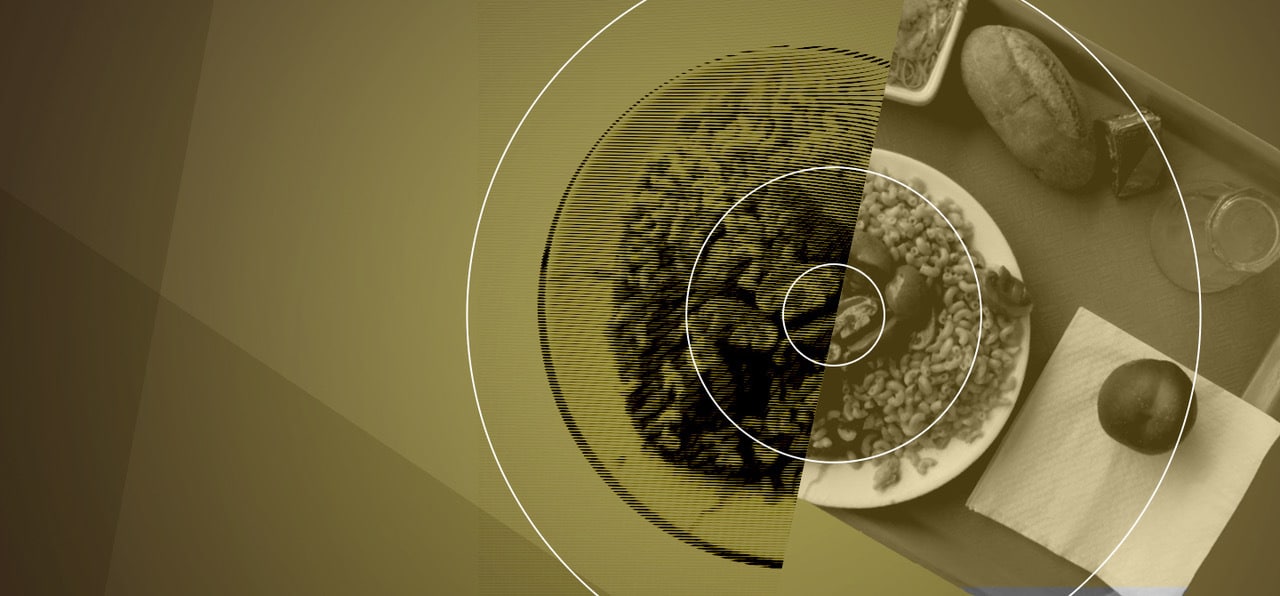
Furthermore, we found that many people deny their own waste habits. When we studied the leftovers on the trays of 479 people who had eaten in different company restaurants, we found that while 398 people had left food, only half of them said they had left any!

Wasteful behaviour is not only dependent on individuals?
In the framework of a qualitative research study conducted with Margot Dyen, lecturer in marketing at the University of Savoie Mont-Blanc and Lucie Sirieix, professor in marketing at the Agro Institute of Montpellier, we were interested in what people do and say around the “Eat Smart” campaign and the “Anti-waste” campaign. Margot Dyen conducted interviews and then went to the homes of the people interviewed to observe their practices in their social and physical environment. Many of these practices are based on complex cooperation and coordination between different people in the household. When you must manage the food preferences of several people, the schedules of adults, children and teenagers who do not eat at the same times, it is very complicated to avoid waste. For example, vegetables bought to meet the “good nutrition” plan can end up in the bin…
What recommendations can be drawn from these studies?
In the catering industry, our research has shown that an organisation can clearly induce wasteful behaviour and/or foster a sense of ‘entitlement’ to waste. For example, charging a single price for a ‘starter-main’ or ‘course-dessert’ component does not encourage diners to modulate their choices according to their appetite, and a single size of container does not encourage them to modulate quantities according to their appetite either.
We conducted an experiment with more than 200 participants by offering consumers “small hunger” plates (21 cm in diameter) or “large hunger” plates (24 cm in diameter) for the main course, which allowed people to ask for a quantity adapted to their appetite, and for cooks to serve smaller quantities. This measure, which is very simple to implement, reduced the amount wasted by 20%.
It should be remembered that collective catering is a strategic lever in the fight against waste. It has been estimated in various European countries that between 13 and 55% of the food produced and distributed in collective catering ends up in the bin. In France, this sector represents nearly 3.6 billion meals per year, which generate 440,000 tonnes of waste – this represents an economic loss of €910 million per year and 1.5 million tonnes of avoidable greenhouse gases!
What can be done to reduce waste at home?
Making a shopping list, learning how to cook leftovers, reserving a specific place in the fridge for leftovers so that each member of the family can find them, can all be effective. More generally, the research we conducted with Guillaume Le Borgne, a senior lecturer in marketing at the University of Savoie Mont-Blanc, showed that individual awareness of waste had a more marked positive effect on the adoption of “anti-waste” practices than “global” awareness. Clearly, communication campaigns that highlight the savings that can be made by the household by wasting less will be more effective than campaigns that point out the negative effects of waste on the environment and waste management. Finally, people who are made aware of “waste” from childhood will waste much less than others, which argues for education on this subject from school onwards.