



How is global warming affecting Champagne vineyards?
Vincent Malherbe. Conditions increasingly resemble those of southern regions, which has led us to begin harvest in August three times over the past ten years. Springs used to be cold and humid but they are now hotter and drier. Before, vines reached maturity at the end of September, or even the beginning of October, when it was approximately 4°C in the morning and 14°C in the afternoon. Now, temperatures can reach 25°C during the harvest season.
How does this impact quality?
VM. Grape maturity is better so for now it is beneficial, but this could evolve if the climate continues to change. In the past, we harvested in October to reach the necessary ripeness of the grapes and we could experience two problems: an excess of acidity and a risk of diseases related to humidity. Nowadays, we are faced with new issues: the alcohol level has increased while the acidity level decreased. We must remain vigilant because it is a key element for both the content and ageing of champagnes. Based on rolling average over four years, the degree of alcohol has increased from 9.6°C in 2007 to 10.1°C in 2020. In the 1980s, we often harvested when temperatures ranged from 7.5°C to 8°C.
Marc Brévot. Climate change has an additional impact on the entire ecosystem surrounding vineyards. For example, we are seeing modifications in the microbiota of grapes which can bring out unknown aromas. Some years, we also observe a desynchronisation of veraison (the change in colour of grapes), due to an accumulation of sugar before the grapes reach phenolic and aromatic maturity. Also, by comparing compositional analyses of current grape musts with those of the 80s from the same land plots, we find that the nitrogen content has changed, too; it has decreased over time and as such the amino acid composition is less appropriate for vinification. That means we have to be more precise in the way we develop our wines to maintain the desired sensory characteristics.
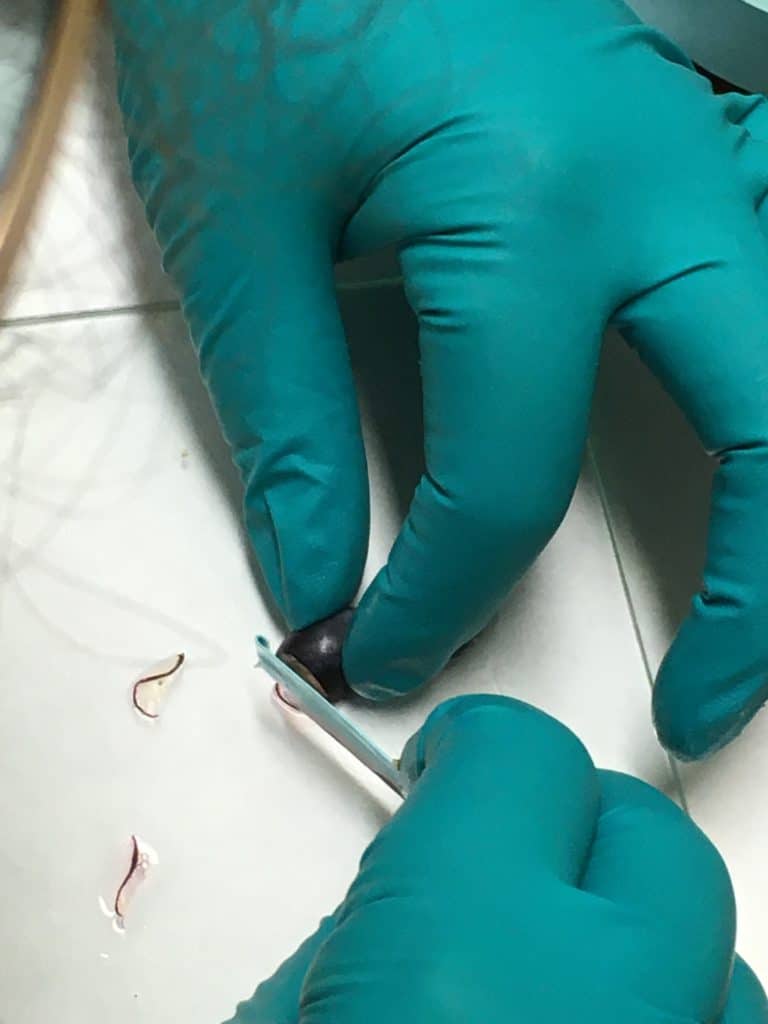
To that end, we developed a method for monitoring fermentation in real-time at our R&D unit, which we have now implemented at our winemaking site of Moët & Chandon de Montaigu. We are also testing new technologies for the future. We tested cooling boxes under vacuum to quickly and efficiently get the ideal temperatures of grapes for vinification. We tried image analysis techniques using artificial intelligence to characterise the stage of grape maturity, in the vineyard or after their harvest, to obtain raw material that conforms with our quality standards. We are also conducting research to better understand the microbiota and its influence on the quality of our products, include new early indicators of sensitivity to diseases to assist business users in their decision-making (ex: indicators of fragility of grape skin), or identify future varieties of vines with great potential in the new climate conditions.
What can be done to counter the effects of climate change?
VM. Vineyard practises are changing, trimming especially. We use rootstocks from other regions, for example. But the specifications of the INAO [the French regulatory body for protected geographical indications], are very strict. And, yet we cannot stabilise our recipes while our environment is changing. So, we are demanding a right to experiment both from an ecological and agronomical point of view without the risk downgrading our products. The German, Swiss and Italian quality standards are more flexible than the French.
Present-day traditions are not sustainable in the long term, and it would be unwise to let them reach breaking point. We must progress in order to maintain style and the quality of our wines. Half a century ago, Chardonnay did not exist in the Champagne region. Our ancestors were able to change. In the future, we will need grape varieties with a later growth cycle, because there is a correlation between the maturity and development of the fruit.
MB. There is considerable pressure to develop agricultural sustainability on one hand, and the obligation to adapt to the changing climate on the other hand. Continuous optimisation is an outdated post-war agricultural model. We must develop systemic approaches, not analytic ones. In this regard, agroecology is a very exciting lead. It pilots a complex ecosystem in which the vine is not isolated anymore, but fully integrated in the surrounding environment and biodiversity, and adapted to the local climate.
What does the future hold for the Champagne vineyards? Are you interested by new wine-growing regions like those in the South of England?
VM. Bearing in mind what we just discussed, vineyards in the Champagne region have a bright and sunny future ahead of them – provided that we are given the means to reasonably improve our cultivation techniques. The solution lies in innovating in accordance with our traditions. We have much to do on the 1,200 acres in Champagne. An expansion in the South of England is not in our agenda, even if we closely follow the evolution of wine-making practices and techniques in the UK.