India’s transition to electric vehicles



- India has set itself ambitious targets for its transition to electric vehicles, notably through the FAME subsidy programme.
- By 2030, India is aiming for 30% of passenger cars and 80% of two- and three-wheelers to be electric among new acquisitions.
- India's new electric vehicle policy could make manufacturers like Tata Motors and Mahindra major players in the future.
- In particular, it insists that companies wishing to work with India on building electric cars should do so in collaboration with a local partner.
- There are still obstacles to the success of this transition, such as the lack of parking spaces and infrastructure problems (rail networks).
India has set ambitious goals for its transition to electric vehicles. What’s the situation there now?
Peter Wells. India as a whole has done pretty well in adopting electric vehicles, but there’s plenty of scope to do more. The country acknowledged early on that there were opportunities for gain with the transition, notably when it comes to reducing the health effects of air pollution and noise. Accordingly, they have been supporting this change since 2015, notably with the Faster Adoption and Manufacturing of Hybrid and Electric Vehicles (FAME) subsidy scheme that supports the purchase of electric vehicles and installation of charging points and purchase of electric public transport.
Still, at the moment, it is lagging behind its ambitions. By 20301, the country aims for 30% of private cars, 40% of buses, and 80% of two-wheelers and three-wheelers to be electric among new purchases as part of a push to reduce overall emissions by 45% by 2030. As of now, electric vehicles make up about 50% of 3‑wheelers (the so-called “tuk tuk” vehicles), about 5% of 2‑wheelers, and 2% of cars bought in 2024. I think most external people looking at this would say that’s far too ambitious as a target.
Altogether, India, is a bit behind other major markets like China, which is now a significant leader in both market penetration and as a location for production. But it is ahead of other comparative markets like Brazil, for instance.
India is quite a distinctive market in itself, isn’t it?
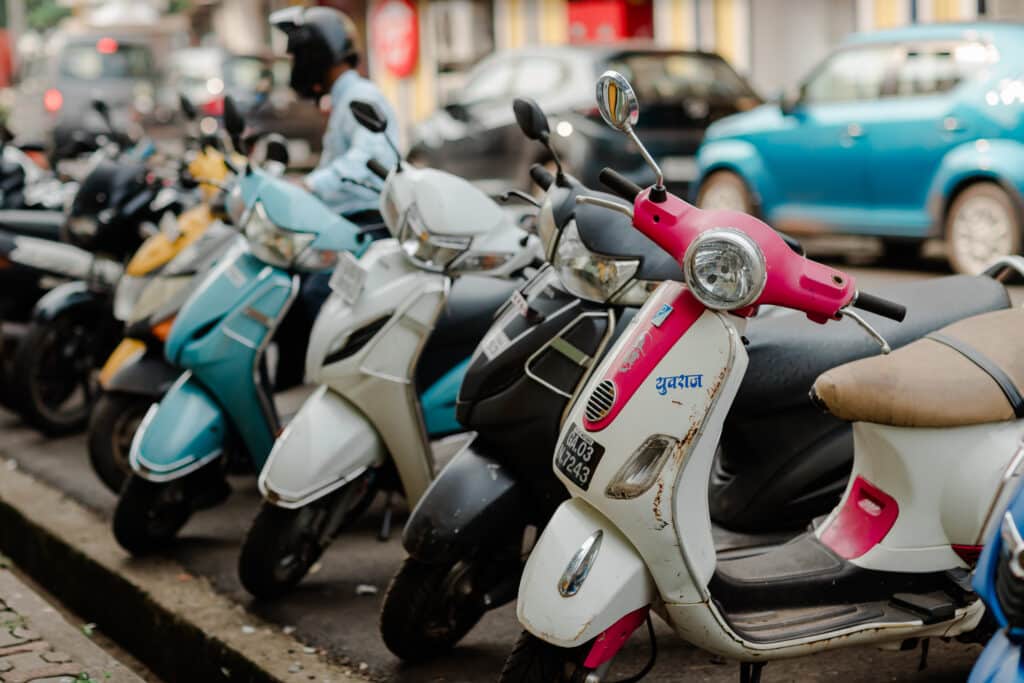
The market has historically been primarily dominated by commercial vehicles and a strong preference for two-wheel and three-wheel vehicles. These are hard-wearing vehicles used in commercial settings like taxi services and the like — just how performant EVs will be in that setting is still up for debate2. Long charging times, high ownership costs, and limited range can increase3 the risks for business owners investing in this new technology.
India has managed to drive some electric sales among two and three-wheelers, but it’s certainly not tipping the market over. That being said, this has led to some interesting leapfrogging, like the emergence of battery-swapping points that allow drivers to power up their two and three-wheelers without delay.
That system is still struggling to find its feet, notably because of a steep learning curve when it comes to the rate of degradation of batteries, how quickly they can be charged, consumer education, but also electricity rate negotiations, subsidies, and so on. But it is showing promise as a way to meet commercial drivers’ demands. Still, we’ve been seeing a significant transformation of the car sector in the last 10 to 15 years, with a growing interest for personal cars.
Where is India getting its electric cars?
We’ve been seeing big global producers like Toyota, Suzuki, Nissan, and Hyundai setting up manufacturing hubs in India.Car manufacturers globally are finding themselves having to adapt to volatility of demand and growing geopolitical instability. In that context, it’s becoming increasingly crucial for them to be able to quickly to adapt to unexpected short-term hits, which are difficult to forecast.
India, which touts manufacturing costs 10–25% lower than operations in Europe and Latin America, is becoming part and parcel of that very complex and constantly shifting structure. Still, international manufacturers implanted there are equally interested exporting these cars to Asia and Europe than in developing their footprint in the country — which still has a relatively small but growing electric car market, compared to its population.
Part of the story is that India has been quite busy building some walls to prevent the Chinese car from flooding the market, so they’ve imposed substantial tariff barriers against finished vehicles coming into the market and insist that companies wanting to work with India do so with a local partner.
India’s new EV policy, the Scheme for Manufacturing of Electric Cars policy, which lowers import taxes on 8,000 electric cars per annum for automakers4 investing at least $500 million in manufacture in India that uses 50% of components sourced locally. In this context, local manufacturers like Tata Motors and Mahindra are becoming significant players and could become more so in the future.
Does that mean that India is on its way toward solving its automotive industry carbon problem?
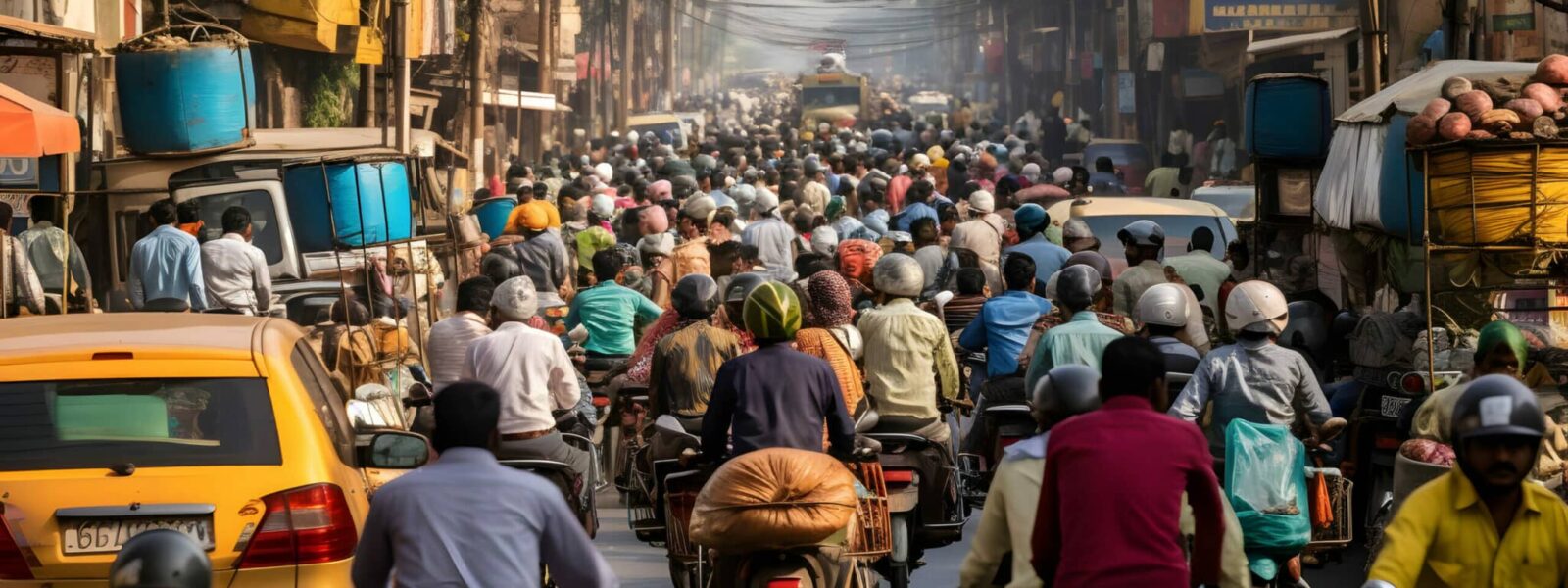
The reality of it is that substantial barriers to success are still in place, which electrification will not solve. For instance, many Indian cities suffer from a lack of parking, which means drivers will often dip back into traffic after dropping off their passengers and drive around with an empty car until they can pick them up again. Poor railway networks mean many will travel into town on three-wheelers, contributing to cities’ congestion problem. Addressing these infrastructure issues would already go a long way towards reducing emissions before EVs even come into play.
Then you’ve got the climate issues — running air conditioning in the car depletes the battery and reduces its range, which makes it a less attractive proposition. And issues to do with the sheer size of the country — huge swathes of the rural areas of the country don’t even have access to basic electric grids, let alone something exotic like a charge point.
All of these are factors make it more difficult for people to use these electric vehicles. It is still unclear how these EVs perform in these settings and whether they are serving consumers’ needs. India also relies heavily on coal and oil to power much of its grid, limiting the positive impact of electrification on emissions. The potential is enormous, but the scale of the problem makes it really difficult to make an impact.
What can our readers take from this situation?
There’s an awful lot of research focusing on this question of transition at the moment. What’s emerging is that having a new technology, no matter how robust it is, will not, in itself, offer a solution. The adoption of the technology is very culturally and locationally specific. It’s about physical structures, climate, environment, regulations, and most importantly, how people live their lives.
This shines a light on the dearth of research emerging from India itself. A lot of research is inwardly focused — it looks at North America, Europe, and increasingly China. I think that’s a concern, because we know that transitions in general don’t work in the same way in those places.