Energy transition: how to improve urban landscapes


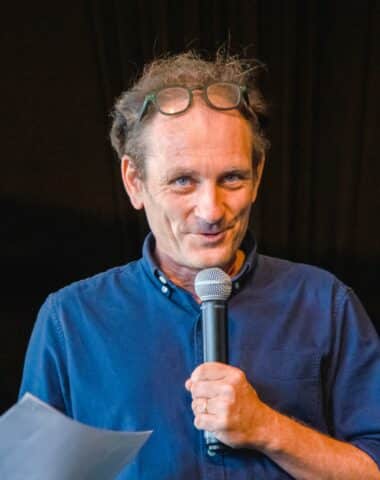
- To make the transition to renewable energy appealing, we need to take steps to improve the landscape and help these energies fit into the surrounding area.
- This approach is based on five principles, including taking into account the connection between people and the places where they live.
- Fossil fuels have caused damage to the areas around cities (an increasing number of car parks); the energy transition must aim to improve the landscape and the urban environment.
- The Vosges region is a pioneer in the application of these guidelines, and landscape plans were drawn up as early as the 1980s and 1990s.
- The Landscape and Energy Chair at the École Nationale Supérieure de Paysage (National School of Landscape Architecture) works to promote interconnection between the worlds of energy and landscape.
In early July, the 2025 report from the High Council for Climate1 was scathing: “At a time when climate action is being deprioritised and the impacts of climate change are getting worse, the High Council for Climate calls for a revival of climate action in France.” Energy production accounts for more than a quarter of France’s total carbon footprint and phasing out fossil fuels is essential. The Landscape and Energy Chair at the École Nationale Supérieure de Paysage is developing different working methods to promote the integration of renewables across the country.
How can we encourage society to embrace renewable energy?
Bertrand Folléa. I don’t like this idea of “acceptability”. Our goal is to get people and developers on board with an energy transition that’s actually desirable. Instead of just focusing on land use planning, we suggest taking a more progressive approach to the landscape. We can’t just think of the landscape as decorative.
Some people propagate the myth that the landscape is unchanging and must be protected from renewable energies. This is unrealistic: our landscape is constantly changing, and not always for the better. Agro-industrial development and urban sprawl have disrupted our living environments. This is due to cheap, powerful fossil fuels, which have caused problems and environmental damage. This development is not sustainable in terms of biodiversity, climate, health or social cohesion. It therefore makes no sense to want to “protect the picture postcard”.
What concrete approach do you propose?
The landscape approach is based on five principles:
- take into account the sensitive nature of a population’s relationship with its local environment;
- consider all living things, making a distinction between humans from non-humans;
- take a cross-disciplinary approach, because everyone contributes to the landscape;
- adopt a collaborative approach, because each person is an expert on their own landscape;
- be creative and operational, moving away from dogmatic or ideological positions.
These conditions are necessary for renewable energies to make sense in relation to living environments. We are reversing the logic: instead of putting the landscape at the service of energy, we are putting energy at the service of the landscape. It is a practical and operational approach.
Can you give some examples?
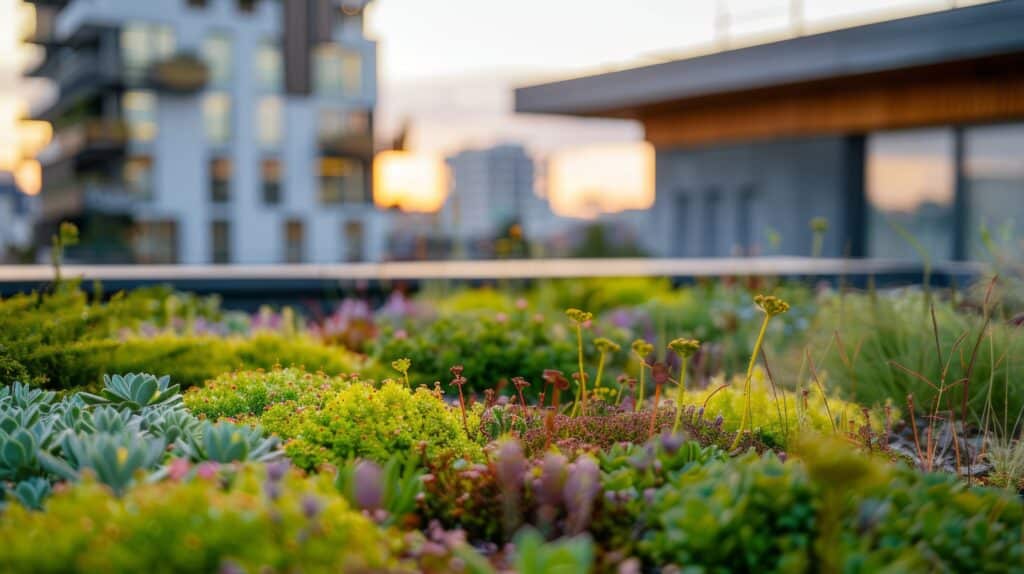
The areas around cities have been damaged because of our use of fossil fuels. They are now filled with business parks and car parks, draining city centres of their shops. The energy transition is not just about installing solar panels on roofs and car parks. The transformation process must aim to improve the quality of the landscape and urban environment. Photovoltaic shade structures on car parks provide an opportunity to partially demineralise them, restore vegetated surfaces that allow water to infiltrate, plant a few more pleasant and cooler shade trees, and give biodiversity a chance to redevelop. This is how the transition will become more desirable.
Another example is photovoltaic panels on roofs. It is possible to adopt a set of common rules to create a contemporary and controlled roofscape. In Rosans, in the Hautes-Alpes region, the Centrales Villageoises (local, citizen-led companies that run projects to promote the energy transition, based on a local approach) has drawn up landscape and architectural recommendations that guide photovoltaic development. This leads to a more attractive roofscape.
Is this method widely used today?
These approaches have not yet been widely adopted. We lack a culture of landscape design and remain stuck in the inertia of land use planning logic, which reduces the energy transition to simply adding new equipment to existing infrastructure.
The Vosges department is a pioneer in this field, with landscape plans having been drawn up as early as the 1980s and 1990s. Since then, the Bruche Valley, Saint-Amarin Valley and Hautes Vosges regions have been working continuously to transform the living environment through landscape. More recently, the central Vosges region has incorporated this concept into a landscape plan for energy and ecological transition covering more than 150 municipalities. ADEME produced its first methodological guide2 on the subject last April.
How can we explain the current resistance of local populations to renewable energies?
We are no longer used to seeing energy production in the landscape. Cassini’s 18th-century maps show mills everywhere. But at the end of the Second World War, we massively increased the use of cheap energy, i.e. fossil fuels. This led to the abstraction of energy production, extracted outside our borders or concentrated in a few nuclear power plants. When energy returned to our living environment in the early 2000s in the form of wind turbines, there was no real divide between those for and against. But we failed to establish a clear framework for discussion.
In other words, public policy has failed and everything has been done to ensure that this turns into a conflict. No inter-municipal planning – which is most conducive to concrete planning – has been implemented. Instead, wind farm projects on a plot-by-plot basis have flourished, even though the installations affect an entire region. The conflict is now a political one: some are fuelling extreme polarisation. Yet we are major energy consumers, and the energy mix is the only realistic option.
What is the role of the Landscape and Energy Chair?
Established in 2015 at the École Nationale Supérieure de Paysage de Versailles by Ségolène Royal, the then Minister for the Environment, the Chair promotes interconnection between the worlds of energy and landscape. We started from the idea that bringing these two worlds together would be more effective for both the energy transition and landscape quality. The Chair has four areas of focus: training, research, creation and dissemination of knowledge. It has been experimenting with these issues with RTE, ADEME, local authorities and developers for 10 years.