
Climate adaptation: why private investment is needed




- As the effects of climate change intensify, it is essential to step up adaptation measures to limit the damage and exploit potential opportunities.
- COP28 marked a significant shift in the direction of climate financing, particularly in the field of adaptation measures.
- Adaptation funding by developed countries must be doubled by 2025.
- Various solutions have been proposed, such as mixed financing, guarantees and co-financing to mobilise more private capital.
At COP28, a critical and increasingly pressing agenda was pushed into the spotlight: climate finance and the growing financial needs for adaptation measures. This was clearly stated in the COP28 Presidency’s letter to the Parties, where an emphasis was put both on delivering old promises and setting the framework on a deal on finance: “We urge developed countries to ensure that the goal of doubling adaptation finance by 2025 is on track, as agreed at COP26 (…) In addition, we have heard strong support behind the idea that the GGA Framework must drive deeper collective action on adaptation finance”1.
The conference opened with the adoption of the “loss and damage” fund accompanied by initial funding announced by several countries, including Germany, France and the UAE, signalling a growing focus on the mobilisation of capital towards the most impacted countries and a growing consensus on the challenges emerging economies face2. Although impacts of climate change are seen worldwide, emerging countries are at the forefront of the crisis as they are most severely affected by accelerating natural disasters, floods, and droughts.
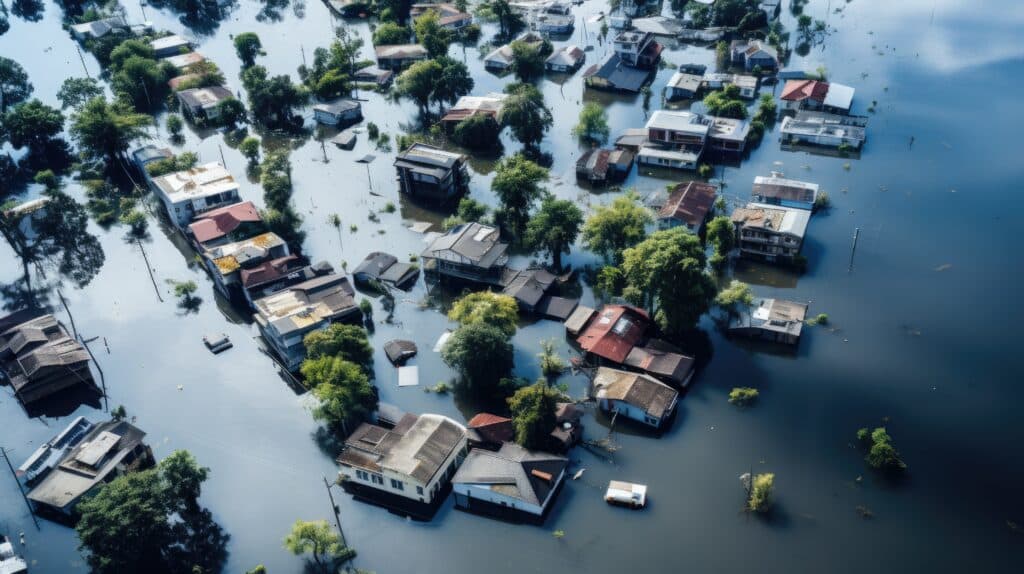
While there has been a notable increase in overall climate finance, with developed countries providing and mobilising a total of $89.6bn for developing countries in 2021, a 7.6% increase from the previous year, the focus of these funds on adaptation strategies remained limited3. Between 2016 and 2021, only 25% of climate finance mobilised for developing countries targeted adaptation, and in 2021, adaption finance even dropped by $4bn4. As the impacts of climate change accelerate and become more severe, scaling up adaptation action is fundamental to limit harm and exploit potential opportunities. The more adaptation is left aside, the more loss and damage there is, ultimately leading to a vicious cycle of climate and economic vulnerability. The adaption finance gap is growing and the increase in international public finance alone is unlikely to close it. And even though is has generally been considered less critical than mitigation, this time around, “adaptation was having its moment at the COP28” as Tara L. Gueling from the Lightsmith Group said.
Private investment in adaptation
Adaptation describes the process of adjustment to climate change’s current and future effects, to moderate harm, minimise damage or take advantage of opportunities that may arise5. Adaptation measures are varied, going from farmers diversifying their crop varieties, to developing climate resilient infrastructure. As the Mayor of Istanbul, Ekrem İmamoğlu acknowledged during the EBRD Conference “Green Cities: Scaling-up Finance for Sustainable Urbanisation” held on the 6th of December at the COP28: “prioritising adaptation projects is essential and there is an urgent need for financial support.” Traditionally seen as safeguarding societies from the adverse impacts of climate change, adaptation action was seen as government responsibility which relied on public investments.
Private finance mobilisation for public investments has previously been considered in the context of government debt in capital markets. In the past year, however, with the challenges of the COVID-19 pandemic and the war in Ukraine, developing countries’ borrowing capacity has worsened, as did their capacity for domestic public investment in adaptation. As such, adaptation finance over the years has mainly been driven by an increase in multilateral public climate finance, with loans seen as the most frequently used instrument.
However, at the COP28, the need for the involvement of additional actors was explicitly stated as the adaptation finance gap grows significantly. The last adaptation report gap indeed estimated that the costs would reach a range of $215–387bn/year for developing countries this decade6. Consequently, various speakers and conferences focused on, and advocated for greater involvement of the private sector to intensify efforts in combating and adapting to the climate crisis.
Climate mitigation investments, such as in renewable energy infrastructure, have received much more support than adaptation investments from the private sector in previous years.
Climate mitigation investments, such as in renewable energy infrastructure, have received much more support than adaptation investments from the private sector in previous years. In fact, as Suzanne Gaboury from the Asian Development Bank suggests at the OCDE event held on the 3rd of December at the COP28: “only 2% of adaptation finance came from the private sector and for them, the barriers have been very complex. When it comes down to the revenue model, adaptation is seen as an increased cost, while mitigation is perceived as an opportunity. Adaptation is very subjective compared to the mitigation side, and this can defer the potential investment. There are opportunities but appropriate right tools are lacking, and there is no standardization. Increased standardized framework approaches would be very important.”
Moreover, as Amar Bhattacharya from The Brookings Institution adds, the main challenge for adaptation is that “it focuses on small scale and very context-specific projects, which don’t work very well for investors. There is a need to better match the characteristics of adaptation projects with the expectations of investors. It is also hard because it is not very revenue generating. Most adaptation projects generate savings, rather than revenue. There is a need to make adaptation projects credible from an investors’ point of view by relying on aggregation structures and credit enhancing structures”.
Scaling up investments in adaptation
A few action areas to scale up current finance sources and unlock additional finance for adaptation were discussed at the COP28 – specifically focused on the private sector. The main ones highlighted at the COP28 were the support for developing countries in strengthening their institutional capacity, policies, and markets; as well as the strategic role that development finance, and specifically blended finance instruments must mobilise private finance for adaptation.
Although a variety of factors are needed to lower investors’ perceived investment risks, such as economic stability or the rule of law, regarding adaptation specifically, increasing the availability of climate-related data is key to efficiently allocate impactful investments in adaptation. This was highlighted by Debbie Palmer, Director of Climate Finance in the UK Government: “one of the biggest barriers to investments in emerging economies comes around the lack of data, which affects investors’ ability to accurately price the risks and estimate the return. Public markets have a key opportunity to help build confidence and correct the misconception about the risk of the market.”
Improving data can therefore help reduce the bias and increase transparency, and thus catalyse private investment in adaptation efforts. Information asymmetries and knowledge gaps represent an important barrier for private investors, which is crucial to solve7.

In addition, international development actors can play a critical role in unlocking private finance for adaptation. This is particularly the case for projects that have an expected stable revenue stream but are not yet commercially viable, and where development financiers can help overcome initial barriers. Blended finance took a central role at the COP28 and appeared as a key innovative way to enhance returns and reduce the risks faced by private investors. Blended finance is defined by the OECD as “the strategic use of development finance for the mobilisation of additional finance towards sustainable development in developing countries”.
Using development finance can strategically attract private investors by highlighting the viability of adaptation investments and enabling them to trust a new business model, or type of investee8. The Emerging Market Climate Action Fund (EMCAF) exemplifies this initiative through the partnership of Allianz Global Investors and the European investment Bank, which provides early-stage equity financing to sustainable projects in emerging markets, with a strong focus on adaptation9. As Milena Messori, Head of Division at the European Investment Bank (EIB) highlighted: “climate adaptation is financially viable, and we need to mitigate risk to attract the private sector. Here, we are using public money as a cushion for the potential first losses. Importantly, it is not only about the risk itself, but about the perception of the risk, which is much greater. We can de-risk investment by providing comfort that the initiatives are solid and that they will deliver in terms of impact and in terms of returns.”
There is a key role for international providers to mobilise private funds. As Jennifer Morgan from the Federal Office of Germany highlights, “MDBs need to scale up the use of guarantees and bring in different tools with short-term and long-term visions”. Similarly, Jamal Saghir, professor at McGill University added that “if we don’t improve concession capital, the private sector will not show up. Moreover, innovative instruments exist, such as the debt swap to nature, to foster countries to focus on adaptation measures”.
At COP28, GAIA, a climate change-focused blended finance led by MUFG and FinDev Canada, Canada’s bilateral development finance institution, was recognised as a leading innovative platform to mobilise private sector participation at scale. Lori Kerr from FinDev explains “GAIA is $1.5bn platform focused on 25 emerging markets across Africa, Asia, and Latin America. Importantly, 70% of its total portfolio investments will go towards adaptation projects in the most climate vulnerable countries in the world. We provide long-term loans from sources that were previously not available. I am excited as the role private capital can play – the money is there, and I am excited about how to unlock this capital.”
This initiative exemplifies the necessity of having more patient capital10 to adequately match the long investment horizon that adaptation projects have. Some speakers, though, clarify how they perceive the emphasis on “innovation” that describe adaption-focused initiatives. For Martin Ewald, the managing director of the Fund EMCAF: “This narrative around innovation, I am not sure if it is the right narrative to have because we need to rely on the element of trust to mobilise private capital. For me, the innovation is on the application, on how we define and focus on adaptation.”
Support for adaptation project pipelines
Across conference and conversations, Mimi Alemayehou, a leader in Development Finance, highlights the recurrent mentioning of “the lack of bankable projects”. There is indeed a significant necessity to assist emerging economies to identify and develop adaptation projects that can attract and meet the requirements of international private sector investors. Innovative organisations, such as Allied Climate Partners came to light during various conferences on Private Capital Mobilization in EMDEs and Innovative Vehicles, to showcase their initiatives: “In emerging economies, it is the first five dollars that unlocks the 95. However, this early-stage capital is the hardest to raise, and this is the investment we aim to undertake to de-lock and de-risk. We create pipelines that other investors can follow,” Ahmed Saeed, Chief Executive Officer of ACP, states. Similarly, Astrid Manroth, Head of the Global Infrastructure Facility, highlights how GIF, a global G20 collaboration platform “supports national governments and municipalities with resources and expertise to build bankable pipelines in infrastructure projects. We support projects to help them scale.”
In emerging economies, it is the first five dollars that unlocks the 95. However, this early-stage capital is the hardest to raise.
These initiatives are on the rise and are key to best attract private finance. It is important to remember, however, that “no project is obviously bankable. It a process that involves identifying the needs to transform it adequately and structure it in a way that it becomes bankable. It is not only about money, but also about expertise, about the human capital”, declares Imad N. Fakhoury, Director of the Infrastructure Finance Group at the World Bank. Ultimately, it is important to build up the capacity of countries themselves and transfer the expertise required to scale up project preparation.
Shift towards adaptation en route
In conclusion, COP28 marked a significant shift in the focus towards climate finance, particularly in the realm of adaptation measures. The conference called for increased private sector involvement and for enhanced collaboration to accelerate the mobilisation of private adaptation finance. Developing countries retained much of the focus for this topic as the impacts of climate will be felt more heavily there, coupled with substantial resources required for implementing adaptation strategies.
Traditionally overshadowed by mitigation efforts, this pivot towards private capital for adaptation highlighted the support needed from international providers and development Institutions to de-risk investment opportunities and effectively catalyse private capital. Innovative approaches like blended finance, guarantees and co-financing were presented as important solutions for private capital mobilization, as well as the development of bankable projects to attract private investment. These strategies, coupled with improved data availability, improved macroeconomic environments and adequate policies, are critical to raise investor awareness and change the perception that adaptation is difficult to support with commercial finance.
Overall, adaption can be a viable private investment target and while collective efforts have been showcased at the COP28, they still need to be strengthened further to bridge the important financing gap in developing countries11.