

What does the future of humanity look like? Will we survive the next few centuries with our descendants looking roughly as we do now, living out their three score years and ten? Or will biology and technological enhancement see us sporting stronger, faster mechanical limbs and genetic augmentation giving us everything from enhanced cognition to longer, healthier lives?
Advances in science, computing and biotech make this future, and the ethical challenges it might throw up, worth considering. But they also mean that those willing to do some extra legwork (and sometimes take significant risks) can try augmenting their own bodies at home. Let’s take a look at some of the predictions, promises, perils and personalities of biohacking, and see how they’ve panned out.
Building better babies
With an almost endless supply of headlines suggesting that scientists have found the ‘gene for’ this and that, ranging from complex diseases to character traits, it’s hard to shake the sense that our destiny is written in our DNA. So, could we rewrite that DNA and improve everything from health to intelligence?
This idea took root in the early 20th Century, when using similar breeding techniques to those that allowed us to optimise farm animals and crops to do the same to human beings was shockingly widely accepted. Eugenic policies were pushed by politicians from Winston Churchill to William Beveridge and studied by giants of statistics and genetics like Francis Galton and even Francis Crick, co-discoverer of the structure of DNA. While the horrific crimes of the Nazis trashed the field’s reputation, eugenics adapted and survived, downplaying overt ties to race and coercive birth control, and emphasising individual liberty and the importance of the welfare state to maximise humans’ potential by means other than pure heredity.
Even as the political decline of eugenics continued, however, modern science has shown us that the whole edifice was built on shaky foundations: most traits and diseases we might want to select for or against are incredibly genetically complex. Sadly, for those headlines promising a ‘gene for’ something, most traits of interest are highly ‘polygenic’, with hundreds or thousands of genes acting in concert with one-another and the environment to create a predisposition—not even a certainty! —for a given characteristic to manifest.
Screening developing babies for serious genetic problems is already common—but companies are already appearing that offer more comprehensive genetic testing.
Even eye colour, which we are taught in school has a very simple pattern of inheritance, is predicted non-deterministically by about 16 genes; height is explained by about 10,000 genetic variants spread across around 30% of our DNA, plus diet and more in youth; and intelligence is both harder to quantify and, even if we take IQ as a good proxy, is genetically less well-understood still. We may not even be able to selectively breed for eye colour with certainty—let alone intelligence.
This hasn’t stopped companies from offering services that may allow parents to choose a future child based on genetic predictions of brainpower. Screening developing babies for serious genetic problems is already common—but companies are already appearing that offer more comprehensive genetic testing. Known as ‘pre-implantation genetic diagnoses, or PGD, couples undergoing IVF can have a sample of just a few cells taken from a set of embryos developing in a test-tube, and get their DNA tested for risk of diseases like cancer and diabetes—and also intelligence.
US company Genomic Prediction offers a number of services under their ‘LifeView’ brand, up to and including a deluxe version called PGT‑P: T stands for ‘testing’, and the ‘P’ for ‘polygenic’. Polygenic risk scores are calculated using a statistical technique that searches for associations between changes in hundreds of places across our DNA and risk of specific conditions. While this is fascinating science at a population level to understand how diseases develop, it has several shortcomings for predicting the future health of unborn children. The main one is that these associations are purely statistical—the genes used to predict risk are often not causally related to the condition of interest, meaning that even if the risk of, say, cancer is lesser, you may be unintentionally selecting an embryo with a higher risk of something else that isn’t measured by the test.
The other problem is that prospective parents will almost always end up forced into some kind of trade-off: even if you take the scores at face value, perhaps the embryo predicted to be most intelligent will also have the highest cancer risk. Not only is this an impossible dilemma for mums and dads, but it illustrates the other problem with genetic screening as social policy: even if the tests provided certainty (which they don’t), we’d end up forced into deciding whether one disease or trait is worth more than another, for future generations who may not share our views—especially if we opt to lower their risk of a disease that’s cured in future at the expense of one that isn’t!
Biohacking
If we’re not comfortable choosing the DNA we start our lives with, perhaps we’d be happier with altering our genetic lot as consenting adults? CRISPR and other gene-editing technologies are making this process dramatically easier—both for scientists and doctors, who are using first-generation therapies to cure deadly genetic diseases, and for garage ‘biohackers’ looking to modify their own biology at home.
One example is biohacker Josiah Zayner, who runs a company providing DNA-editing kits—and once injected himself on camera with a supposedly muscle-boosting gene edit using CRISPR technology. That this is even a plausible concern shows us how far the technology has come, but DIY DNA alteration comes with serious risks. For a start, it may simply not have done anything: getting DNA editing machinery into enough cells to make a significant difference to the biology of an adult human is a work in progress, and most gene editing right now happens outside the human body, by extracting some cells and modifying them in controlled conditions in the lab. The biggest risk if it does work might be cancer from ‘off-target’ genetic edits. This kind of extreme biohacking is very risky, and any benefits are very hard to quantify—and, for what it’s worth, Zayner says that he regrets setting such an audacious example.
The second type of biohacking involves melding human biology with technological implants. Elon Musk co-founded Neuralink, a company making brain–computer interfaces, with the long-term goal of enabling a ‘merger of biological intelligence and machine intelligence’. He hopes that this will be the solution to aligning artificial intelligence with human interests, by giving humans a direct interface to ensure that AI advances augment rather than oppose our desires.
However, despite big claims and even FDA approval for a clinical trial, Neuralink remains vapourware. Musk has promised ‘to address brain injuries or spinal injuries and make up for whatever lost capacity somebody has with a chip’, but so far the company’s highest-profile demo in 2021 was a monkey playing computer game ‘Pong’ with its mind.
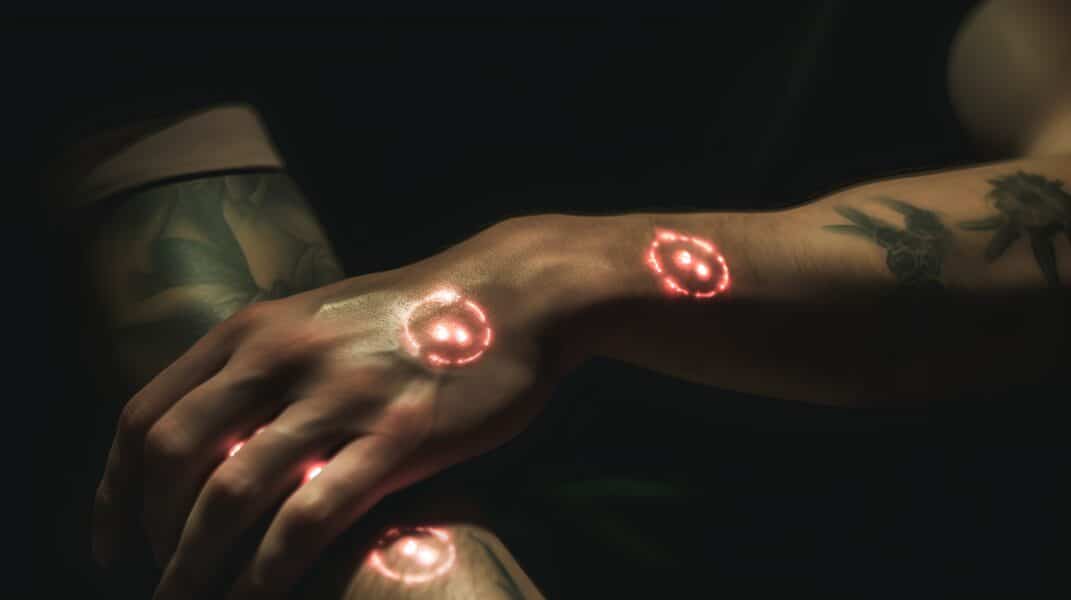
Other bionic implants seem to have garnered publicity not through being huge technical advances, but more because they seem weird and underwhelming. One company, Biohax International, has implanted ID ‘biochips’ in a few thousand customers—but use-cases range from no longer having to ever worry about losing your keys, to paying for groceries with a wave of your arm. It seems that most of us would rather leave a spare key with a neighbour or use our phone to pay than have a minor surgical procedure.
Other biohackers are trying to use more conventional medical interventions to optimise themselves. This ranges from using supplements and off-label approved drugs like rapamycin to optimise health or cognition. There are dozens of companies offering everything from supplements with dubious evidence to online pharmacies that will ship you drugs without a prescription—or any easy way to check that they are what they say they are, correctly dosed, and so on.
Whether from infections from an implant gone wrong, or problems from drug or supplement side-effects, do-it-yourself medicine definitely comes with a health warning.
A sliding scale
Most ideas for human enhancement exist on a sliding scale (or perhaps a slippery slope, depending on your outlook): as these technologies approach feasibility and widespread adoption, might they simply cease to be considered ‘biohacking’, and become regular medicine, or everyday tech?
When dismissing the practice of having an ID chip embedded in your hand as dangerous and eccentric, it’s easy to forget that human–technology interfaces are already in use every day, like microchip-enabled modern pacemakers keeping hearts beating, or cochlear implants wiring an external microphone to the brain and giving some deaf people the ability to hear. Similarly, implantable glucose monitors, are becoming available for diabetics as a more comfortable and convenient alternative than finger-prick tests or external ‘CGM’ devices.
It’s easy to imagine the lines becoming blurrier as technology advances.
It’s easy to imagine the lines becoming blurrier as technology advances. Many of us already wear smartwatches that monitor our heart rate and count our steps—could implantable versions sensitive to blood chemistry be diagnosing diseases or providing diet and exercise tips in the next decade or two? Is this biohacking, or a continuation of modern medical and technological innovation?
Similarly, the line between genetic treatments and enhancements isn’t hard and fast. Most people would agree that it’s OK to use gene therapy to correct a gene that causes a fatal genetic disease, even if the disease isn’t fatal in all cases. Is it OK to lower risk of death from heart disease by 50% in someone at genetically high risk? What about 10% in someone with no overt genetic risk factors? What about if it improves their athletic abilities a bit at the same time? Where does the line between treatment and enhancement lie, and how comfortable are we with the latter? These are important questions, and delineation will become increasingly complicated as gene-editing technology becomes safer and more powerful—maybe even safe enough that, one day, we’ll all be doing DNA modification at home.