



Greenhouse gas emissions need to be reduced by 40% as we approach 2030 to limiting global warming to less than 2 degrees. Hence, if we want to respect the 2015 Paris Agreement, we must adopt new production models and think well upstream about the environmental performance of products and industrial or commercial processes. To do this, companies are turning to the principle of “eco-design”, which consists of integrating as many environmental aspects and processes as possible into products, well before they are put on the market.
The (whole) life of products
Benjamin Cabanes, a lecturer and researcher in management science at École des Mines de Paris and École Polytechnique (IP Paris), defines eco-design as “a preventive approach”. It consists of integrating environmental aspects not only in the design phase, but also throughout the life cycle of a product. This is true from the extraction of its raw materials, through its production and distribution, to its use, recycling and end of life.
“This approach is based on several methodologies,” explains Benjamin Cabanes, “including Life Cycle Assessment (LCA), which is divided into four stages: objectives of the LCA; inventory of incoming and outgoing material and energy flows; identification of potential impacts; and finally, analysis and interpretation of the results to propose solutions for product design.”
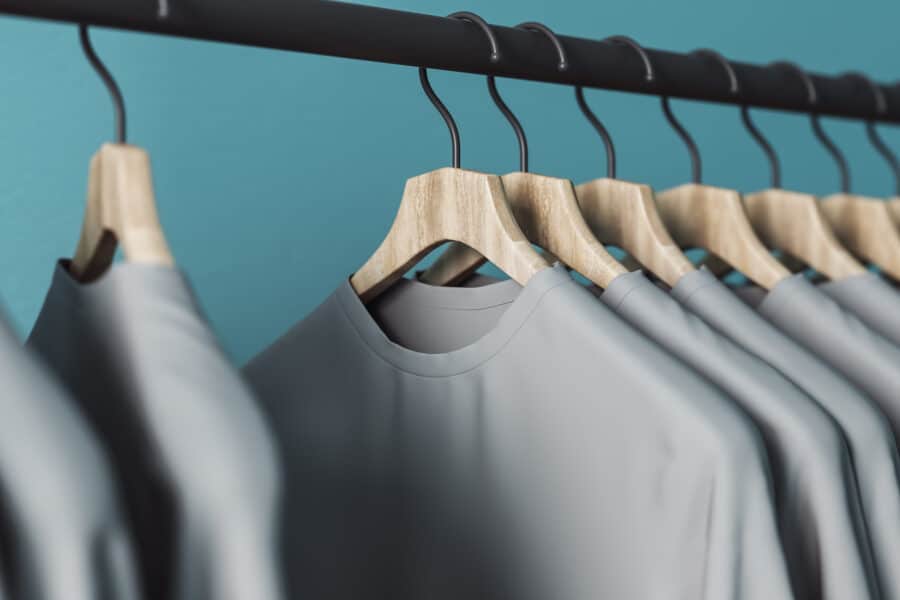
If you want to make a T‑shirt, for example, you must consider the raw materials used: like how cotton is produced, as it often requires a lot of water, pesticides, and fertilisers, which have very significant environmental impacts. Then, the garment will, of course, need to be produced and often distributed to the other side of the planet: all steps that consume a lot of energy. Finally, we must consider how the T‑shirt will actually be used. It will need to be washed more or less often depending on the material or colour and these successive washings will have an impact on the environment, as they require water and energy used in the washing machine.
Important issues for the company
In order to remain competitive, it is in the interest of companies to anticipate regulations that will be increasingly restrictive, such as those induced in France by the “Anti-waste for a circular economy” (AGEC) law. However, this LCA approach is far from being widespread, as the tension between environmental and economic performance remains too great.
“It is not enough to produce organic T‑shirts to be an eco-responsible company,” says Benjamin Cabanes. “If, as a company, you release ten new collections a year and have several sale periods to sell off old stock, you are encouraging consumption without meeting real needs.”
It takes more than a line of organically-produced T‑shirts to be an eco-responsible company.
To avoid greenwashing, it is therefore essential to consider the entire production process, and to generalise the LCA approach throughout the company, applying it to all products not just a few. But how can companies be convinced? Benjamin Cabanes is banking on the training of young people in these methods and issues and counts on the motivation of young engineers who are already choosing to go into a particular sector of activity or company that are more aligned with their own environmental commitments.
The building sector, a leading example
In the building and public works (BTP) sector, the eco-design approach, framed by increasingly rigorous regulations, is already having a significant impact. For example, the use of new types of materials and new construction processes makes it possible to reduce energy loss in existing buildings and to renovate old buildings with a view to reducing their carbon footprint. The construction industry has much potential for recycling its own waste, but also for using current waste. This is how the founders of the family-run start-up Néolithe came up with the idea of fossilising common waste to transform it into mineral aggregates that can be reused in construction and public works.
Today, most of the non-recyclable waste produced by individuals (household waste) or by companies (ordinary industrial waste) is buried in huge landfills or incinerated, which in both cases leads to significant pollution. In the first case, there is serious soil pollution and methane emissions during the decomposition of the waste; in the second case, the material disappears in smoke, but the energy produced by the incinerator to burn it is highly carbonated.
“The waste fossilisation process was invented by my father William Cruaud, a stone mason,” explains Nicolas Cruaud, president of Néolithe. “For 40 years he has been working on the white limestone of the Loire castles. What is known as ‘tuffeau’ is nothing more than the remains of Cretaceous waste, which has been fossilised and sedimented. His idea was to replicate this natural process by accelerating it, through a mechanical and chemical transformation without heating that mineralises the material and does not emit CO2.”
The son, a polytechnician, implemented his father’s idea, and they created this industrial start-up in Angers in 2019, in association with engineer Clément Bénassy.
Fossilising waste
The principle is to grind the waste into a very fine flour (between 0 and 500 microns) and then to react this flour with mineral binders, which are the industrial secret of Neolithe. This reaction produces a mineral paste that is shaped under pressure in a “fossiliser” to produce small aggregates. “We call this aggregate ‘Anthropocite’ in reference to the Anthropocene era, the geological period when humans began to have a real influence on the Earth.”
This mineral aggregate can be used in certain types of concrete and is in the process of being approved for use in road sub-base materials. “If we fossilised the 30 million tonnes of French waste per year, we would obtain 40 million tonnes of aggregates and reduce the French carbon footprint by a factor of ten,” says Nicolas Cruaud. Because this process also has the advantage of being ‘carbon negative’, since it allows for carbon sequestration.
The company plans to deploy 250 fossilisers throughout the country by 2027, each of these machines being able to process 10,000 tonnes of waste per year and produce 12,000 tonnes of aggregates. The company will then generate revenue both from the quantities of aggregate sold and from its waste treatment services, as the accelerated fossilisation process is financially and environmentally competitive with landfill or incineration.
Many countries, especially those with strong regulatory constraints on landfill and incineration, are beginning to show interest in this new process.