
Homo Economicus on trial: what neuroeconomics reveals about rational choice



- Behavioural and experimental economics now offer a more nuanced view of the homo economicus paradigm.
- Researchers are studying the influence of social preferences, incentives and moral norms on individuals’ choices.
- These studies use individual decision-making games to calculate, for example, loss aversion, risk aversion or present bias.
- Physiological data (skin conductance, heart rate) are tools for identifying motivations for cooperation, reciprocity or group membership.
- However, certain beliefs need to be qualified, including those suggesting that brain imaging could explain our economic choices with certainty.
Economic theory has long described agents capable of optimising their choices based on complete information and coherent calculation. Empirical observations, both in the laboratory and in the real economy, have gradually qualified this view. For example, the dramatic fluctuations observed in GameStop shares in 2021 highlighted dynamics of herd behaviour and collective overconfidence that are difficult to reconcile with the hypothesis of informational efficiency1.
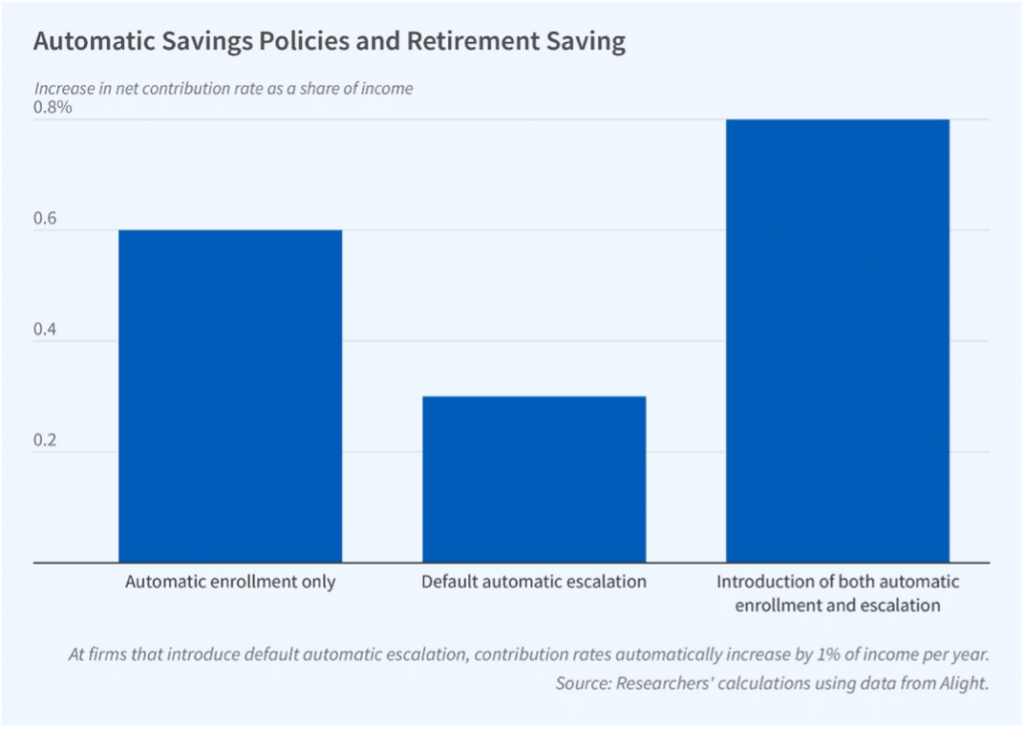
Also of note, the automatic enrolment of employees in pension schemes, which is particularly widespread in the United States following the Pension Protection Act of 2006, is based on research demonstrating the decisive influence of default options on saving behaviour2. Public authorities also use messages based on social norms or framing to encourage vaccination or reduce energy consumption3.
These developments are further explored in the work of Marie-Claire Villeval, a CNRS research director in the GATE Lyon Saint-Étienne, where she has played a central role in the development of experimental economics in France. Internationally recognised for her research in behavioural economics, she studies the influence of social preferences, incentives and moral norms on individual choices. Her publications appear in the discipline’s leading journals, including key generalist journals. By founding and leading the GATE-Lab, an experimental platform combining behavioural and physiological measurements, she has helped develop tools designed to better identify the cognitive processes involved in economic decision-making.
The study of cognitive biases is no longer limited to a theoretical challenge to rationality. It addresses concrete choices regarding saving, regulation, organisational governance and public policy, and raises questions about how to manage behaviours influenced by mechanisms that are sometimes implicit.
Bounded rationality: what does it mean?
The concept of bounded rationality, formulated by Herbert Simon, refers to the idea that individuals make decisions with imperfect cognitive abilities and information. Rather than strictly optimising, they adopt simplifying rules and heuristics adapted to their environment. This framework paved the way for behavioural economics, which documents systematic deviations from the predictions of the perfectly rational agent model 4.
#1 Research in neuroeconomics has shown that humans are fundamentally irrational in their economic decisions
FALSE
The design of an experimental protocol begins with a theoretical model. First, a standard framework of rational and self-interested individuals is employed, followed by a behavioural model incorporating cognitive biases and social preferences. This theoretical framework enables the formulation of hypotheses, the definition of relevant variables and, through appropriate experimental treatments, the isolation of certain mechanisms. To measure biases such as loss aversion, present bias or risk aversion, individual decision-making games are favoured. These biases are generally insensitive to the intentions or gains of others. Conversely, the study of social preferences requires interactions between players to identify altruism, aversion to inequality or sensitivity to norms.
The methodological challenge lies in manipulating these dimensions orthogonally to identify their respective contributions. Loss aversion refers to sensitivity to one’s own losses, whilst social preferences capture sensitivity to others’ gains and losses. It is, however, possible that cognitive biases and social preferences are correlated. Loss aversion may reinforce concerns about fairness, and moral preferences may define the reference point from which a situation is perceived as a loss or a gain. A controlled protocol standardises the decision-making situation to limit competing factors. When several dimensions are likely to interact, additional data is collected at the end of the session, such as on attitudes towards risk, patience or moral preferences, which may influence the observed behaviours.
#2 Physiological and brain measurements enable us to accurately identify the mechanisms underlying economic decisions
UNCLEAR
Combining behavioural measurements with physiological or brain data helps to shed light on the mechanisms underlying choices. Eye-tracking provides information on the allocation of attention and helps identify information avoidance or the salience effect. In a sharing game, observing whether an individual systematically ignores others’ gains helps identify selfish motivation. It can also reveal the avoidance of morally binding information.
Electrophysiological measures, such as skin conductance or heart rate, shed light on the role of emotions, their intensity and their valence. They help distinguish between different motivations for cooperation, such as the pursuit of efficiency, reciprocity, group membership or shame associated with an insufficient contribution. Neural data from EEG or fMRI can identify the activation of areas involved in reward, disgust or value calculation, notably the striatum. They can link behavioural variables to biological traces and detect unconscious processes, such as risk anticipation or prediction errors in learning.
These approaches do, however, have limitations. They are costly, often restrict the observation of multiple interactions and complicate the collection of large samples, whereas much research focuses on small effects requiring high statistical power. They generally do not allow for causal identification, unlike behavioural protocols.
#3 Financial mechanisms designed to influence behaviour can have mixed effects on cognitive biases and the quality of economic decisions
TRUE
Monetary incentives play a central role in experimental economics, as they allow values to be induced in a controlled manner. Their effect on biases is, however, mixed. They can reduce certain biases by increasing attention and engagement, particularly inattention and anchoring biases. High financial stakes tend to increase caution and thus risk aversion. Conversely, present bias, loss aversion or truth preference show little response to changes in incentives, suggesting that they stem from structural characteristics of preferences or heuristics that are difficult to neutralise.
Incentives can also produce effects contrary to their objective by reducing intrinsic motivation, particularly in the moral or social sphere. A tax incentive for purchasing an electric car may blur the prosocial significance of the choice and discourage those whose motivation is intrinsic. Similarly, a fine for being late to the nursery may transform a relational norm into a commercial transaction and increase lateness.
At very high levels, incentives can reinforce overconfidence, the illusion of control and excessive competitiveness, or impair performance due to the stress of high stakes. These contrasting effects call for caution in the design of public or private incentive mechanisms.
The unexpected effects of financial incentives
Research increasingly suggests that simply increasing monetary rewards does not uniformly alter behaviour. According to a 2024 systematic review, incentive mechanisms inspired by behavioural economics (which take into account the structure of choice, the presentation of options or the social context) can improve the effectiveness of programmes, including in areas such as diet and physical activity. This suggests that incentives designed with cognitive biases in mind may be more effective than traditional financial incentives alone5.
#4 Imposing a penalty on another person while incurring a personal cost oneself is necessarily irrational
FALSE
From the standard perspective, punishing others at personal cost is irrational. However, experiments show that individuals are willing to punish those who deviate from group norms, even symbolically. This behaviour reflects social preferences, particularly an aversion to inequality and injustice, rather than a cognitive bias. Loss aversion may, however, explain a stronger reaction to punishment than to a reward.
The perception of sanctions depends on procedural justice and transparency. A mechanism adopted by vote is more widely accepted and may even reduce the need to apply sanctions by making the norms explicit. Conversely, sanctions perceived as arbitrary can trigger revenge and spirals of counter-punishment, especially in unequal contexts. “Antisocial” sanctions directed against cooperators also exist and undermine cooperation; they appear to be more common in certain cultures, particularly in former communist bloc countries.
Finally, informal sanctions aim to uphold group norms. When norms that have become obsolete persist due to “pluralistic ignorance,” preferences for change remain unexpressed, generating frustration and withdrawal. An explicit collective expression of preferences, for example through a referendum, can create a shared understanding of the desire for change and revive cooperation.
Loss Aversion in Numbers
Experimental studies show that a loss is psychologically felt about twice as intensely as an equivalent gain. This phenomenon was formalized in prospect theory by Daniel Kahneman and Amos Tversky6.
#5 Brain imaging techniques now allow us to explain with certainty why we make certain economic choices
UNCLEAR
External validity requires the replication of experiments in varied contexts, with different populations, stakes, and cultures, following a meta-scientific approach. Even in the absence of a perfect correlation between the laboratory and everyday life, many biases observed in controlled environments are found in real-world situations. Loss aversion and overconfidence appear in investment decisions; the overemphasis on small probabilities explains lottery play or overinsurance; the preference for the present manifests itself in procrastination regarding work, studies, or health.
In everyday life, individuals have more time to learn or avoid certain situations, provided they are aware of their biases. This raises a normative question: to what extent can public authorities intervene to correct limited and contextual rationality? Nudges can be perceived as benevolent assistance or as an intrusion. Their acceptability varies across cultures and preferences regarding the legitimacy of public action.
The Integration of Behavioural Approaches into Current Public Policy
The insights of behavioural economics are now being used by many national governments and international organisations to design or adjust their public policies. Among the tools used is the “nudge”, which involves modifying the architecture of choice to guide decisions without prohibiting any options or substantially altering financial incentives, whether through a default choice, a personalised reminder, or a message promoting a social norm.
These mechanisms are often presented as complementary to traditional regulatory or fiscal instruments. They attract particular interest in a context of budgetary constraints, as they require few public resources while potentially improving tax collection, increasing savings participation, or promoting more energy-efficient behaviours. Their adoption is thus based on a dual argument of behavioural effectiveness and fiscal efficiency, while raising questions regarding the transparency and acceptability of these forms of intervention.