Invasive species: solutions to the economic burden




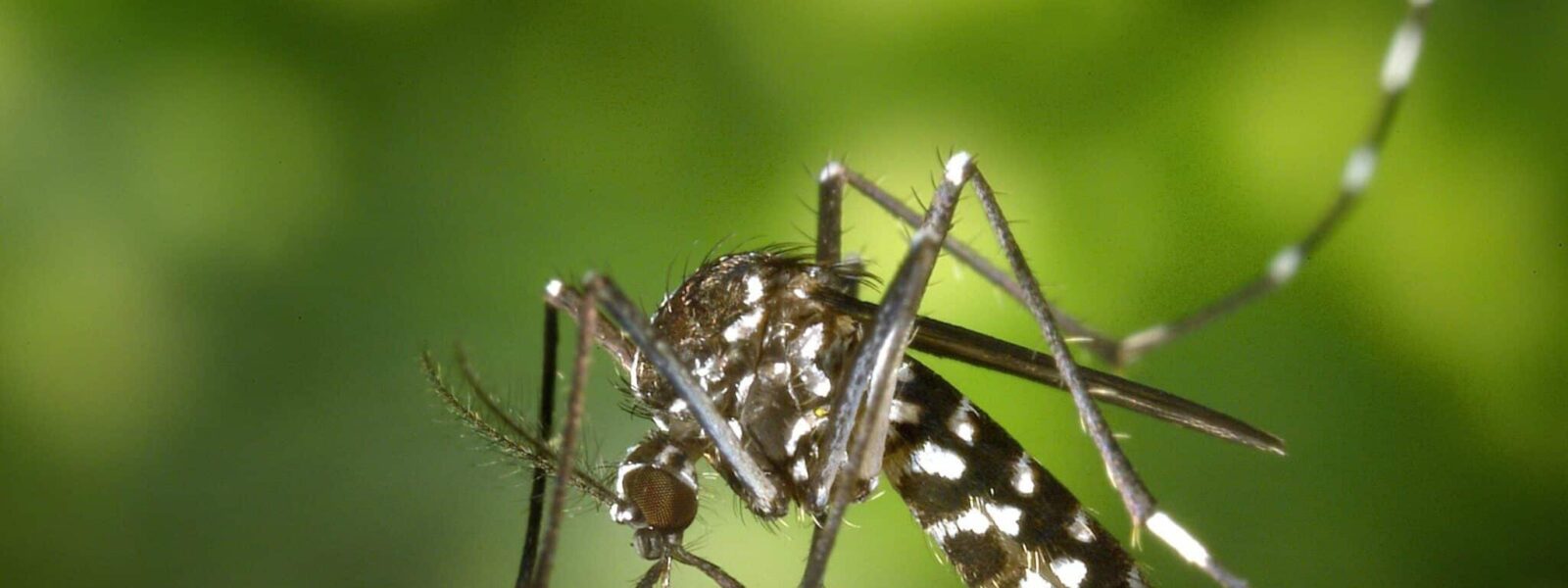
To date, there are 544 species listed as invasive in France. Among them, the Asian hornet decimates domestic bees, the tiger mosquito spreads dengue fever and chikungunya, the primrose willow causes the disappearance of aquatic plants that are close to it… This phenomenon is called ‘biological invasion’ and these species have certain characteristics in common. First, they have been displaced by humans, often as unexpected passengers in the transport of goods and people. Once introduced, they have survived in their new environment, spread, and had various impacts, such as elimination of local species, spread of diseases, alteration of ecosystems or devastation of crops.
Invasive species are not only a threat to biodiversity, but also a major economic burden. We have recently demonstrated this by summarising all existing global economic costs due to invasions since 1970, which total $1,288bn1. This is only a tiny fraction of the actual costs, as it is only what has been estimated and published. As such, the majority of the costs have not as yet been assessed. This figure has been growing steadily, tripling every ten years until it reached an estimated $163 billion in 2017 alone. A new study just published in France specifically shows that invasions cost between 1.1 and 10.2 billion euros between 1993 and 20182.
These costs are associated with many socio-economic sectors (agriculture, health, tourism, real estate…), and thus affect a variety of private and public actors. The burden of biological invasions therefore appears to be systemic and requires a strong and concerted policy rather than one-off efforts. Below, we present three ways of tackling this burden.
1. Concerted research as a first line of defence
The economic costs generated by invasive species can be divided into damage costs (loss of agricultural yields, tourism revenues, etc.) and management costs (control or eradication of invasive populations, etc.). All studies show that investment in preventive measures is the most cost-effective and efficient strategy against biological invasions. For example, early detection and rapid eradication of new invasions is much less costly and has a much higher success rate than late action, which often amounts to damage control.
It is therefore essential to strengthen early detection and monitoring programmes for alien species, so that an effective response can be initiated at the first sign of negative impacts. The variety of these impacts coupled with the complexity of implementing research recommendations requires interdisciplinary and intersectoral approaches – still too rare – involving ecologists, economists, analysts, sociologists and stakeholders (e.g. biodiversity managers).
2. Prevention at the individual level through education
To raise awareness of biological invasions among the general public and private and public stakeholders. It is crucial to raise awareness of public and private stakeholders who are responsible for the translocation of living organisms on an international/regional scale (e.g. activities linked to trade or livestock farming) and/or who are victims of their effects (e.g. farmers). It is also essential to raise awareness among the general public through various media and educational channels (e.g. in school curricula). Empowering consumers by providing information on the origin and risks of the organisms they buy, for example in the ornamental trade [i.e. trade in exotic animals or plants], would be an excellent way to reduce the risks of uncontrolled introductions into the wild.
In this context, building bridges between science and society is therefore the key element. These bridges include (i) the formalisation of intersectoral networks dedicated to research and management of biological invasions, (ii) the organisation of discussion workshops and specific and continuous training, and (iii) the development of participatory science programmes, which represent a major asset due to their triple educational, scientific and management role. For example, there is now an application developed by Europe (Invasive Alien Species Europe3) that allows any citizen to send photos of new presumed species with a view to deploying rapid responses in terms of management. Despite its interest, this application is not widely publicised.
There is also great potential in participatory science tools based on artificial intelligence to identify species, such as the Pl@ntNet application, which is a great tool for the early detection of invasions4, but is largely under-exploited at present. We therefore emphasise the need for decision-makers to be involved to achieve concerted and efficient management of these biological invasions.
3. A legislative response proportional to the magnitude of the economic burden
Despite the increase in national and international laws to combat biological invasions, the magnitude of their damage continues to accelerate, which suggests that these laws remain insufficient. There is a need to strengthen species blacklists by rapidly updating them once impacts are proven, and to consider a shift in the legal paradigm towards whitelists, i.e. the deliberate introduction of new alien species must be authorised in advance on the basis of an invasion risk assessment. Those responsible for deliberate introductions should be held criminally liable as a deterrent.
Biosecurity, which consists of the interception of alien species prior to their introduction, is the most effective and cost-efficient tool to combat the impacts of biological invasions. For example, some countries severely affected by biological invasions, such as New Zealand and Australia, have put in place highly effective biosecurity protocols for both tourism and international trade. These measures require substantial staffing, particularly for the implementation of surveillance, quarantine and disinfection protocols; but they offer insurance and a very significant net benefit compared to the excessively high costs of damage and management of invasions.
In France, this legal framework and biosecurity measures still appear to be lacking, as suggested by the recent history of invasions in France such as the Asian hornet5, the tiger mosquito6, the mugwort7, garden flatworms8, or the Xylella fastidiosa bacterium9. As island systems are even more fragile to invasions than continental ones, reinforced biosecurity measures should be implemented, particularly in the French overseas territories, including travel between overseas territories.
Conclusion
Biological invasions cause enormous economic losses for society. This loss of earnings that we have estimated is only the hidden face of an iceberg whose total amount is currently unquantifiable, given the diversity and scale of the impacts of invasions – and we are only talking about the monetary cost here, ignoring the irreparable ecological and health costs. Nevertheless, we do have the keys to fight this burden since the problem does not lie with the displaced species, but rather with our activities that cause these displacements, over which we do have control.
Contributors
Christophe Diagne
Christophe Diagne’s research concerns the relationship between biodiversity and global change. He began his research on the contemporary evolutionary ecology of host-parasite interactions in small mammal communities in changing socio-ecosystems. In his current work, Christophe Diagne is interested in the ecological, health and socio-economic implications of biological invasions at various scales. He is also developing an integrative approach integrating interdisciplinary knowledge (ecology, social sciences, computer modelling).
Boris Leroy
Boris Leroy’s research focuses on the geographical distribution of biodiversity and on the factors that explain this distribution: climate, environment, history. He is interested in the alteration of the natural geographical distribution of biodiversity by global changes (climate change, invasive alien species, habitat destruction). His research also focuses on the methods used in ecology, biogeography and macroecology, and he makes his work available through the development and publication of free software.