The effect of clear-cutting forests on the environment





- Clear cutting is the felling of an entire forest, usually before replanting.
- This method of forestry helps to optimise the harvest in technical, logistical and economic terms.
- Many members of the public are critical of the long-term environmental impact of this practice, particularly on the water cycle and soil quality.
- As well as affecting ecosystems, the repercussions are also felt by neighbouring communities, with flooding, the threat of fire, and a decline in flora and fauna.
- Although scientists have issued recommendations, there are no regulations in force, so professionals need to be trained in good practice.
Regularly condemned by citizens’ groups in the Morvan and Landes regions, do clear-cutting operations threaten forest ecosystems? At the end of 2022, 70 experts presented the results of a collective study1 answering this question.
Clear-cuts are hard to miss: this type of silviculture consists in felling an entire forest zone at once, then replanting it. In 2010, clear-cuts accounted for 0.4% of forest area in mainland France, mainly maritime pines, chestnuts, spruces and poplars. But there are regional disparities: the figure rises to 2.1% for the Landes massif, for example. “This equates to a period of less than 50 years between two clear-cuts,” explains Jérôme Ogée. “This is equivalent to the rotation recommended for maritime pine, and therefore means that clear-cutting is the most common practice across the whole region.”
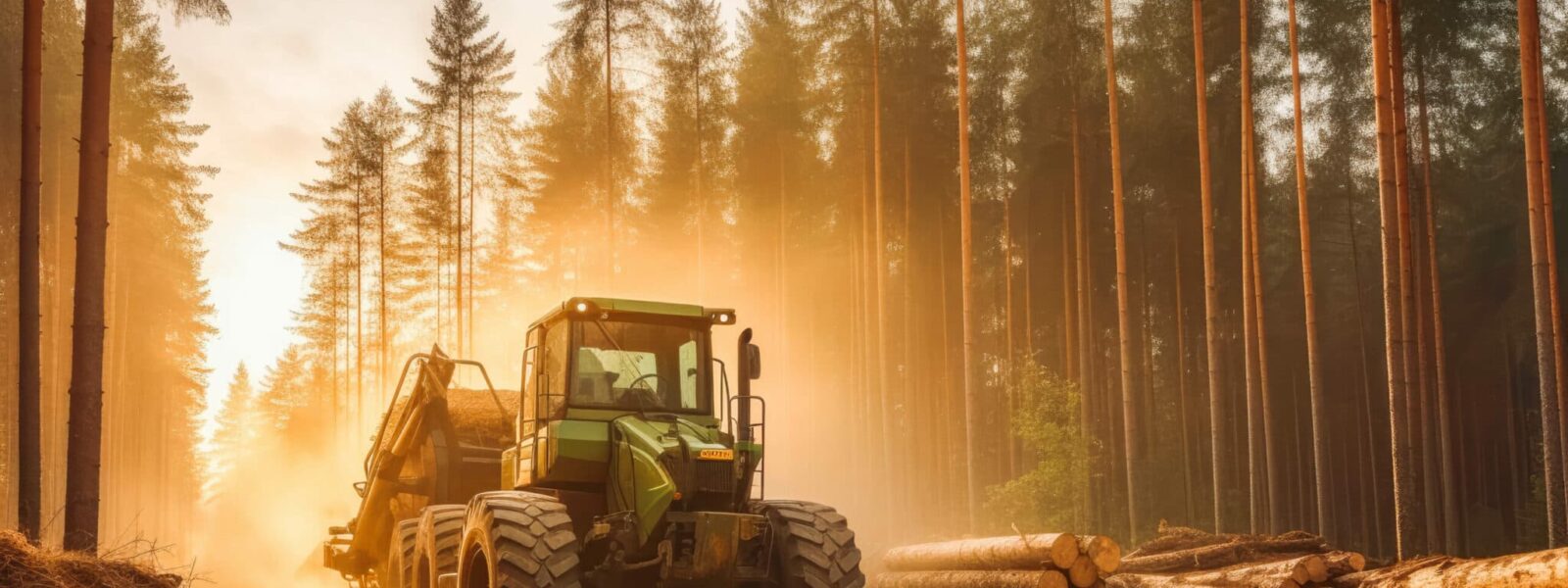
While some members of the public condemn the negative impact of clear-cutting on biodiversity and landscapes, foresters argue that it “optimises harvesting from a technical, logistical and economic point of view.” However, as Laurent Bergès points out, “clear-cutting is synonymous with increased mechanisation in forestry.” Logging and felling machines, forwarders and skidders are used to harvest the wood, followed by stump removal and scarification equipment, and planters for regeneration. “For reasons of economic profitability and the labor intensive nature of the work, we are currently experiencing a revolution similar to the agricultural revolution of the 1950s, with increased mechanisation in forestry,” notes Laurent Bergès. “And even if clear-cutting is still not widely practised today on a regional scale, its effects are not negligible.”
A practice with many spin-offs
First and foremost, it affects the environment itself. The water cycle is altered. Water content in the soil rises from 18% to 66%: as there are no longer any trees drawing water from the soil or preventing rainfall from reaching it! The ground is heavily compacted by the passage of increasingly heavy machinery – particularly on clay soils. As a result, the soil’s infiltration capacity is reduced, water runs off and the stream flow out of watersheds increases by 30 to 100%. Large quantities of sediment (up by 700%) are washed into watercourses, along with nitrates and soil cations (calcium, potassium, aluminium), sometimes degrading water quality. The soils themselves become less fertile, less rich in carbon, less aerated… Most of the effects can be observed for several years after the cut, or are almost irreversible, as in the case of erosion. “Clear-cutting also affects the surrounding plots: for example, trees at the edge of the forest become highly vulnerable to storms,” explains Jérôme Ogée. “As for the impact on the microclimate, it can be measured up to several hundred meters away.”
Local populations are also affected. “During heavy rains, the forest acts as a buffer zone, allowing for the infiltration of the rainwater,” explains Jérôme Ogée. “Clear-cutting increases the occurrence of peak flooding.” The scientific community has recently been studying another lesser-known effect. The banks of watercourses are populated by special trees known as riparian vegetation. “It appears that riparian forests, whose deciduous species are less flammable than coniferous species, act as natural firebreaks during fires,” points out Jérôme Ogée. “These results have yet to be confirmed by research.” When riparian forests are razed, the natural wildfire barrier is lost, posing a direct threat to the surrounding infrastructure and population.
Finally, the forest ecosystem is also disrupted. In the first two decades following a clear-cut or progressive cut, the total number of species increases by more than 10% compared with a control plot. It then decreases after 20 years. “These plots act as substitute habitats for open, agricultural species, often birds and butterflies, when they are threatened in the surrounding area by intensive agriculture, for example,” explains Laurent Bergès. This sunnier environment is also home to a new flora… but this is not a positive development. “This masks a decline in the presence of species specific to forest areas,” warns Marion Gosselin. “These forest species thrive in old trees: if they’re all cut down, they’ll eventually disappear, as they have no alternative habitat. This completely disrupts the ecosystem.”
In their summary, the experts also point to the negative short-term effects (less than eight years after felling) of clear-cutting on birds and mosses, and a non-significant effect on vascular plants, lichens, fungi, arachnids and insects. “Soil compaction and mechanised preparation before planting significantly alter biodiversity: trees grow more slowly, floral communities are altered, microbial biomass decreases and fungal communities are changed”, adds Laurent Bergès. Finally, the introduction of non-native species – at the time of planting or in the tyres of machinery, for example – can endanger native species.
Behind these global observations lie geographical disparities. Erosion is amplified on sloping ground, and compaction is greater on clay soils. But in particular, clear-cutting close to a watercourse has even greater negative effects. “It changes the microclimate, including that of the watercourse, and contributes to releasing a huge amount of nitrates into the watercourse in the following months”, explains Jérôme Ogée. The group of experts recommends that clear-cutting should be strictly avoided within 30 metres of watercourses.
Climate change is already likely to lead to more forest dieback due to drought
Other recommendations include adopting specific harvesting methods that reduce the negative impact of clear-cutting. Recommended practices include not stump stripping, leaving the remains of branches on the ground, carrying out very localised tillage around the plants, keeping to roadways to limit soil compaction, maintaining at least 10–15% of habitat trees to provide shelter for specialist forest species and replanting with a variety of native species. Marion Gosselin adds: “Generally speaking, it is also beneficial to maintain integral reserves and to regenerate forests by progressive cutting or by small gaps rather than by clear-cutting.” However, putting this into practice comes up against operational and economic obstacles. “We need to strike a balance between these recommendations and their implementation: it’s much more complicated to carry out tillage at a specific area rather than on an entire plot,” explains Laurent Bergès. Jérôme Ogée adds: “These recommendations are not regulated, and we now need to train professionals in the sector in these practices.”
Compliance with these recommendations is all the more important in the context of a changing climate. “Climate change is already likely to lead to more forest dieback due to drought,” says Laurent Bergès. “Recent assessments have shown that the CO₂ storage capacity of forest ecosystems has been halved in ten years.” Jérôme Ogée adds, “Studies in France have shown that heatwaves and drought cause plantation failures following clear-cutting.” On such bare ground, daily temperature ranges are higher, radiative transfer increases and the soil dries out at the surface. Conversely, the presence of tree cover tempers climatic extremes, limiting their harmful effects on the survival of young trees. “Climate change calls into question silviculture practices, which are no longer appropriate today,” concludes Laurent Bergès. We need to think about new silvicultural methods, taking into account the context of the individual plots.”