What impact does climate change have on the seasons?



- Over the last thirty years, the vegetation growth period has lengthened by around a month.
- Certain regions of the planet and certain types of vegetation are more affected, such as the northern hemisphere and grasslands.
- Changes in the seasonal rhythm affect our entire ecosystem: plants are more vulnerable to drought and disease, and this threatens biodiversity.
- Some tree species have already migrated to higher latitudes in search of more suitable climatic conditions.
- The future of the seasons is still difficult to determine, since it depends largely on the actions taken and the evolution of the climate.
It’s a fact: climate change is increasing temperatures, drought frequency and extreme weather events. But what effect is it having on the seasons?
Observing the seasons and how they change is crucial. Winter, spring, summer, and autumn illustrate the rhythm of vegetation: budding, the appearance of the first leaves, followed by flowering and then leaf fall. They control everything and work in symbiosis with all the elements of our ecosystem.
For the last thirteen years, Jadu Dash has been studying the evolution of vegetation over time around the world, using satellite observations. The professor of remote sensing in geography and environmental sciences at the University of Southampton has access to some fifty years’ worth of satellite data, enabling him to determine variations in vegetation growth over time. “We use a technique that involves examining the degree of greenness of the vegetation in a specific area, in order to identify the start and end of the growing season,” explains the researcher.
Spring ahead, autumn behind
According to his studies, global warming has changed duration of the seasons. Spring arrives a fortnight earlier on average, and autumn two weeks later. In other words, the vegetation growing season has been lengthened by an average of one month over the last five decades. These effects are not the same everywhere on the planet. “In the northern hemisphere, i.e. Europe and North America, we are seeing a much more pronounced change in seasonality,” says Jadu Dash.
This change in seasons is mainly due to rising temperatures. In France, for example, 2022 was 2.7°C warmer than 1961–1990. In spring, high temperatures send a signal to plants that triggers buds to open and leaves to unfurl. Then, in autumn, the drop in temperature brings vegetation to a halt. So, according to the researcher’s work, rising temperatures have a major impact on the growing season for plants.
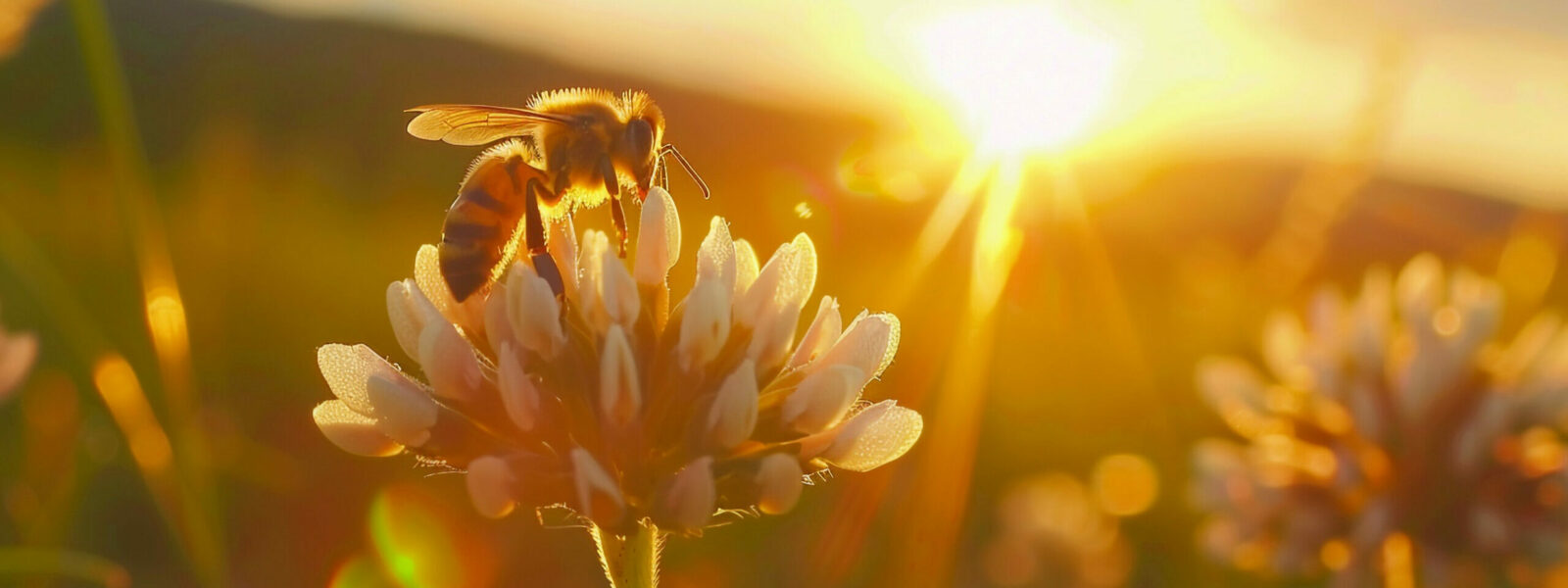
The lengthening of the plant growing season has multiple consequences for our ecosystem. “Vegetation stays longer, so it is more exposed to spring frosts, parasites and diseases, but also to droughts during the summer”, explains Jadu Dash. His observations have also shown that there are discrepancies between certain biological events. Pollinating insects, for example, depend on flowering. When these occur earlier, by the time these animals arrive, there may no longer be enough flowers for them to move around and transport the pollen. In the same way, migratory birds depend on vegetation and know where to feed. “If they expect to find a certain type of vegetation in a given place, but it’s not there because it’s finished or late, this could have an impact on their ability to survive,” adds the professor.
More vulnerable plants
The impact of this change in seasonality varies according to geographical area, but also according to the type of vegetation. The professor of remote sensing has noted that the large forests of Russia are more responsive to changes in temperature than the coniferous forests of Europe. Furthermore, grasslands, made up of shallow-rooted grasses, are very sensitive to changes. “Spring comes earlier, they turn green, lose a lot of water and are therefore more sensitive to drought during the summer than forest trees, which are more deeply rooted”, explains Jadu Dash.
In its inventory published in October 2023, the Institut national de l’information géographique forestière noted a major increase in tree mortality, of around 80% between 2013 and 2021. Is this the result of the changing seasons? For the researcher, it could be a combination of factors. “Droughts have become more frequent. If they occur towards the peak of the growing season, severe water stress can lead to tree mortality. We are also seeing new diseases affecting forests, potentially linked to changes in seasonality, all of which makes them more vulnerable.”
Should we expect the seasons to continue to evolve in the future to become completely different from those we know today? “It’s not entirely clear. Climate forecasts for the future are very uncertain,” replies Jadu Dash, “but if we pass a tipping point, we could still see the vegetation period lengthen. In the long-term, the entire plant composition around us is likely to change.” The scientist is already observing tree species migrating to higher latitudes that suit them better. In the United Kingdom, winegrowing is expanding considerably, whereas before it was non-existent. “Farming practices are bound to change over time, due to the changing suitability of the land for different crops,” anticipates Jadu Dash. For the rest, the future evolution of the seasons depends largely on our actions to reduce our impact on the environment.
Sirine Azouaoui
Références : https://www.ign.fr/files/default/2023–10/memento_ign_2023_2.pdf