Should there be limits to academic freedom?


- Scientists must constantly assess the risk-benefit balance of research topics in light of societal values.
- Geoengineering encompasses techniques aimed at artificially modifying the climate to reduce global temperatures, at the risk of disrupting local water cycles.
- Some research projects stem from industrial strategies, such as tobacco companies that funded ‘distraction’ research into other risk factors for lung cancer.
- The lack of public funding alone does not explain researchers’ interest in industrial projects, as governments continue to provide substantial support for basic and climate research.
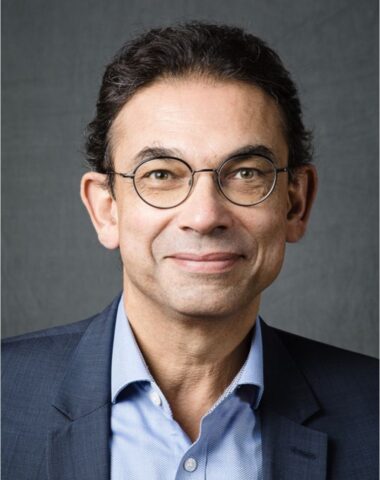
Does the production of scientific knowledge justify all freedoms? Should research have limits? As a member of the CNRS Ethics Committee, Éric Guilyardi was the reporter for one of the committee’s most recent opinions1 addressing the question: “Manipulating viruses, manipulating the climate? How can we judge responsible research?”
The progress of knowledge is vital for society, but does it justify total academic freedom?
Éric Guilyardi. Of course not. On the one hand, scientists need financial resources to carry out scientific research. It must therefore serve the interests of the public and private stakeholders who fund it. On the other hand, there is some confusion surrounding the concept of ‘academic freedom’. Scientific research is carried out by human beings, within a social context shaped by society’s values. Academic research cannot therefore be conducted outside these values, and it is important to consider the associated moral boundaries, even if these are evolving. Scientists must therefore constantly assess the risk-benefit balance of research topics in light of societal values.
How is it possible to decide on the ethics of a research topic when values differ from one country to another, and from one era to another? Especially since the risks posed by the manipulation of viruses or the climate transcend geographical borders.
Indeed, ethical questions do stem from a conflict of values that, by definition, is not easy to resolve. Part of this discussion falls within the realm of geopolitics, and an international debate is necessary. Take the case of geoengineering: these techniques for artificially modifying the climate could potentially reduce the Earth’s average temperature but would likely lead to other local effects such as changes to the hydrological cycle. It is possible to imagine a scenario in which a state, for example the United States, deploys geoengineering techniques to cool its territory. But this could cause drought elsewhere, for example in China or India, with easily imaginable geopolitical tensions. Current understanding of the climate system – which includes significant uncertainties regarding changes to the water cycle – is insufficient to justify taking such risks.
As there is no international governance framework adopted by all states, the legal route seems risky to me. The issues surrounding these matters must be incorporated into international negotiations. One might, for example, call for the introduction of a moratorium on geoengineering experiments in Europe.
Should certain areas of research, such as geoengineering, be completely banned then?
No. Research remains essential. Not with a view to deployment in the case of geoengineering, for example, but with the aim of establishing objective knowledge. It is critical to provide this information to decision-makers and diplomats so that they can take an informed stance at international conferences. We must also be able to detect the deployment of geoengineering in countries that decide to use it unilaterally.
However, this controversial research requires specific governance. So, we need to put regular reviews in place, develop multidisciplinary research, allow sufficient time, and ensure it is possible to halt a project if necessary. Halting research can be detrimental to the careers of the scientists involved, and specific rules are therefore needed that involve all stakeholders beyond the research community – civil society, businesses, and associations – in the decision on whether to continue.
Are industry players responsible for the emergence of this controversial research?
Some research projects result from proven industrial strategies. For example, tobacco companies funded so-called ‘diversionary’ research into other risk factors for lung cancer. But this is not always the case; the idea of artificially altering the climate originated with an academic scientist, for instance. Subsequently, these projects may have attracted the interest of industry, some of whom see them as an opportunity to delay climate action or sell carbon credits.
Doesn’t the lack of funding for academic research push scientists to turn to research that benefits industry?
I do not believe that the financial argument alone is sufficient to justify this. Governments continue to invest in basic research, and budgets for climate-related topics have not decreased. Furthermore, work by economists indicates that private funding for public research is generally directed towards areas already heavily funded by public money, as the return on investment is, by definition, better.
How can an ethical framework for academic research be established in France?
Scientific communities are at different stages of maturity. Medical research has been grappling with these questions for a very long time. Organisations acting as a bridge between society and scientists – such as regional health agencies – have already demonstrated their importance. During the Covid-19 crisis, every country implemented public health measures, which were sometimes radically different! This illustrates how societal values are taken into account.
A different situation is observed for climate scientists, who now find themselves on the front line of public engagement. The scientific community needs to develop its expertise on social issues, for example by collaborating more closely with experts in the humanities and social sciences. As with healthcare, there will no doubt one day be climate agencies. Our research institutions are looking into these ‘climate services’ issues, but the projects remain experimental for the time being.