Why there is no scientific consensus on the “nudge”





- Nudges are suggestions that aim to influence and change people’s behaviour in a predictable way: the default option on a phone, for example.
- There is no consensus on nudges in the scientific community: in addition to having varying definitions, their effectiveness is varied.
- Ethical issues are paramount as the nudge involves questions about the boundary between autonomous – albeit influenced – choice and forced choice.
- Politically, nudges are criticised for delaying the implementation of state measures.
- While nudges can be useful, it is important to take a step back and not forget that other means exist to change population behaviour.
You may have never realised it, but chances are you’ve already been influenced by a “nudge”. According to the two theorists behind the term, Richard Thaler and Cass Sunstein, nudges are suggestions that aim to influence and change people’s behaviour in a predictable way. This is done without prohibiting any option, without any real financial incentive and without providing additional information.
What is a nudge?
A well-known example of a nudge is the little fly inserted in the urinals of the toilets at Amsterdam airport, which is said to have greatly reduced the workload of the cleaners, as men using them “aim better” thanks to this simple addition. With this example, we can see that it is human beings who are the target of nudges. People steeped in cognitive biases (according to the Kahnemanian paradigm in behavioural economics) and sensitive to social influences, as opposed to other paradigms such as the ecological rationality developed by Gerd Gigerenzer. Indeed, according to both theorists, nudges are aimed at “mere mortals” and not at the homo economicusof classical economic theory.
However, the term nudge is rather generic, and it is difficult to know what we are really talking about when using it. And there are still grey areas in the way it is characterised – not all authors agree on the definition. “Depending on the intentions of the nudger or the conformity with the right decision, we can find different terminologies such as dark nudge or sludge,” explains Daniel Priolo. “All these notions were invented after the demonstration of the effects of influence in social psychology and our cognitive biases in behavioural economics.”
There are still grey areas within its characterisation, and not all authors agree on the same definition.
Some even dispute the central idea that the nudge should not be prohibitive. Emma Tieffenbach, PhD in ethics and a specialist in the ethics of giving, who works mainly on charitable nudges at the University of Geneva, suggests that in some cases a ban can be understood as a nudge. “Local bans on smoking, for example at an airport, can be seen as nudges,” she says. “If someone really wants to smoke, they can walk a hundred metres or so and go outside to do so. The opportunity is not taken away, it just requires an extra effort on their part.”
Some classical examples of nudges include the default option (your phone settings, for example), forced intervention to complete a process (when the bank’s ATM asks you to withdraw your card to get your notes) or eye-level placement (when the “healthiest” food is placed at eye level). Nudge advocates say that all these techniques are supposed to make your life easier and guide you towards better choices – assuming they are effective.
Criticisms of nudges
Mechanisms and practises of nudges are mixed. “To say that nudges are or are not effective is a bit like saying that medication works,” suggests Daniel Priolo. Indeed, the parallel with medicine is relevant because the effectiveness of a drug always depends on the effect size of the intervention, specific judgement criteria, a benefit-risk balance, and a context. The same applies to nudges.
Nevertheless, there is currently no consensus on the effectiveness of nudges. A recent meta-analysis published in the Proceeding National Academy of Science1 suggested their overall effectiveness… before being criticised by other authors who claimed that this effectiveness was no longer relevant when publication bias was considered to adjust the results2.
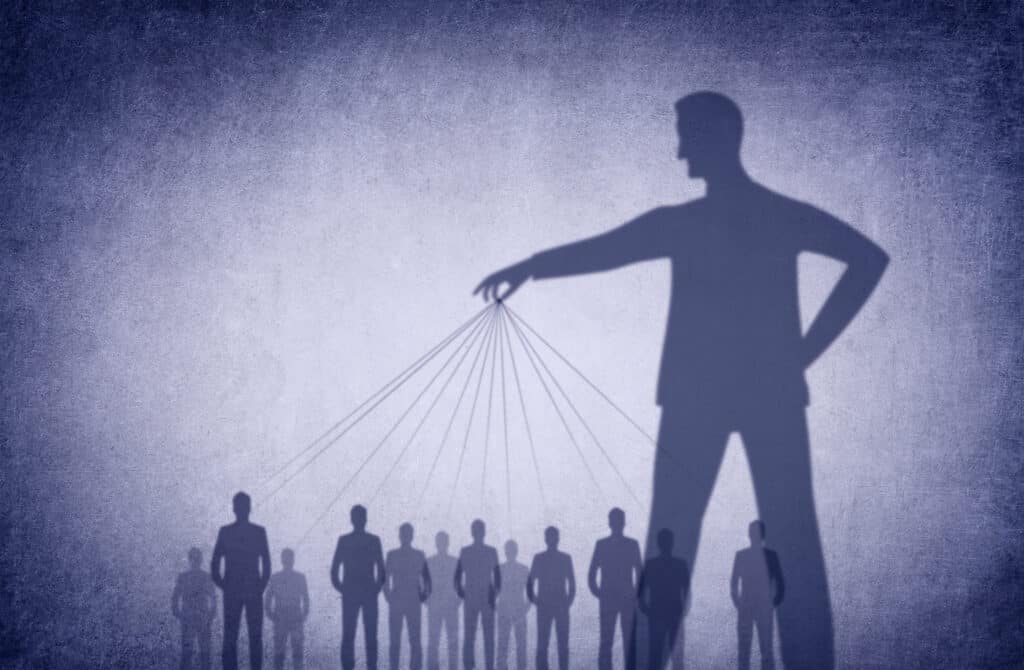
In the scientific community there is as much enthusiasm regarding nudges as there is criticism. Given their normative objectives, they are also widely discussed in the field of ethics and political science: what are the acceptable limits of their use? How can we tell the difference between a moral and an immoral nudge? Let’s imagine that a nudge is implemented to make you choose a fruit salad rather than a chocolate cake in the cafeteria. Yet today you really wanted cake. You might think there’s a problem here, however Emma Tieffenbach does not. “Nudges are not ethically problematic if they make us act in accordance with our second-order preferences,” she says.
Second-order preferences are all those things that we would prefer to do (the ‘foreseeing self’ according to Thaler and Sunstein), but fail to do because of our first-order preferences that make us act in the opposite way (the ‘acting self’). In theory this makes sense, although in reality it is very difficult to assess this conformity. “All we see in reality are people who appear to be influenced by nudges, but it is very difficult to know whether they are acting in accordance with what either their second-order preferences or their good judgment would lead them to do,” warns Emma Tieffenbach.
On the other hand, nudges are problematic if they influence individuals without respecting their autonomy. “Nudges do not exploit our deliberative capacities but our cognitive or affective biases, or our exaggerated aversion to certain emotions such as shame or guilt. And this can be ethically problematic,” says Emma Tieffenbach. This leads to debates among ethicists: some consider that the violation of autonomy is sufficient to prohibit the use of nudges, others suggest that the beneficial consequences of nudges from a global point of view justify their use.
In the scientific community there is as much enthusiasm regarding nudges as there is criticism.
Some nudges may exploit people’s excessive aversion to certain emotions, such as shame, embarrassment, or guilt. For example, charity nudges most often exploit the desire to avoid the guilt associated with the option of keeping money to oneself. “In this case, the nudge acts on individuals by associating certain options, for example, having a cigarette in the smoking area of an airport, often a glass room, under the potentially condescending gaze of passers-by, with an experience of shame that could deter even the most addicted smoker. What is problematic is that the mental cost associated with the option to smoke may be no different in intensity and discomfort than that of a fine. In this case, it is questionable whether the freedom to smoke is really preserved,” says Emma Tieffenbach.
Nudges and politics
From a more political point of view, nudges are subject to three main criticisms. They are suspected of favouring the status quo; of delaying the implementation of truly effective measures at a systemic level; and of allowing excessive blame to be placed on the individual. A recent review published in Behavioral and Brain Sciences lists these criticisms and gives several concrete examples3.
To illustrate the problem of the status quo, imagine a slumlord in a developing country. He might claim that people are unhealthy because they do not follow hygiene rules or because their diet is unbalanced. The nudge policy could then be used to increase the use of soap or to choose better foods. However, the real reason for the poor health of the population seems to be the general living conditions of these people, and it is a real social policy towards housing that will solve the aforementioned problems.

With regard to the other two issues, the example of green nudges, such as the roll-out of Linky smart meters to all households in the country in France, can be taken. Although the aim of green nudges here is to help citizens become more aware of their energy consumption, some consider that they place much of the responsibility for energy problems on households without questioning the overall energy policy. Nevertheless, the government seems to be aware of these problems4, and criticises nudges for not allowing radical changes in both behaviour and systems.
However, this does not prevent it from making frequent use of nudges. “The government regularly calls on the Direction Interministérielle de la Transformation Publique (DITP) and the behavioural sciences department within it to produce visual communications and advertising spots. This was notably the case during the Covid-19 pandemic,” attests journalist Audrey Chabal, who published the investigation Souriez, vous êtes nudgé (Smile, you have been nudged) on the use of nudges during the pandemic. “But it was not only the DITP that was responsible for this. For example, the BVA research company hired by the government submitted the idea of using the terminology of “1st, 2nd and 3rd line jobs” to the government in order to get people to accept the idea that some people could go out to work while others would remain working from home.”
To sum up, nudges are very diverse tools with mixed effectiveness and sometimes problematic consequences. While there is certainly a range of possibilities within which they can be useful, it is important to always take a step back and not forget that other levers exist to change the behaviour of a population.