

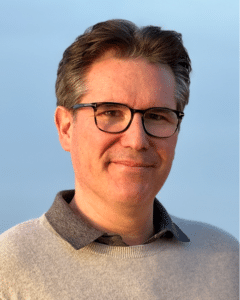
Europe’s goal for 2050 is to move towards a low-carbon world. “Global warming is expected to reach 1.5 degrees by 2030, and probably over 3 degrees or even 3.5 degrees by 2100, so we’ll soon be at unmanageable temperatures,” says Olivier Sala, vice-president in charge of research and innovation at Engie. “The urgent situation we face on climate change means we can’t wait any longer. But after decades of climate denial, we shouldn’t give in to despondency. We have a duty to be optimistic, and to take action.”
Decarbonising our activities
So how best to go about it? Firstly, by reducing our energy consumption at a European level by at least 30–50%. This requires policies that encourage energy sufficiency. Secondly, by switching to electricity for as many of our activities as possible, using decarbonised, renewable energy sources such as wind and solar power. Thirdly, the use of low-carbon molecules, either of biological origin (food or agricultural waste, for example), or produced from hydrogen. Unlike hydrogen produced from hydrocarbons, hydrogen obtained from the electrolysis of water is non-polluting.
“If we want emissions with zero carbon footprint, the CO2 emitted must come from biogenic sources, such as methanization, a technology based on the breakdown of organic matter by micro-organisms, under controlled conditions and in the absence of oxygen,” continues Olivier Sala. “Another possibility is to capture CO2 from the air. Major investments are being made in this technology, but they won’t bear fruit for at least another ten years.”
Which of these avenues is Engie pursuing? They’re all interesting, but they need to be studied together, because there won’t be a miracle solution for decarbonizing our emissions, but a variety of technical solutions that need to be combined according to local situations. The challenge is also to strengthen Europe’s ability to procure the raw materials needed to manufacture components (cobalt and lithium in particular) and to encourage industrial innovation in these new energies.
Solar power: a European lead
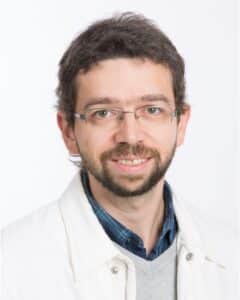
After Germany and Italy, France is the third-largest producer of solar energy, but solar power only accounts for 3% of French energy consumption, so there’s plenty of room for growth in this sector. This can be achieved not only by multiplying the number of photovoltaic panels, but also by diversifying the surfaces on which they can be installed, and of course by improving their performance. Jordi Badosa, Research Director at École Polytechnique (IP Paris) and Technical Director of the Centre Interdisciplinaire Energie4Climate (E4C), is working on this very subject.
At the SIRTA atmospheric research observatory, he is developing experimental instrumental platforms to test conditions that are more or less favorable to photovoltaic panel energy production. The aim is to deploy solar energy on a massive scale across a district or city.
New uses for photovoltaics
New avenues are being explored, such as agri-voltaics, which involves combining solar energy production with agricultural production. Installations are being tested above crops that need little sunlight (particularly lettuce), with panels that can be adjusted to let in more or less light depending on the time of day and the time of year. In the event of drought, such panels can also protect the soil from evaporation. Lakes would also be good places to install solar panels, because the warmer they are, the less energy they produce. Floating, they benefit from a natural cooling effect.
Significant progress has also been made in recycling the various materials that make up photovoltaic panels, which are now 90% recyclable – an essential factor when considering sustainable technologies.
The issue of the intermittency of solar energy remains. But in addition to the research being carried out on storage, Jordi Badosa agrees with Olivier Sala that the future lies in an energy mix that includes solutions based on green hydrogen.
Finally, if the energy transition is to succeed, “these energies will have to be not only accepted but, above all, desired by consumers”, concludes Olivier Sala.