Three beliefs that hold companies back in the face of crises



- In times of crisis, the ability to identify our mental models and to question them makes all the difference.
- Companies’ identities may become too static: the key may lie in re-exploring this identity.
- We should be wary of consensus in times of crisis, and not hesitate to challenge it if it forms too quickly.
- True leadership is about cultivating the model that has worked in the past without letting it become stagnant.
- Mental models are useful right up to the point where we forget about them: It takes a bit of practice not to get trapped in them.
How do we make decisions in an uncertain world? We can only develop a strategy based on hypotheses. Over time, they stick and become mental models. The problem is that we live in a time that is becoming less and less predictable. An increasing number of unexpected events means that some of our beliefs become obsolete more quickly. What makes the difference, then, is the ability to identify our models to question them. This is difficult and often costly. But the survival of a business may depend on it.
Here are three points where mental models can become entrenched. And three ways to avoid becoming trapped.
#1 Identity
Cultivating it without clinging to it
The trend towards having a raison d’être has put identity back into the centre of the game. “Who are we?” almost takes precedence over “what do we do?” But the two questions come together into one: companies are human societies, and each has its own identity. Relying on this identity makes it possible to mobilise the troops, to draw up a strategy and to focus on the fundamentals. It doesn’t matter whether we emphasise values or the core business.
The problem is that identity is also a trap. More precisely: it becomes a trap if it is centred around the obvious and ready-made formulas. In the face of an existential crisis, clinging to this routine identity can be fatal. Conversely, salvation can be found in re-exploring this identity. Two examples illustrate this perfectly, the first often cited, the second less well known.
Identity becomes a trap if it is centred around the obvious and ready-made formulas.
Kodak’s misadventures are a parable of what not to do in the face of a major paradigm shift. It was at Kodak in Rochester in the 1960s that an engineer invented digital photography. But the company missed this revolution because its core business was photo paper. The mental model here was its business model. A business model so profitable that it had no interest in questioning itself… until the day the market disappeared, and the company with it.
Kodak’s lesser-known counterexample is its competitor Fujifilm. Shaken by the same revolution, the Japanese company was able to question its identity and go beyond the obvious. From this self-questioning arose a discovery: the business of photo paper is not paper, nor photography. It’s the chemistry. It is by redeploying this identity as a chemist that Fujifilm has been able to invent a future for itself.
#2 Consensus
Learning to put it on hold
To get away from the obvious, Fujifilm’s managers and employees had to make the effort to reflect. They had to distance themselves from their activity, from the image they had of it. And admit to themselves that they were going to hit a wall. It is not easy to tell the King he has no clothes! Who will be the first to say it?
The underlying issue here is that of consensus. It also has many advantages in good times: when we get along well, we work better and faster, without wasting time arguing or having to justify everything. In difficult times, it also allows the organisation to come together.
But in the face of uncertainty, in the event of a serious crisis, a major disruption, in short, when we move from the continuous to the discontinuous, consensus becomes dangerous, and potentially disastrous. Here is a historical example of how a consensus reached a little too quickly could have had terrible consequences.
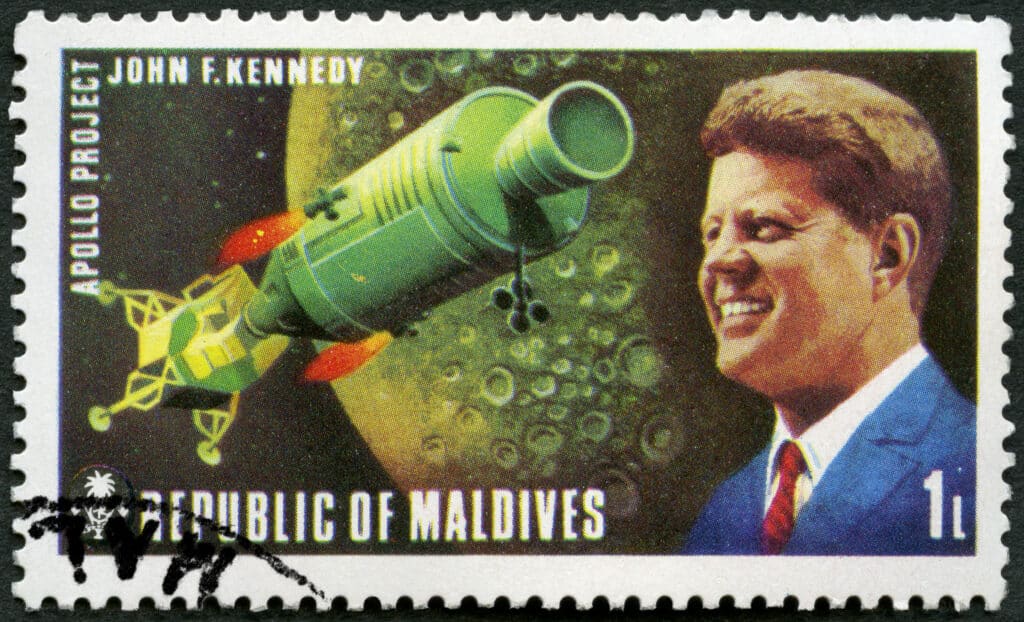
In 1962, the American administration was faced with an existential threat as a result of the Cuban missile crisis: the USSR sent nuclear missiles to the island and the ships were on their way. The committee convened by Kennedy quickly agreed that the only effective, albeit terrible, option was to raze Cuba to the ground. The president then spoke: « I hear you. But how will our children judge us? Then he left the room. This moment is fundamental: by leaving the room, the president allowed for another group dynamic to be created, which would allow different solutions to emerge in a few days, including the blockade, which was finally adopted.
Kennedy’s actions changed the game, by altering the framework of the discussion. Alfred Sloane, the legendary head of General Motors, had made it a rule not to let a consensus be established too quickly. “Does everyone agree?” he would say. “Really? Then I’ll postpone the decision until next week.” And in the meantime, some of his staff would come to him with new ideas.
Kennedy and Sloane were not timid personalities afraid to make decisions. They offer us a lesson: beware of consensus, and do not hesitate to call it into question if it forms too quickly.
#3 Leadership
Beware of your own authority
Jeff Bezos, the boss of Amazon, is known for being tough and stubborn. But he almost always forces himself to be the last person to speak in a meeting, otherwise the discussion would quickly become focused on his ideas. Here we see a charismatic leader who is wary of his own authority and who, in the same spirit as Kennedy or Sloane delays consensus, holds back from expressing his ideas in order to encourage his collaborators to express themselves.
Because leadership is also a mental model, all the more complicated because of the combination of a personal dynamic (an individual clings to a model, for example because it has been successful in the past) and a social dynamic (the leader’s management style ends up being communicated to the organisation). True leadership is both about cultivating this model, which is a source of effectiveness, and about not letting it stagnate. There is an art to learning to extract yourself from your own leadership model.
There is an art to learning to extract yourself from your own leadership model.
This does not mean doing without it, and again, there are no good or bad models. Let’s take the “vertical power” model, which has been revived by some political leaders over the last twenty years. As we know, the top-down nature of the decision ends up hampering the feedback process. However, this model also has its advantages: a vertical company can also be very innovative because the boss protects his subordinates. This was the case at Apple under Steve Jobs.
But problems arise when the model becomes self-evident, and we no longer know how to question it. A British boss, for example, told me his problem: not enough ‘team engagement’. He admitted that he did not ask his employees for their opinion but justified this by explaining that he did not want to undermine his leadership. He was anxious to be respected and had allowed himself to be trapped in a mental model from which he was unable to escape. He was still able to see that it was not working! Simple adjustments or technical solutions are not enough to correct this type of dysfunction. It is the model itself that needs to be set aside.
Any leadership model would benefit from being “brought to the table” from time to time. Or at least to be taken out of its comfort zone. A good way of doing this is to move away, sometimes physically. Other things will be said, other things will be observed. Try holding a meeting in a factory and not in the boardroom, for example. Another method is to encourage a form of diversity – not so much ‘moral’ as cognitive – in deliberation and decision-making bodies. Different backgrounds, people who have been tested in the field, will be an asset on a board.
What does this mean?
Leaders and organisations that have managed to emerge from serious crises have been able to identify their models, to question their identity, to break the consensus to reopen the game. Mental models are habits that we no longer pay attention to. They are useful… right up to the point where we forget about them. It takes a bit of practice not to get trapped in them.