Climate change is affecting power grids, here’s what to expect



- Climate change is undermining the electricity system, particularly the transmission and distribution infrastructure.
- The grid relies on water for 80 % of its operations, with significant amounts used in the infrastructure’s cooling systems.
- In France, this dependence stems from the significant share of hydroelectricity (11.4 % of total electricity generation in 2025) and nuclear power (68.1 %) in the French electricity mix.
- Summers marked by heatwaves are leading to an increase in electricity demand, as well as consumption peaks, which RTE anticipates will rise from 14 to 28 gigawatts by 2050.
- The impacts of climate events reinforce one another due to their interdependence, thereby increasing the pressure on the electricity system.
This summer in France, many households were left without electricity due to heatwaves, thunderstorms or forest fires. These recent events highlight the strains on the country’s electricity grid, whilst raising questions about its ability to adapt to global warming and the gradual electrification of human activities.
Risks to infrastructure
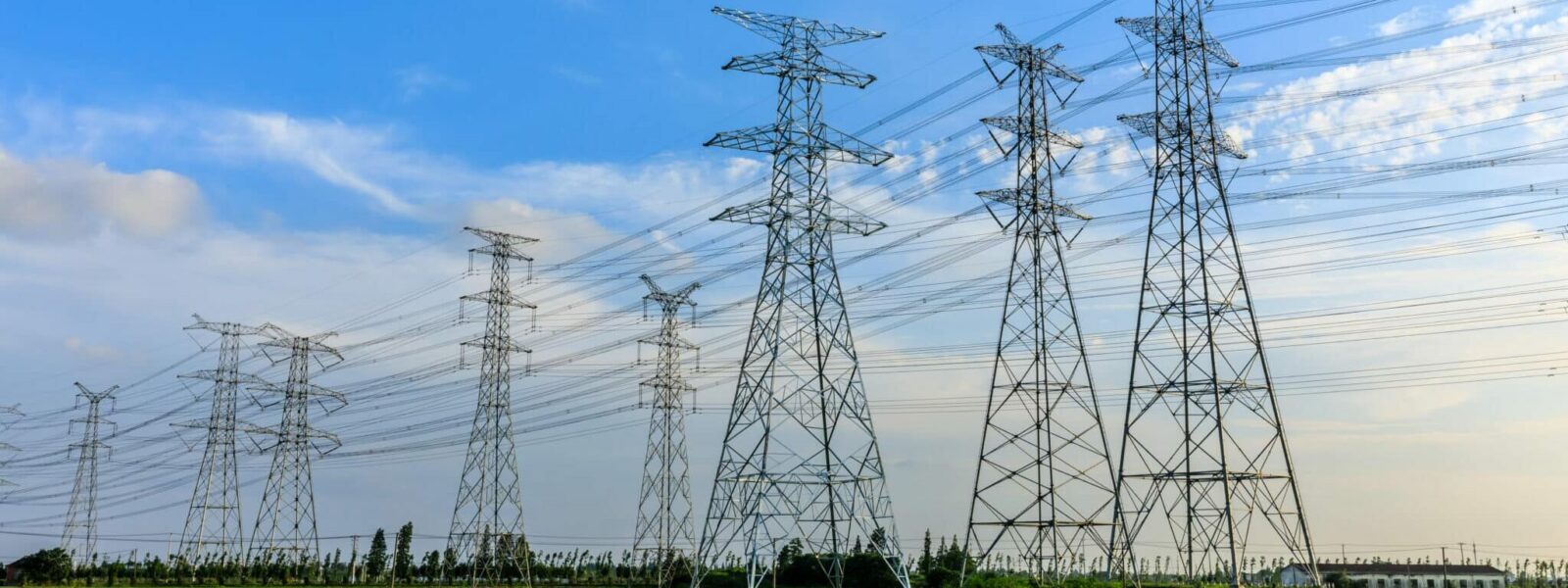
The effects of climate change on the electricity system – and probably the most obvious ones – relate to transmission and distribution infrastructure. When subjected to extreme temperatures during heatwaves, certain pieces of equipment such as transformers and substations age prematurely, operate at reduced capacity and may even suffer a short circuit1. In addition, overhead power lines have a transmission capacity that depends directly on external temperature. And the more they overheat, the more they expand and come closer to the ground, posing a risk to the public and the environment2. When outside temperatures exceed 35°C, certain operational measures such as the redistribution of power flows and a reduction in electricity generation, can be implemented to limit the risks3.
But “the resilience of the electricity system to climate change is not solely a matter of infrastructure; it would be far too simplistic to stop at that observation,” points out Philippe Drobinski, CNRS Research Director and Professor at Ecole Polytechnique (IP Paris). Another consequence of climate change is a reduction in electricity generation capacity. “In summer, our electricity system will become increasingly vulnerable,” explains Philippe Drobinski. “In fact, 80 % of it relies on water, a resource particularly affected by climate change. This does not only concern France; this heavy dependence of the electricity sector on water is a global issue.”
Dependence on water
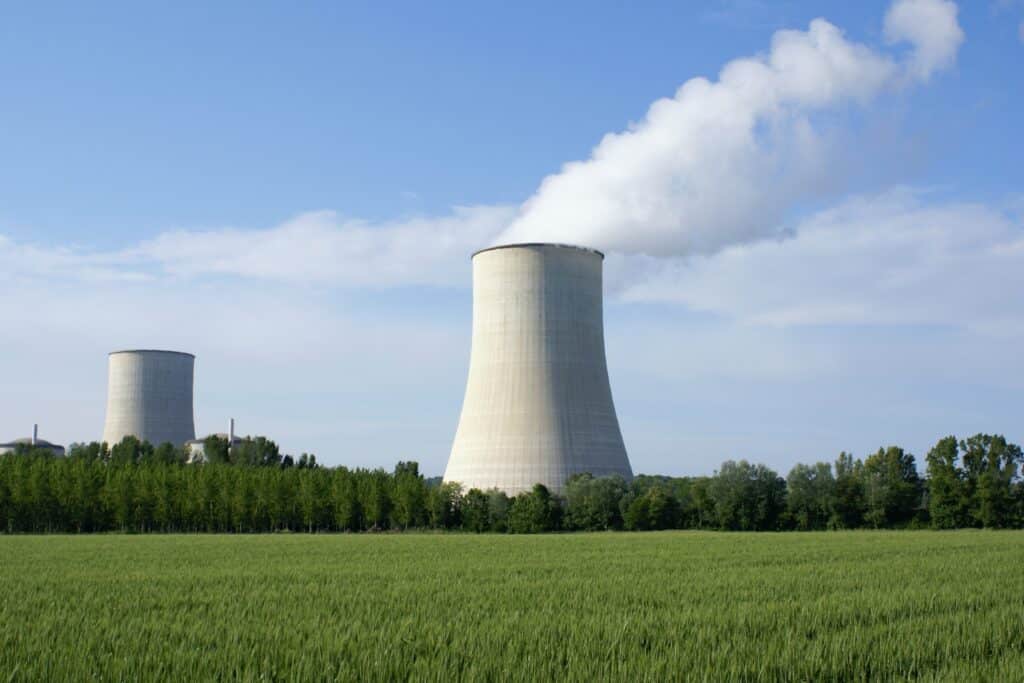
In France, this dependence is due to the significant share of hydroelectricity (11.4 % of total electricity generation in 2025) and nuclear power (68.1 %) in the French electricity mix4. For a nuclear power station, water is essential for the cooling system. Drawn from a river or the sea depending on the location, the water is fed into the cooling circuit, from which it emerges heated – the vast majority of which is discharged back into the natural environment. Water abstraction and discharge are subject to regulatory limits: if the river’s flow rate is too low or its temperature too high, the plant may be shut down to protect the natural environment. However, river flow rates and temperatures are affected by heatwaves and droughts, which are themselves altered by climate change. The frequency and intensity of heatwaves and droughts have already increased in mainland France. And in a France that is 4°C warmer, the number of days with heatwaves between May and September would increase tenfold, according to the latest report from the Haut Conseil pour le Climat5.
The nuclear reactors most sensitive to climate change could be out of service two to three times more often.
As a result, the nuclear reactors most sensitive to climate change could be out of service two to three times more often, causing national thermoelectric power generation to fall by 10 to 15 % by 2050 if greenhouse gas emissions continue to rise6. A large part of Europe would see its power generation affected to a similar extent. As for hydroelectric generation, which is also dependent on water resources, it could fall by between 2.5 and 7 % in the Mediterranean.
Rising electricity demand
Finally, one last pillar of the electricity system is affected by the climate: demand. With summers increasingly characterised by heatwaves, the growing use of air conditioning raises the question of rising electricity demand. “Added to this is the widespread electrification of various uses, particularly in transport,” explains Philippe Drobinski. “Batteries do not cope well with high temperatures, which increase their energy consumption.” RTE, the operator of France’s electricity transmission network, forecasts a rise in annual electricity consumption due to the shift from fossil fuels to electricity. But during heatwaves, consumption peaks are one of the major challenges for the grid. These relatively brief periods of very high electricity demand can put strain on the electricity grid. By 2050, RTE anticipates a rise in peak demand due to the use of air conditioning, rising from 14 to 28 gigawatts.
And to make matters worse, all these effects coincide in the summer. During a heatwave, the electricity grid’s equipment overheats, demand for electricity skyrockets due to air conditioning… and some power stations are shut down because of high temperatures and low river flows. The weather events themselves compound due to their interdependence, thereby increasing the pressure on the electricity system: repeated heatwaves lead to droughts, which in turn create ideal conditions for the spread of wildfires. A study7 published in 2023 identifies the three factors most likely to cause a power system failure in the western United States: abnormally high temperatures, abnormal solar radiation and abnormally low wind speeds. These weather parameters, which are directly influenced by climate change, simultaneously cause an imbalance between supply (which is falling) and demand (which is rising).
Grid adaptation strategy
Given the impacts of climate change that have already been observed and those yet to come, there is no doubt that the electricity grid needs to be adapted. RTE highlights the need to replace network equipment – most of which was built during the second half of the 20th Century, in a climate very different from today’s – and, in its 2025 Ten-Year Network Development Plan8, proposes a fully-fledged adaptation strategy to be implemented by 2060. Nevertheless, the latest report from the Haut Conseil pour le Climat still highlights significant risks regarding the adaptation of the energy framework: in particular, the body emphasises the weakness of strategies in the face of rare but extreme events, or in the face of episodes where natural hazards occur in succession. For example: repeated heatwaves, prolonged droughts, and major wildfires.