
Should scientists take a stand or remain neutral?


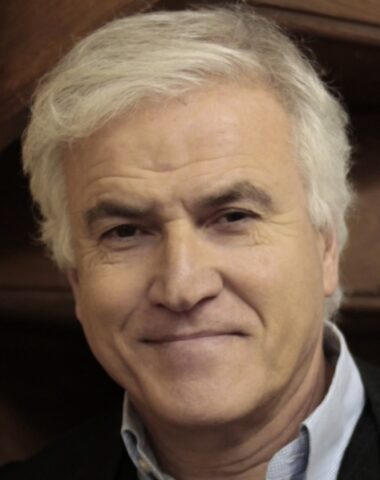
- In their civic engagement, researchers must, when speaking based on their scientific expertise, maintain a form of argumentative neutrality.
- This entails presenting, even under political and economic pressure, only the most reliable findings on which they base their arguments, along with the corresponding sources./li>
- To uphold scientific rigour, anyone criticising the state’s inaction must be able to propose effective and feasible public action.
- Yellowstone National Park in the US has been the focus of a significant number of research projects aimed solely at supporting the reintroduction of wolves.
- Legal challenges necessitate a meaningful public debate in cases of scientific uncertainty and remind leaders of their duty to disclose the limits of our knowledge when justifying their decisions.
IPCC scientists announced as early as 2018 that a rise in global surface temperature of more than 1.5°C poses a threat to humanity. Faced with the effects of climate change, the scientific community and policymakers bear a particular responsibility, for whilst the danger is widely recognised, many uncertainties remain regarding the paths our societies will take to adapt. Against this backdrop of uncertainty, Armand Hatchuel reflects on the need to define the relationship between researchers and government to work towards a just societal transition.
Groups such as Scientifiques en rébellion are condemning the inaction of public authorities in the face of climate change, whilst the SUD-Recherche1 trade union has been actively involved in political debates on health issues. To what extent can, or should, a scientist engage in the public arena?
Armand Hatchuel. Civic engagement is not an unexpected trait among researchers. The image of the researcher isolated in a laboratory, producing knowledge sheltered from all external influence and with no known audience, is more myth than reality. A researcher is first and foremost engaged within their own scientific community, where debates and controversies take place. When facing their peers, each seeks to defend the direction of their work, their methods and their conclusions. But even in their civic engagement, researchers must, whenever they speak based on their scientific expertise, uphold a form of argumentative neutrality. This involves presenting, even under political and economic pressure, only the most reliable findings on which they rely, together with the corresponding sources. It is adherence to scientific rigour2 (the set of methodological principles that enable reliable knowledge) that guarantees, not the absence of personal commitment, but the researcher’s scientific neutrality.
In the face of the shared threat posed by climate change, have scientists’ responsibilities changed?
In democracies where decisions are subject to public debate, researchers do indeed have a duty to resist various pressures from public opinion to defend verified theories. Today, the scientific community continues to sound the alarm: human societies are at risk from global warming. However, beyond simply raising the alarm, this crisis should prompt researchers to reflect more deeply on the nature of their various commitments. Thus, warning of a danger and formulating proposals to guide public policy are two distinct forms of public engagement. Each of these forms requires a specific scientific approach. A climate specialist is justified in warning of the dangers that lie ahead if nothing is done. However, unless speaking as a private citizen, their expertise as a climatologist will not suffice to criticise inaction or public policy. To uphold scientific rigour, anyone denouncing the state’s inaction must be able to propose effective and feasible public policy.
Do the controversies surrounding the Loi Duplomb reveal a growing disconnect between the scientific community and policymakers?
The French government, like any other government, has a duty to maintain the country’s democratic unity by striking a balance between imperatives that are sometimes contradictory. Under the Loi Duplomb, or the ‘Emergency Act for Agricultural Protection and Sovereignty’, health and environmental concerns have been pitted against the economic difficulties faced by part of the farming community since the ban on certain pesticides (acetamiprid). In this debate, researchers also have two distinct responsibilities: to warn of the dangers of pesticides, and to develop pesticide-free farming models. However, discussions regarding the existence of these alternative models, their actual results and their acceptability to farmers have lacked transparency3. To help move beyond this fruitless confrontation, the researcher’s role is precisely to highlight the existing alternatives for the general public.
When it comes to proposing these alternatives, are the resources allocated to scientific research commensurate with the challenges at stake?
Working in harmony with nature and devising new, viable agricultural models requires a vast amount of knowledge. Yellowstone National Park in the US, for example, has brought together a significant number of research projects with the sole aim of supporting the reintroduction of wolves. All scientific disciplines have been drawn upon there. The challenges relating to climate change and societal adaptation require a commitment on the same scale. Climate science alone will not be enough to meet these challenges. Admittedly, scientific institutions are inevitably faced with political or economic constraints. However, it has always been the responsibility of researchers to convince decision-makers and fellow citizens to prioritise investment in certain fields of research.
Both public authorities and scientific institutions share responsibility should it transpire that certain areas of research have been wrongly sacrificed. And if across-the-board cuts to research budgets become necessary, the choice of priorities must also be the subject of scientific debate before becoming a political one. It is important that each scientific discipline can explain its own challenges and expectations to colleagues from other disciplines. Blind competition between research fields will in no way guarantee that the political decision will be an informed one.
The Japanese government was taken to court in 2025 for its ‘unconstitutional’ inaction on climate change. In France, we recall a similar case with the ‘Affaire du siècle’ in October 2021. More recently, the UN adopted a resolution on states’ climate responsibility. Between civil society’s commitment and scientists’ warnings, has the responsibility of public authorities evolved in the face of the climate emergency?
These appeals – made in the name of the law – are extremely useful. For they force a debate that is often sidestepped. A decision-maker makes choices, whether democratically or authoritatively, based on existing and known knowledge. But when a decision-maker must make a decision whilst knowledge is lacking, and we are faced with the unknown, the situation is quite different. In such cases, it is the responsibility of political leaders to inform the public without concealing gaps in knowledge or controversies amongst experts. For it is this lack of knowledge that can explain and justify, in the eyes of the public, the decisions taken. Lawsuits for failure to act can at least provide a forum for comparing researchers’ proposals with political choices.