





Of different regulatory mechanisms, what issues are there around use-by dates?
This is an important issue, because more than 50% of French people do not know the difference between the “Use By” date and the “Expiration Date”. The latter, which is mandatory for rapidly perishable foodstuffs, is the date after which the product becomes unfit for consumption, as it may present a risk to human health. The former is the date after which the product loses some of its nutritional or organoleptic qualities, but does not constitute a health risk. It is indicated by the words: “Best before XX/XX/XXXX”.
It is estimated that this lack of awareness is responsible for around 20% of food waste at the consumer level. Moreover, this issue goes beyond the national framework and is posed at the European level, requiring changes to the regulations governing consumer information.
Several regulatory changes could reduce the waste linked to the misinterpretation of these dates. For example, the statement “Use by” could be reworded to read “Best before”. Policy action could also be considered to replace some use-by dates with best-before dates and to expand the list of products exempt from use-by dates. For example, currently salt or vinegar are exempt, but not pasta or rice.
What is X‑Food ?
“Launched in late 2018 under the impetus of École Polytechnique alumni, X‑Food aims to shed light on controversies on topics related to agriculture and food, and to promote innovation. The transition to healthy and sustainable food, in a context of world population growth, is a crucial challenge. We have a dual approach, scientific and holistic. On each subject we study, we involve experts from all walks of life: researchers, industrialists, engineers, from the private and public sectors, and associations.
We have organised four discussion meetings over the course of 2020, moving progressively up the value chain: consumption and catering, distribution, processing, and then production, and each time calling on 3 or 4 experts from the sector. These meetings were followed by a summary conference, the publication of a loss calculation tool for professionals and a fifty-page summary document in which we propose to act on 12 levers for controlling food losses.”
Anne-Claire Asselin, President of X‑Food
Other policies are more difficult to put in place, as they are at the interface of different links in the food chain?
Yes, this is the case with fruit and vegetable waste, for example. Producers cannot always sell their entire production, due to climatic hazards, market dynamics, or sanitary and regulatory constraints. The sizing criteria resulting from regulations, as well as certain buyers’ specifications, lead to a significant rejection of downgraded production. While health criteria are undeniable, quality criteria (sugar content, protein content, etc.) or aesthetic criteria (colour, size, shape, etc.) seem more questionable. They generate significant rejects of so-called “ugly” fruit and vegetables. European regulations impose such size and appearance criteria on ten product categories that represent about 75% of the market! This excludes downgraded fruit and vegetables from traditional distribution channels…
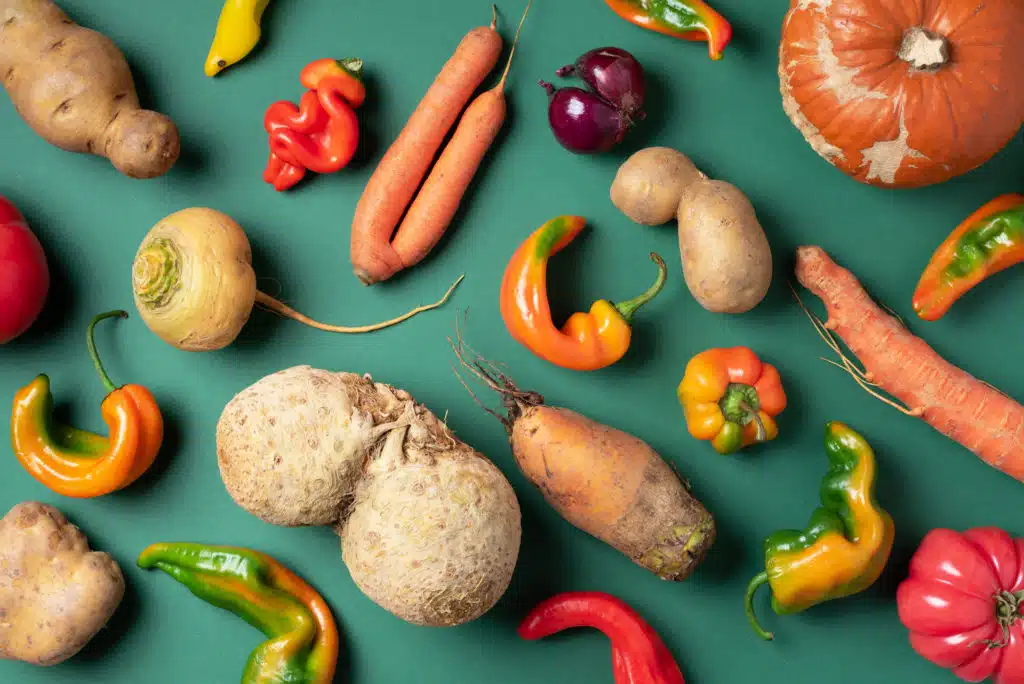
This is a good example of the complexity of the fight against waste. We could make use of this spoiled food by producing canned food. But this production chain would then have to be supplied regularly, which is contradictory when we are talking about spoiled fruit and vegetables. It would also be possible, by changing the legislation, to offer them more systematically to consumers at a reduced price.
It is not enough to allow the sale of imperfect products; consumers must also want to buy them?
As we can see here, again, the fight against waste involves several players. In this case, producers continue to produce quality-assured food because the consumer demands it. We therefore need to encourage people at the end of the chain to buy these products through promotional campaigns, such as the one that was carried out on “broken heads” or “ugly vegetables”.
This is all the more true since the “anti-gaspi” shelves or baskets containing products “close to the use-by date” suffer from a lack of exposure when they are not simply discarded, as they are often placed in bulk at the back of the shop. Cheaper food is also associated with lower food quality. Companies such as Zéro Gâchis or Smartway, for example, propose to transform the image of these shelves to make them attractive, in particular by playing on the positive image of the fight against waste. It is also necessary to raise awareness among supermarkets of the positive economic impact of these departments.
The 12 solutions to food waste and losses as cited in the report
1. Align the definition of food waste between France & other organisations.
2. Clarify the distinction between Use By and Expiration dates, and remove some.
3. Mobilise Territorial Food Plans (TAP) and public funding.
4. Rebalance trade relations in favour of farmers.
5. Take another look at calibration and commercial specifications.
6. Make date contracts between suppliers and distributors more flexible.
7. Facilitate the reprocessing of agricultural surpluses.
8. Identify and monitor products that are close to expiry.
9. Develop the sale of near-expiry products.
10. Strengthen and improve the quality of unsold food donations.
11. Raise awareness among professionals and consumers.
12. Implement food waste education.
One of the last (but not least) levers is information and education?
A major source of loss and waste is to be found at the distribution/consumption interface; it is the hyper-choice offered to a “hyper-consumer” who has to find his way between products with a low carbon impact, organic products, promotions on cheaper products, etc.
At the national level, we need to increase the visibility of the subject, and make it a major national cause, as Guillaume Garot proposed during one of our debates. We should also set up, why not in schools, an education on food waste. The youngest are generally sensitive to these subjects, and they can bring about a change in attitude.
What will be the next theme of X‑Food?
The issue of food loss and waste was our first topic. In 2021–2022, we have chosen the theme of animal proteins: what are the different impacts? Should we really consume less of it? A subject just as complex and controversial as food waste!
The report can be read here (in French only)