Developing employee share ownership for the benefit of all


Today, employees own 3.2% of CAC40 companies, compared to 1.7% in other European countries, with variation depending on the company – anywhere between 0% and 13%. Significantly increasing employee ownership (to 10% on average or even more, which is the highest level observed in CAC companies) could be beneficial to the community for microeconomic, macroeconomic, financial, and social reasons.
The three benefits of employee ownership
The first benefit is that of governance and social relations in the company. These can often be conflictual in France, whereas in Germany for example they are based on compromise between employees (trade unions) and employers. A higher shareholding by employees would work towards this compromise in governance. Employees would have an incentive to better understand the objectives of top management through their position as shareholders and they would also have more influence on company decisions through boardroom influence. By adding employee directors representing trade unions and directors representing employees in their own right, presence could reach at least one third amongst boards of directors.
The second benefit is that of creating of a European model of capitalism that is different from the Anglo-Saxon model centred on maximising shareholder value alone. It would be a more inclusive model that takes an interest in all stakeholders and accepts a more modest objective of return on capital for shareholders in return for more assured long-term value creatin. To achieve this, we need to increase the weight of shareholders who share this conviction. Such as, family shareholders in medium-sized companies, public pension funds (as in Northern European countries), and employee shareholders. A more powerful employee shareholding is therefore one of the conditions for the appearance of a more autonomous, less financialised model of capitalism.
The third issue is that of inequality. In France, unlike most other OECD countries, income inequality is quite low, and has improved thanks to redistributive public (progressive taxes, activity bonus) and private (profit-sharing and participation in companies) policies. As such, when we talk about the fight against inequality, in France, we must focus on wealth inequality and not income inequality. Income inequality has risen sharply since the 1990s due to the upward trend in asset prices, i.e. stock market prices, property prices and company values.
Reducing inequalities
Current inequality is linked to the increasing number of expansionary monetary policies in the euro zone, which have led to negative interest rates (when adjusted for inflation). This has led to what can be called a “monetary rent”, a sharp rise in the value of various assets and inequalities in wealth that is not due to the rise in the intrinsic, fundamental value of those assets.
This has negative economic, social, and political consequences. It leads, for example, to a strong difficulty in access to housing for the middle and working classes and for young people. It incites high social tension, with public opinion reacting to an enrichment that is only due to money. It is important to understand that expansionary monetary policies designed to reduce inequality – such as helping companies to invest and create jobs or by helping states to finance public deficits – actually results in the opposite. The development of employee share ownership would make it possible to distribute this progression of collective wealth more widely. So, we see that there are several possible reasons for developing employee ownership: to improve corporate governance and social dialogue, to develop a European capitalism different from the Anglo-Saxon model and to reduce wealth inequality.
What might be the challenges?
If the aim is to move to a high level of employee ownership of companies (10%, for example, or more, compared to an average of just over 3% today), there would necessarily be dilution of the old shareholders with the creation of new shares. It would therefore be necessary to make pre-existing shareholders accept this dilution with the argument that they only give back a fraction of the enrichment due to the rise in stock market prices and the value of companies when they are not limited.
In smaller companies and family businesses, the reluctance of owners to allow new people into the business will have to be overcome. This can be done with non-voting shares, and possibly with an obligation to resell when the employee leaves the company.
Finally, it will also be necessary to overcome the reluctance of trade unions, which most often consider that this hybrid employee who is also a shareholder and is therefore in position of a conflict of interest. As such, they can be opposed to it as, for them, the priority is to increase salaries on the whole rather than participating in the results or enriching the company. It is also important to avoid strong employee ownership leading to excessive conservatism in the governance of the company. This includes absence of management inquiries, rejection of mergers with other companies, and strong strategic or technological evolutions.
In spite of these difficulties, one can be convinced that a much larger employee ownership would improve the functioning of companies and society, and would avoid the extreme concentration of wealth that we see today in the United States (where 1% of people hold more than 25% of the national wealth) or in China. This extreme concentration of wealth is unfavourable from an equity point of view but also from an economic efficiency point of view, because when few people hold the capital, since they do not have access to all the investment projects, a significant part of these projects is not financed.
Contributors
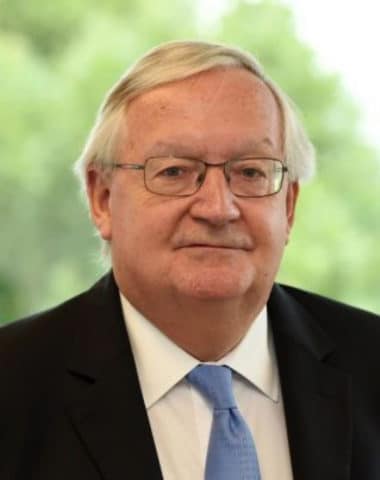
Patrick Artus
A graduate of Ecole Polytechnique, Ecole Nationale de la Statistique et de l'Administration Economique and the Institut d'Etudes Politiques de Paris, Patrick Artus was Director of Research and Studies at NATIXIS until 2020, then Chief Economist and Member of the Executive Committee. He combines his teaching duties with his research work and is associated with various economic journals and associations. Today Patrick Artus is on Boards of Directors at Total and IPSOS as a Director and Economic Advisor to Natixis.
Other contributions
Voir toutes ses contributions