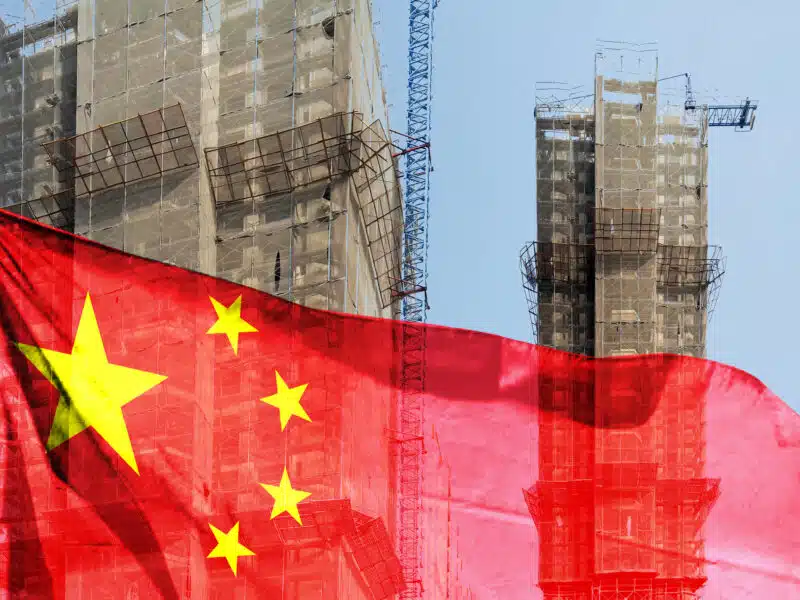



When observing China’s development, you describe it as an engineering state that builds at a frenetic pace, guided by three principles: “construction, capitalism and control”. What are the historical roots of this?
Dan Wang. China is an “engineering state” that has been building at a frenetic pace. This aspect of the country took shape in the 1980s, when Deng Xiaoping came to power. He shaped this vision in response to the disasters left in the wake of the Great Leap Forward (1958–1961) and the Cultural Revolution (1966–1976), led by his predecessor, Mao Zedong.
At the end of the Maoist era, an extensive catch-up programme was launched aimed at rapidly making up for the accumulated shortfall in infrastructure. Until then, a large proportion of the population was living in unsatisfactory conditions: there were repeated electricity shortages, the railway network was overburdened, there were very few ports along the coast, and no motorways had been built before 1993.
Faced with this glaring lack of infrastructure, the ruling class of the 1980s set about promoting engineers to the highest positions of state. A new generation of students, trained according to a Soviet-inspired model, began to emerge. Within a few years, they became the country’s ruling elite, and by 2002 all nine members of the Politburo Standing Committee1 held engineering degrees (in hydraulic engineering, geology, electrical engineering, etc.).
What role has the large-scale training of engineers played in China’s economic and industrial boom?
Engineers are, by their very nature, builders. Their presence within the state apparatus partly explains why, over the last three decades, a massive wave of construction has swept across the country. Hydropower dams, motorways, housing, and solar and wind power facilities have sprung up.
The country has developed an extraordinary capacity to train engineers to meet the needs of its industry, to the point where this has become a significant strategic asset. A report published in 2012 in the New York Times revealed that, when production of the iPhone first began, Apple needed to recruit nearly nine thousand engineers. At that time in the United States, it would have taken around nine months to recruit that number of engineers, whereas in China, the task was accomplished in just two weeks.
This capacity is now helping to make China a manufacturing superpower, accounting for around a third of global production capacity. Its factories produce around sixty million cars a year (one-third electric, two-thirds petrol or diesel), and in the field of robotics, for example, it is one of the only countries in the world to manufacture consumer drones. There are still some areas of weakness, such as semiconductors and aviation, but China is now able to produce goods whose quality rivals that of European and East Asian products.
Has this culture of engineering at the highest levels of government also transformed the way Beijing deals with social issues?
The “engineering state”, which claims to uphold “socialism with Chinese characteristics”, exists to bring about significant improvements for the people and derives its legitimacy primarily through the implementation of public works, without resorting to democratic mechanisms. Under this approach, democratic principles are seen as potential obstacles to the implementation of major projects deemed necessary for the common good. Beijing thus favours a technocratic form of governance to maintain its growth targets, without serving the interests of specific groups or individuals.
The engineer, by nature, follows this guiding principle, even if it means treating social issues as mathematical exercises. The one-child policy (1979–2015) and the handling of the Covid crisis are particularly illustrative of this. The Party thus positions itself as a conductor, coordinating unified actions and making decisions that are beyond the comprehension of ordinary citizens.
You have studied both China and the United States. How does this difference in the training of the two countries’ leadership help us to better understand the divide between the two powers?
This is one of the most striking contrasts between the two countries. As explained, the Chinese elite is a technocratic group comprising a majority of engineers specialising in construction. The American elite, on the other hand, is made up of lawyers who form a legalistic society, structured around procedures where obstruction is rife. This difference in background results in a striking disparity in outcomes. To put it in figures, China spent 13.5 % of its GDP on infrastructure funding in 2026, whilst the US average stood at around 3 % over the last three decades.
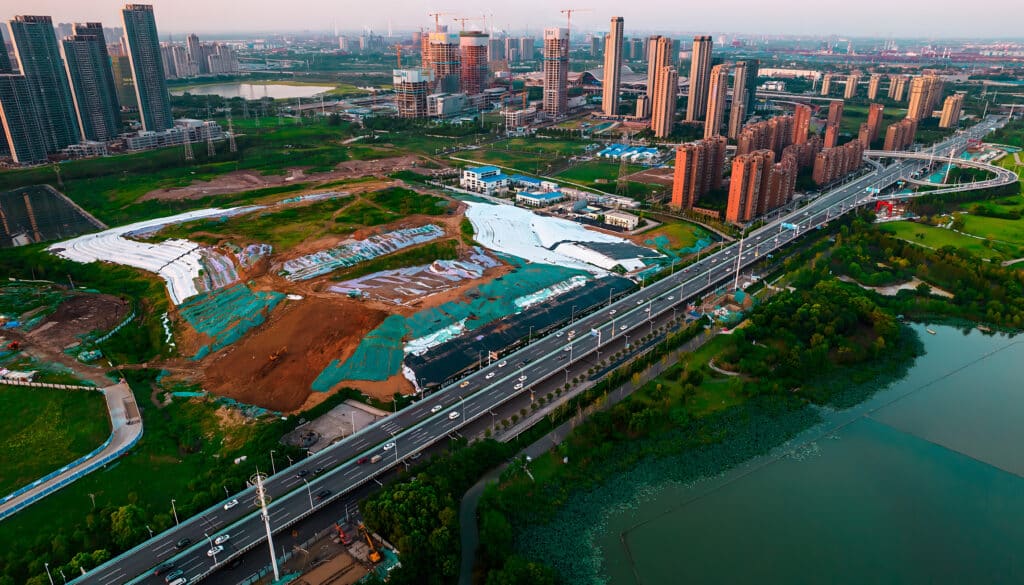
The production of carbon-free energy is certainly the most compelling example. In the US, six gigawatts of new wind power capacity were added in 2023, compared with 76 in China. In the same year, China installed two-thirds of the world’s wind and solar power plants, four times more than the G7 countries combined. The United States clearly retains some major strengths, ranging from its innovative prowess in digital technologies to a network of international partnerships, but when it comes to construction, its rival has become a master of the field.
During an official visit to Beijing in May 2026, which passed without incident, Donald Trump showed a certain degree of respect for Xi Jinping and the power he wields. He appeared to treat him as an equal, acknowledged the military progress made and recognised the areas in which China excelled. Their shared appetite for power fosters a certain understanding between the two heads of state.
Having analysed the political and industrial culture of the two global superpowers, you offer some reflections on European countries, which you describe as optimists trapped in an “economic mausoleum”. How can they break free from this kind of stagnation?
Europeans are only optimistic when looking back at the past. Their superpower lies mainly in their way of life and their heritage. Chinese and American megacities are indeed unattractive compared to European cities. But both powers are made up of resolutely ambitious entrepreneurs, focused on the future and with little attachment to the ideas of the past. Both China and the United States, in their own way, are inventing the future.
On the other hand, the European Union seems to be fighting a battle on two fronts: against China and against the manufacturing sector. And they are losing, falling significantly behind the United States (in biotechnology, finance, software and AI) and facing their own deindustrialisation, driven by offshoring to Chinese sites. It is not a question of becoming an engineering state, but of quickly recognising this decline and establishing a programme to excel in a particular field.