How effective is nuclear deterrence today?



- Since the end of the 2000s, nuclear weapons have once again become a factor in the interplay of power between nations, as seen in certain Russian strategies during the war in Ukraine.
- Deterrence aims to prevent major wars between powers but does not prevent the emergence of proxy wars and other conflicts around the world.
- The establishment of the Treaty on the Non-Proliferation of Nuclear Weapons in 1968 has generally been effective, but risks remain, particularly in the Middle East and North Korea.
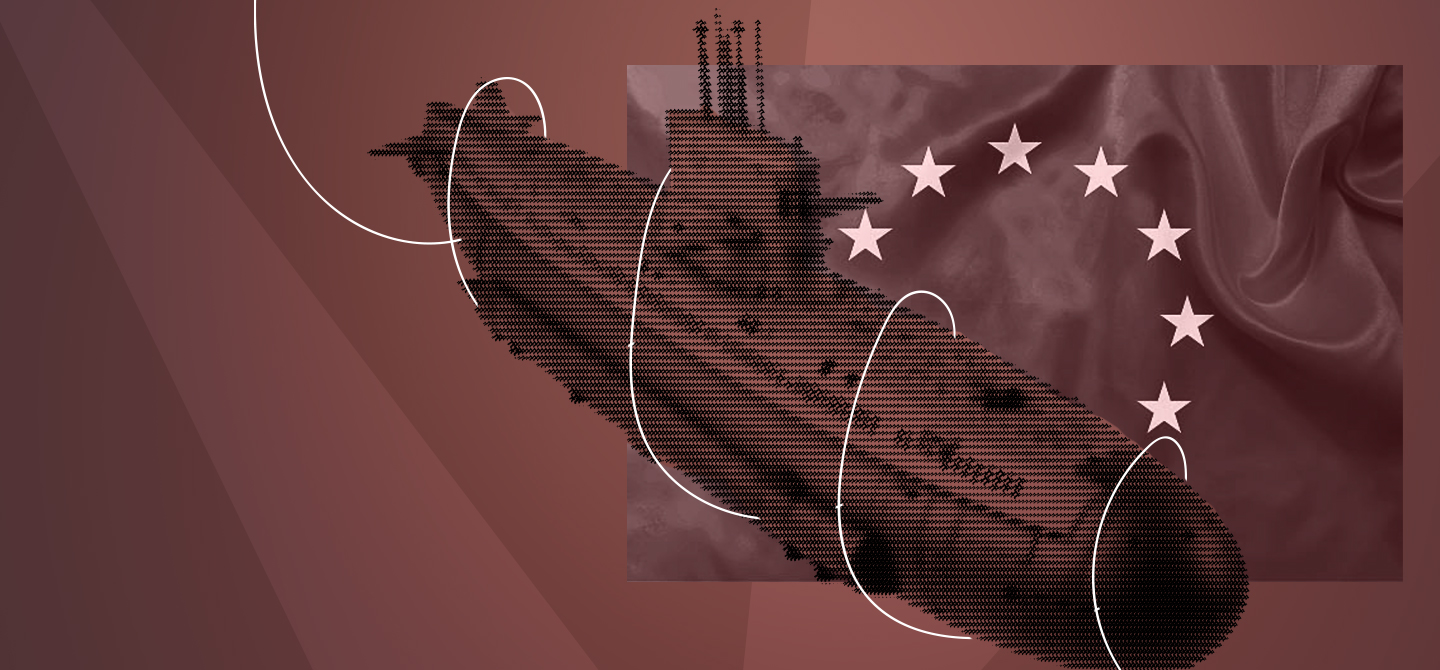
- Nuclear deterrence in France remains at the cutting edge of technological developments; in particular, the country is developing the third generation of nuclear-powered ballistic missile submarines.
- Among the main areas of innovation and capacity development in nuclear power are hypersonic technologies on the one hand and space technologies on the other.
“The balance of power between nations as a deterrent has (…) become more unstable.” In his speech at the École de Guerre in 2020, Emmanuel Macron was already painting a worrying picture of the landscape of deterrence, which has been further darkened by the war in Ukraine and Russia’s rhetoric of intimidation. Together with Paul Zajac, director of strategic affairs within the military applications department of the CEA (French Alternative Energies and Atomic Energy Commission), which designs and manufactures the nuclear warheads of the French deterrent, we take stock of the strategic threats to Western democracies and the state of deterrence in France.
How has the landscape of deterrence evolved over the past decades?
Paul Jazac. The post-Cold War period in Western democracies was marked by both a diminishing role for nuclear deterrence in defence strategies and a focus on the risk of nuclear proliferation, which remains a major concern today. After the fall of the USSR, Western countries that had signed and ratified the Treaty on the Non-Proliferation of Nuclear Weapons (also known by its acronym TNP, concluded in 1968 and to which France acceded in 1992) wanted to set an example through disarmament measures, and the nuclear issue became less present in the public consciousness. However, this development has not been mirrored in China and Russia, where nuclear strategies have remained central.
A turning point was reached at the end of the 2000s, with a renewed focus on nuclear power in the interplay between powers. This is most clearly seen today with the war in Ukraine, through Russia’s strategy of nuclear intimidation, which aims both to prevent Western governments from supporting Ukraine and to divide public opinion.
The philosopher and political scientist Raymond Aron said in 19761: “For the great powers, the possession of nuclear weapons has not, until now, guaranteed ‘non-war’; it has guaranteed non-nuclear war.” Could the same be said today?
I would qualify Raymond Aron’s remarks: deterrence is there to prevent major wars between powers, not just nuclear wars. And in this sense, it works, including in the context of the war in Ukraine: it is the exercise of deterrence that prevents an extension of the conflict. However, the fact is, and this has been the case since the Cold War, that nuclear deterrence does not prevent “peripheral conflicts in relation to those that would pit the major powers against each other, nor the concept of proxy wars.
Several countries have acquired nuclear weapons outside the NPT. Is proliferation inevitable and does it threaten Europe?
In the 1960s, more than a dozen additional nuclear powers were expected to emerge in the Western world over the following decade. In reality, the implementation of the NPT normative framework has worked for the most part: the number of States that have acquired nuclear weapons outside this framework can be counted on the fingers of one hand (Editor’s note: India, Pakistan, North Korea and Israel2).
Iran is currently at the centre of a major proliferation crisis, which could set a precedent, either strengthening or weakening the entire system, depending on the outcome. The risk of an Iranian nuclear arsenal is that it could trigger a proliferation cascade in the region, with countries that see their security diminished seeking to develop their own capabilities.
North Korea’s illegal withdrawal from the NPT could also be seen as a failure of the non-proliferation effort, and its recent rapprochement with Russia constitutes a major attack on the architecture of non-proliferation. Russia, a country with NPT status and therefore with the responsibility to guarantee the treaty’s standards, implicitly recognises North Korea’s nuclear status through this rapprochement.
The war in Ukraine could also, depending on its outcome, have other systemic consequences. In the event of Ukraine’s defeat, some countries might consider that the only effective protection against the potential aggression of a nuclear-armed country would be to acquire their own nuclear capabilities. This is one of the reasons why it is important that Russian aggression fails.
There has also been a resurgence of investment in deterrence by Western powers. What are the major technological developments to be considered in this field today?
In France, nuclear deterrence is still at the cutting edge of developments in military technology; its credibility depends on this. This bears repeating, as we could be forgiven for thinking that it is a somewhat static tool, having changed little since the 1960s. On the contrary, the stability of this strategy is guaranteed by constant technological adaptation, carried out by the Ministry of the Armed Forces and the CEA. France is thus in an important phase of renewing its nuclear arsenal. We are developing the 3rd generation of nuclear-powered ballistic missile submarines, and all the resulting adaptations for the ballistic missile in its future versions. With regard to airborne capabilities, we are also working on the next vector and the nuclear warhead it will carry. This work is of course based on projections into the future to ensure that the tool will remain at the cutting edge in the coming decades. It is a constantly evolving challenge, and for the nuclear warheads it is conducted using simulation methods, without recourse to testing. Without going into detail, I can mention two major fields of innovation and capability development: hypersonic technologies on the one hand and space technologies on the other.
It may seem that deterrence raises two parallel debates, one ethical and moral, the other strategic and political. Where and how can they be reconciled in a democratic system?
To a certain extent, this is true: I am thinking in particular of those who advocate the abolition of nuclear weapons, who seem to me to pursue their objectives in an irenic manner, disconnected from security issues. It can also be argued that ethical and moral concerns are secondary for powers such as Russia or China, for example.
In well-established democracies, these two debates must be connected to ensure the consistency of deterrence strategies with the rule of law, which is the foundation of the democratic system. In his speech of 7 February 2020, the President of the French Republic emphasised the importance of articulating the strategic and ethical dimensions of nuclear deterrence.
For deterrence is in fact a paradox, which on a moral level is called dissuasive intention: one puts oneself in a position to carry out an action in order not to have to carry it out. We must come to terms with this paradox, while examining deterrence in the broader context of defence strategy. It is when deterrence, considered as strictly defensive, is at the service of a defence strategy consistent with the democratic framework, that we can achieve consistency between strategy and morality.