K‑företag: how Sweden mobilises civilian businesses during war efforts



- In Sweden, during the Cold War, the concept of the K-företag was a contract linking a company to the state, designed to ensure the continuity of production and the maintenance of vital societal functions should war break out.
- At the time, the authorities regarded civilian businesses as indispensable resources for national defence in a crisis situation.
- This framework for economic partnership was based on voluntary cooperation: companies retained their freedom, without any form of a command economy.
- However, in the 1990s, Sweden dismantled the system in favour of a new model for security of supply through integration into the European market and free trade.
- Today, reinstating the K-företag system would be impossible, but a new model has been proposed: security of supply agreements, known as F-avtal.
In 1994, Leif Arthursson, director of a Swedish fire hose manufacturer, had a discreet plaque on a wall in his factory. It bore the inscription “K‑företag”, a commitment signifying that, in the event of war, the company would not have to close its doors. On the contrary, it would have reorganised its operations to fulfil a pre-established contract with the state, to produce a specific type of hose designed to be manufactured in times of crisis without the need for imported raw materials1. Thirty years on, Sweden is seeking to revive this system.
A concept born of necessity
K‑företag (krigsviktiga företag, “companies of critical importance in wartime”) are part of a long Swedish tradition of economic preparedness, the origins of which date back to the First World War. Although Sweden remained neutral, it was not spared the economic consequences of the conflict. Disruptions to international trade and shortages of raw materials exposed the vulnerability of an economy heavily dependent on imports. This experience gradually led the authorities to view civilian enterprises not merely as economic players, but as indispensable resources for national defence in the event of a crisis)23.
This line of thinking was part of a broader trend towards economic planning observed in several European countries. In Germany, the industrialist Walther Rathenau discovered as early as 1914, after surveying nearly nine hundred large companies, that their reserves of raw materials would only be sufficient to sustain a few months of war. This realisation led to the creation of an administration tasked with coordinating industrial supply4. In the Soviet Union, centralised planning followed a similar logic of permanent mobilisation of the economy. Sweden, however, chose a different path.
In 1917, the economist Eli Heckscher set up an initial temporary commission for economic preparedness. This became a permanent body in 1928 under the name Rikskommissionen för ekonomisk försvarsberedskap, with the remit of building up strategic stocks and preparing industry for a possible war. From this period onwards, General Joachim Åkerman, the institution’s first chairman, explicitly rejected the German and Soviet models. In a memo addressed to its board of directors, he explained that Sweden must not intervene authoritatively in the peacetime economy. On the contrary, economic preparedness must be based on organised cooperation between the state and businesses that remain free, rather than on a command economy. This principle of voluntary partnership forms the enduring foundation of the Swedish model.
Authorities map out supply chains to identify those businesses whose goods or services are essential to the country’s functioning in times of crisis
The system proved its worth during the Second World War, with Swedish industrial preparedness proving far more effective than it had been in 1914. Building on this experience, the system was gradually institutionalised and strengthened throughout the Cold War under the authority of specialised agencies, notably the Överstyrelsen för ekonomiskt försvar (ÖEF), or National Office for Economic Preparedness, which was responsible for coordinating the country’s economic preparedness until 19865. The principle is simple: the authorities map out supply chains to identify those businesses whose goods or services are essential to the country’s functioning in times of crisis. Each company is then covered by a preparedness plan and, for the most strategic ones, a beredskapsavtal (“preparedness agreement”), which sets out both the company’s obligations in the event of war and the guarantees provided by the state, such as the retention of key staff, protection against certain requisitions, or exemptions from transport and fuel rationing.
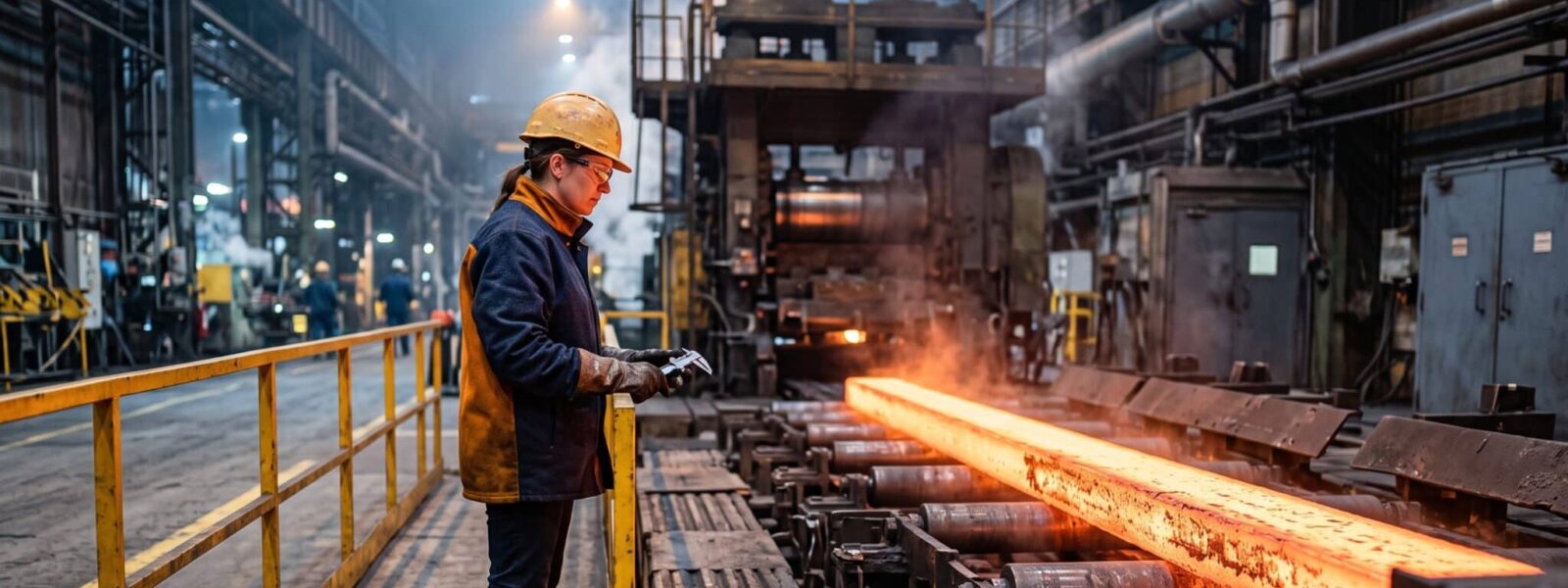
At its peak, during the Cold War, the scheme covered nearly 15,000 companies, extending well beyond the defence sector alone. Industrial groups such as Volvo and Saab were thus included alongside operators of essential infrastructure, such as the Swedish railways and the Stockholm Stock Exchange. This diversity illustrates a broad conception of economic defence: the aim is not merely to ensure military production, but to guarantee the continuity of all of society’s vital functions.
Dismantling and its consequences
In the 1990s, Sweden gradually dismantled its economic preparedness system. This decision was based on a new approach to security of supply, which was no longer to be ensured through strategic stocks and state planning, but through integration into the European market and free trade. This shift reflected a widely held belief following the end of the Cold War that peace was now deemed to be lasting and that international supply chains were a factor for stability rather than a source of vulnerability. The opening up of the Swedish economy accompanied this shift in doctrine. Consequently, following its application to join the European Community in 1991, Sweden reformed its competition law to bring it into line with Community rules, joined the European Economic Area in 1994 and then acceded to the European Union in 1995. Contingency plans were gradually phased out in the late 1990s, whilst the main strategic stocks were liquidated in the early 2000s.
This strategy was based on the idea that economic interdependence was now sufficient to guarantee the continuity of supplies. However, the crises of the 21st century have revealed its limitations. The Covid-19 pandemic has highlighted Sweden’s dependence on global supply chains, leading to shortages of face masks, medicines and industrial components. The Russia-Ukraine war has confirmed this vulnerability by highlighting insufficient ammunition stocks and the difficulties in rapidly scaling up production capacity within the defence industry.
A reassessment
Recent crises have prompted the Swedish authorities to reconsider this decision. As early as December 2023, the Defence Commission (Försvarsberedningen), the parliamentary body responsible for setting the broad guidelines for defence policy, recommended in its Kraftsamling report that a system modelled on the K‑företag be re-established6. This direction was confirmed a few months later in Stärkt försvarsförmåga, Sverige som allierad, which set a target of at least three months’ self-sufficiency for activities essential to defence, achieved through a combination of stocks held by the state and by companies, supplemented by industrial and international agreements7. The debate therefore no longer centres on whether to re-establish economic preparedness, but on how to adapt it to an economy profoundly transformed by globalisation, digitalisation and the internationalisation of value chains.
At the same time, the government commissioned a committee of inquiry into the private sector’s economic preparedness (Utredningen om näringslivets försörjningsberedskap) to propose a reform of the system. Its final report, submitted in June 2025 and published in the official collection of public inquiries (Statens offentliga utredningar, SOU), concluded, however, that a return to the previous system was impossible. Several developments explain this finding. Since the end of the Cold War, supply chains have become globalised, corporate capital has become largely internationalised, and much of the expertise relating to business planning for defence (företagsplanläggning) has been lost. These economic transformations are compounded by a profoundly revised legal framework. Membership of the European Union requires, in particular, compliance with the principle of proportionality, which demands that any measure be strictly necessary to achieve the objective pursued, as well as the principle of non-discrimination, which prohibits favouring a company on the basis of its nationality within the European Union or the European Economic Area. Under these circumstances, economic planning must be rethought within the framework of an open economy and European law.
The proposed new model: F‑avtal
Rather than reinstating the K‑företag system, the commission of inquiry proposes a new instrument: supply security agreements (försörjningsberedskapsavtal), or F‑avtal. Unlike the historical system, this no longer involves granting certain companies permanent strategic enterprise status. Specially designated sectoral authorities (F‑avtalsmyndigheter) conclude individualised agreements with the companies concerned, based on identified needs. The model therfore moves away from a centralised planning approach in favour of contractual cooperation, which is more flexible and better suited to the diversity of contemporary economic actors.
The committee considers, however, that this cooperation cannot be based solely on voluntary participation. The commercial interests of companies, particularly when they belong to international groups or are foreign-owned, may conflict with defence requirements and the need to ensure security of supply in times of crisis. It therefore recommends that the F‑avtal be accompanied by the possibility of legal compulsion as a last resort. In support of this recommendation, it draws on the Norwegian experience, where the mere existence of a power of requisition has encouraged the conclusion of voluntary agreements without it ever being necessary to invoke it in practice. The credibility of state intervention thus appears to be one of the conditions for the success of voluntary cooperation.
In conclusion, Sweden is not seeking to reinstate the K‑företag as they existed during the Cold War. Rather, it is attempting to rebuild cooperation between the state and businesses in a way that is suited to a globalised economy and the European legal framework. Beyond the Swedish case, this development illustrates a challenge now shared by many European states: how can economic resilience be strengthened in the face of crises without abandoning the principles of an open economy?