Vaccine passport: why so much doubt?


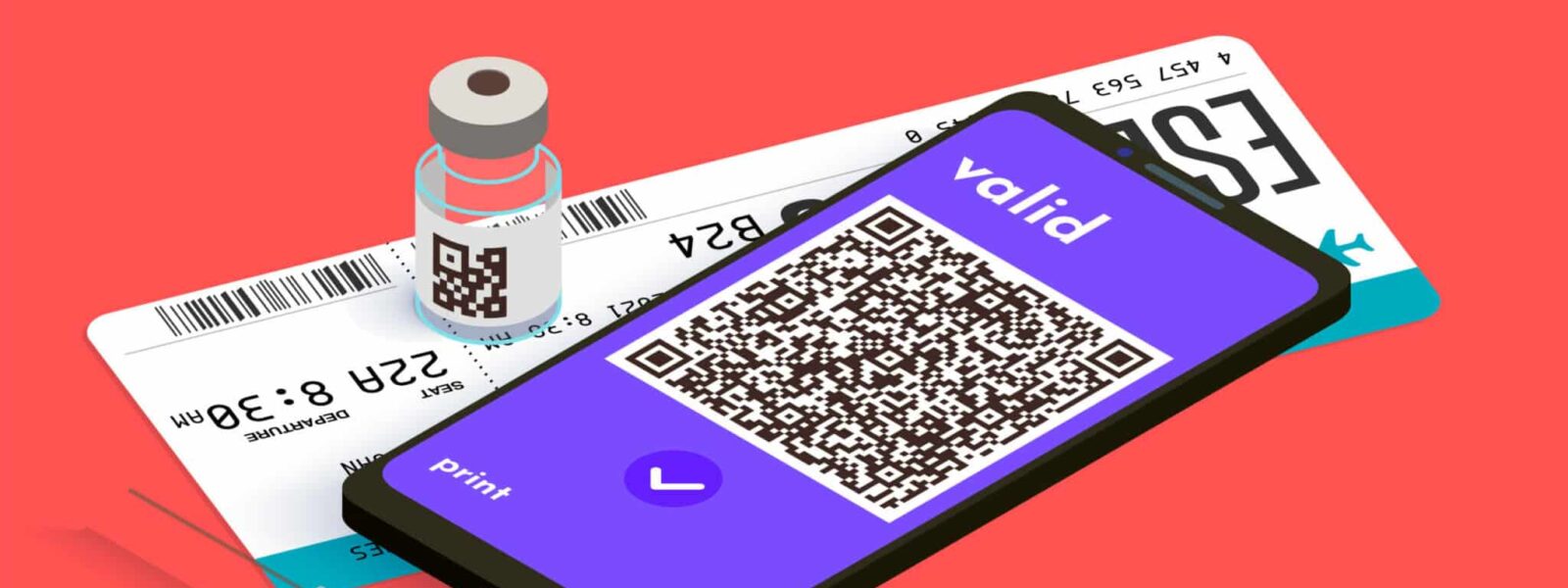
According to a survey by the Economic, Social and Environmental Council 1, 67% of French people are “highly unfavourable” to the adoption of a “vaccine passport”. How do you explain this opposition?
Étienne Minvielle. The passport offers a way to reopen places that are currently closed and to start travelling again. But many people see it as a form of infringement of individual freedoms and a potential source of inequality. The passport is supposed to be an incentive for vaccination, yet access to vaccines is still problematic. So, to generalise a vaccine passport now would be giving freedoms to those who lucky few who have been able to benefit from it so far.
Hence, this would create inequalities on both national and international levels, likely to fuel bitterness of non-vaccinated individuals and suspicions of entitlement. The crisis is putting social cohesion to the test, and the reluctance to put this passport into circulation is a testimony to this.
Who are those who oppose this passport?
There is widespread fear of surveillance among most French people and the passport, since it increases traceability, increases this fear. Many people also have doubts about the risks and effectiveness of vaccines. We can see this clearly with the controversy surrounding AstraZeneca’s doses: people are worried about the lack of hindsight and fear potential side effects.
But it’s not just the clinical sphere that is concerned. Many people understand the medical benefit/risk ratio but are still sceptical about the intentions of those who are pushing for vaccination. There is a social – almost identity-based – rejection of political and medical elite. This scepticism can border on conspiracy when citizens come to imagine collusion between elites and pharmaceutical laboratories. We are therefore seeing the emergence of a form of resistance, based on the rejection of the discourse of the elite, of which the first and foremost is the government.
There is widespread fear of surveillance among most French people and the passport, since it increases traceability, increases this fear.
How can those people be convinced of the effectiveness of vaccines?
For people who have doubts about the clinical effectiveness of vaccines, medical staff simply need to explain the clinical results, which prove that vaccines are not dangerous. In the case of AstraZeneca, for example, no link between the vaccine and thrombosis has been demonstrated.
For those whose doubts are based on socio-identity criteria, the mistake is to believe that words by doctors and authority figures are enough 2. The vaccination of elites can even send a negative signal: the fact that Jean Castex was vaccinated with a dose of AstraZeneca can be interpreted as proof of his links with the laboratories. The response is therefore not be clinical, rather it is social.
We need to develop a different kind of communication, based on influencers playing the role of “trusted third parties” [President Macron promised famous youtubers McFly and Carlito to take part in one of their videos if they made a music video on preventive measures that reached 10 million views]. The vaccination of rapper Booba (suggested in a post on his Instagram account) is in this sense not entirely anecdotal, not least because he is followed and listened to by a some of these conspiracy theorists. The mixed reaction of his fans on social networks shows the limits of this method: people are not fooled, and often perceive this communication as an attempt at manipulation.
So, there is no miracle solution for convincing people who doubt?
It is extremely difficult to convince people who do not want to be convinced. To take just one example, one study showed that parents who were reluctant to vaccinate their children became even more sceptical when they were presented with data that shattered the myth of autism risk due to vaccines 3. Although counterintuitive, this position does not reflect a lack of intelligence. It demonstrates that scientific evidence is rejected when it disturbs beliefs. It is therefore not the conclusion that counts, but who produces it.
The transmission of information is not just a sender/receiver relationship! It requires taking into account the whole social context: people are not just clinical cases. In cancer patients, for example, the rate of non-adherence to prescriptions is close to 20% in different clinical conditions 4 5. This results in considerable loss of opportunity and is inexplicable from a strictly clinical point of view. In the work we are currently doing, this non-adherence seems to be explained by social phenomena: the relationship to life, the level of isolation, lassitude or the deterioration of the professional situation. This social dimension must be taken into account to optimise care. The same approach must be adopted to understand the reluctance of citizens to be vaccinated and the health passport.
Interview by Juliette Parmentier and Clément Boulle
Contributors
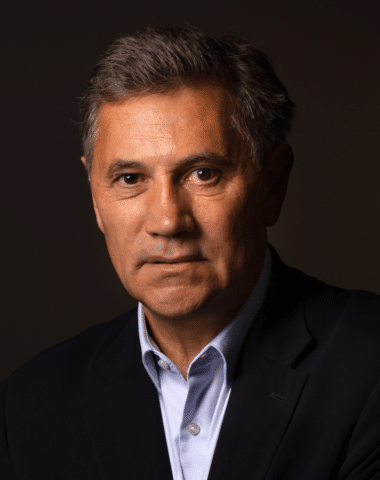
Etienne Minvielle
A former intern at the Paris hospitals, a graduate of ESSEC and holder of a doctorate from the Ecole Polytechnique, Etienne Minvielle is also Director of Quality, Risk Management and Patient Relations at the Gustave Roussy Institute. He is director of the Centre de Recherche en Gestion (i3-CRG*) at Ecole Polytechnique (IP Paris).
*I³-CRG: a joint research unit of CNRS, École Polytechnique - Institut Polytechnique de Paris, Télécom Paris, Mines ParisTech
Other contributions
Voir toutes ses contributions