
COP27: cities and universities create an alliance against climate change



- In the face of the worsening climate crisis, cities and universities are working together.
- The aim is to organise thought, training, and research activities so that cities can become involved in the fight against global warming.
- This alliance facilitates contact between academic and institutional partners and creates a global network of researchers and public decision-makers.
- For example, the École Polytechnique (IP Paris is working with the City of Paris as part of the green and sustainable finance strategy supported by the region.
- In the south, the city of Marseille is working with Aix-Marseille University to review its mobility, energy, and biodiversity preservation policies.
In 2011, Edward Glaeser, an economist at Harvard University, considered that cities were the healthiest, greenest, and richest places. People live longer, healthier and with 40% less energy consumption in New York than in the suburbs1. But the cities and metropolitan areas of the 21st Century are set to undergo profound changes in the future: in technological, environmental, and social ways.
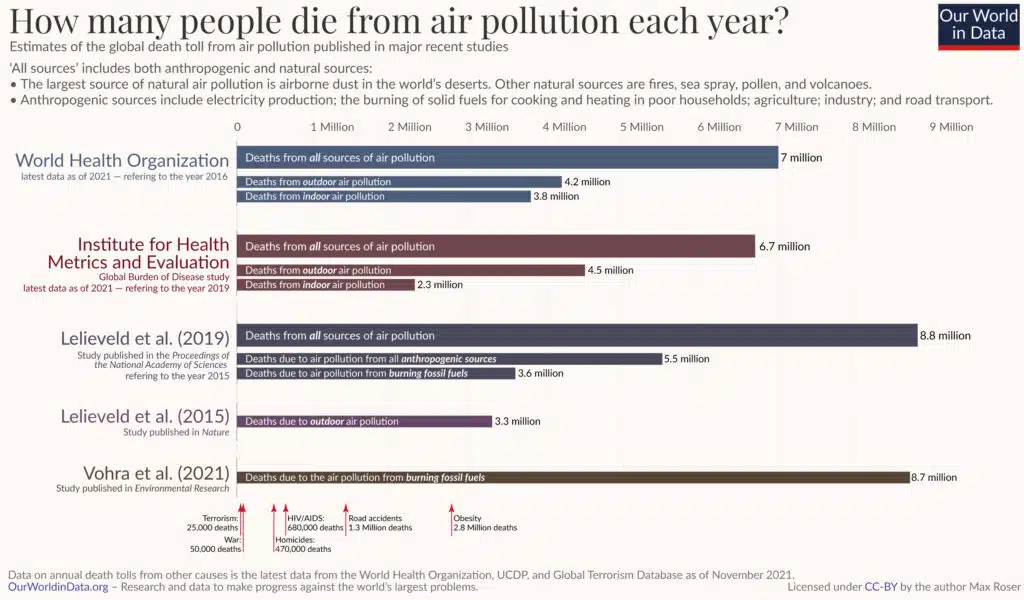
Climate change and the resulting health risks pose a major problem for our cities and towns: air pollution alone is responsible for 3–9 million deaths per year – equivalent to almost 1 in 5 deaths worldwide – and up to 3 times more than Covid-19 (estimated at 3 million deaths).
Uniting against climate change
As the global climate crisis escalates, cities and universities are demonstrating unprecedented commitment.
First, given their dual nature as the political institutions closest to citizens and the main providers of public services, cities are committed to addressing change by driving sustainability, participation, and equality. These same principles are guiding the actions of a growing number of universities, which are also keen to contribute in terms of research and training, both on the characteristics of climate change and on the best tools to counter it and integrate it into government measures.

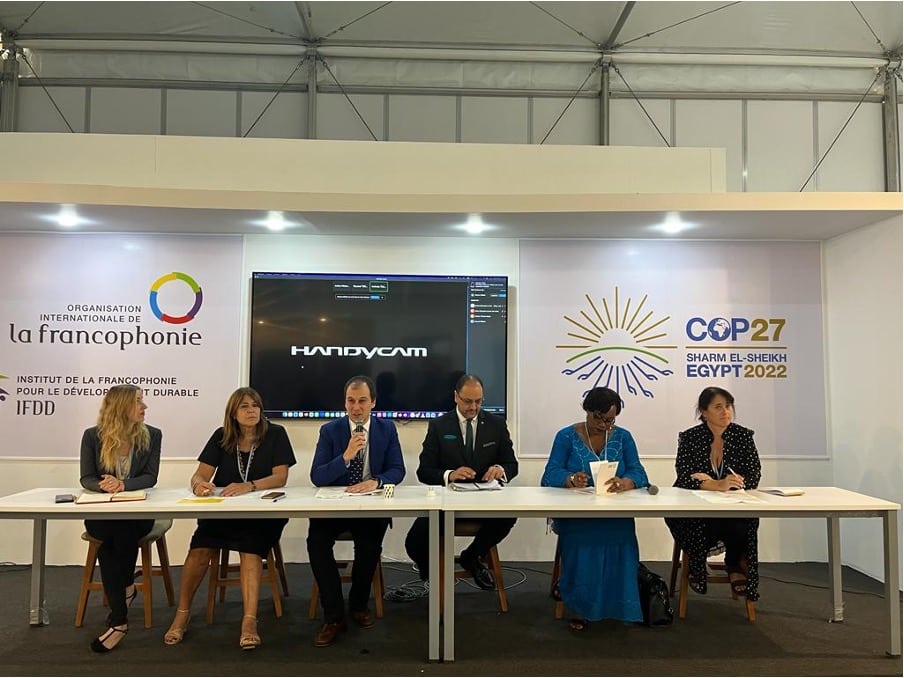
This convergence of intentions fosters a growing synergy between cities and universities. During COP27 in Sharm el-Sheikh, the City Diplomacy Lab of Columbia Global Centers Paris and the AIMF (Association internationale des maires francophones) organised a round table at the Pavillon international de la Francophonie on 8 November2, bringing together – alongside Lorenzo Kihlgren Grandi and Patricia Crifo – Michèle Rubirola, First Deputy to the Mayor of Marseille ; Slim Khalbous, Rector of the Agence Universitaire de la Francophonie; Etotépé Sogbohossou, Director of the Environment Department at Senghor University in Alexandria; Mélody Braun, Associate Member of the International Research Institute for Climate and Society (IRI) at Columbia University’s Climate School.
The City Diplomacy Lab at Columbia Global Centers Paris is an unprecedented alliance between academics and practitioners of international city action. It deploys a multidisciplinary methodology to broaden the understanding and practice of city diplomacy and contribute to its evolution. And it develops both research (theoretical framework, data and comparative analysis) and training on city diplomacy issues (for university students and municipal, national and international officials), as well as practice by advising local and international actors.
In addition, since 1979, the International Association of Francophone Mayors (AIMF) has brought together the mayors of cities that share the French language and that collectively share a societal project: to build cities that are sustainable in their social, economic, and environmental aspects through inclusive and open governance.
What are the objectives of the collaboration between cities and universities?
An event at COP27 focused on the role of alliances between cities and universities for sustainable development and the climate.
On this occasion, several emblematic cases of city-university alliances for the sake of climate and sustainable development were presented. For example, École Polytechnique (IP Paris) and the City of Paris have been developing an innovative and original partnership since 2019 with the aim of responding to a common problem, namely how cities and universities can effectively fight climate change together.
Converging goals on climate issues are driving a growing synergy between cities and universities.
In concrete terms, this involves, on the one hand, organising a reflection, training, and research activity to promote the contribution of cities to the fight against climate change, with the Climate Plan, for example. On the other hand, it is a question of facilitating direct contact between academic and institutional partners by relying on the creation of a worldwide network of researchers and public decision-makers.
This collaboration makes it possible to assess the prospects offered by digital technology, the new challenges for infrastructure and the smart city, as well as to anticipate the major risks that metropolises will have to face. It is the students of the MScT Economics for Smart Cities and Climate Policy3 who are interested in all the dimensions of a sustainable climate and finance plan in their final thesis (as part of their capstone projects). They are also the ones who must come up with ideas for the future. The students benefit from the advice of a professional from the partner institution involved, who can help them access relevant data. The students are supervised by a master’s referent professor who is in charge of the academic part.
In practical terms, the subjects covered are numerous: they range from traffic and mobility policies in Paris (bicycle plan, subsidies for EVs, motorised two-wheelers, electric refuelling, management of old vehicles, carbon pricing) to energy renovations, bio-sourced construction, and intelligent buildings, not forgetting the reduction of plastic, food wastage, waste pricing and recovery, or even biodiversity, urban agriculture, fake news and cities, sport, and health.
Similarly, École Polytechnique and the Île-de-France region have been cooperating since January 2021. Since the law on the New Territorial Organisation of the Republic (7 August 2015) and the law on the Energy Transition for Green Growth (17 August 2015), the French regions have become key players in the implementation of energy, air quality and climate policies. Given their responsibilities and competences (urban planning, mobility, etc.), local authorities are key players in the field of air quality, energy, and sustainable development policies.
The objective of the collaboration between the region and École Polytechnique (IP Paris) is to carry out joint work – in particular, economic and social impact studies – concerning the Ile-de-France region, within the framework of the green and sustainable finance strategy supported by the region.
Marseille and sustainable urban development
Many questions arise in the context of such collaborations between cities or regions and academic institutions, whether it be, for example, on the measures to be taken to achieve ambitious objectives or the measurement of the impact of a climate plan and a sustainable finance strategy.
The aim is to organise reflection, training and research to promote the contribution of cities to the fight against climate change.
Among the examples of collaboration between cities and universities for climate and sustainable development that exist, we should mention Marseille. In April 2022, the City of Marseille was chosen by the European Commission (among the 377 municipalities that applied) to participate in the European programme « One hundred carbon neutral cities by 2030 ». To achieve this objective, Marseille has chosen to focus on transport and mobility, thermal renovation of buildings and public facilities, sustainable energy production, a return to nature in the city, preservation of the coastline and biodiversity, inclusion and innovation. To meet this challenge, the City of Marseille has co-constructed the project with Aix-Marseille University.
The project is therefore a great hope for finding solutions for sustainable urban development and effective tools for mitigating and adapting to climate change.