Ariane 6: a strategic success for Europe, but challenges to come


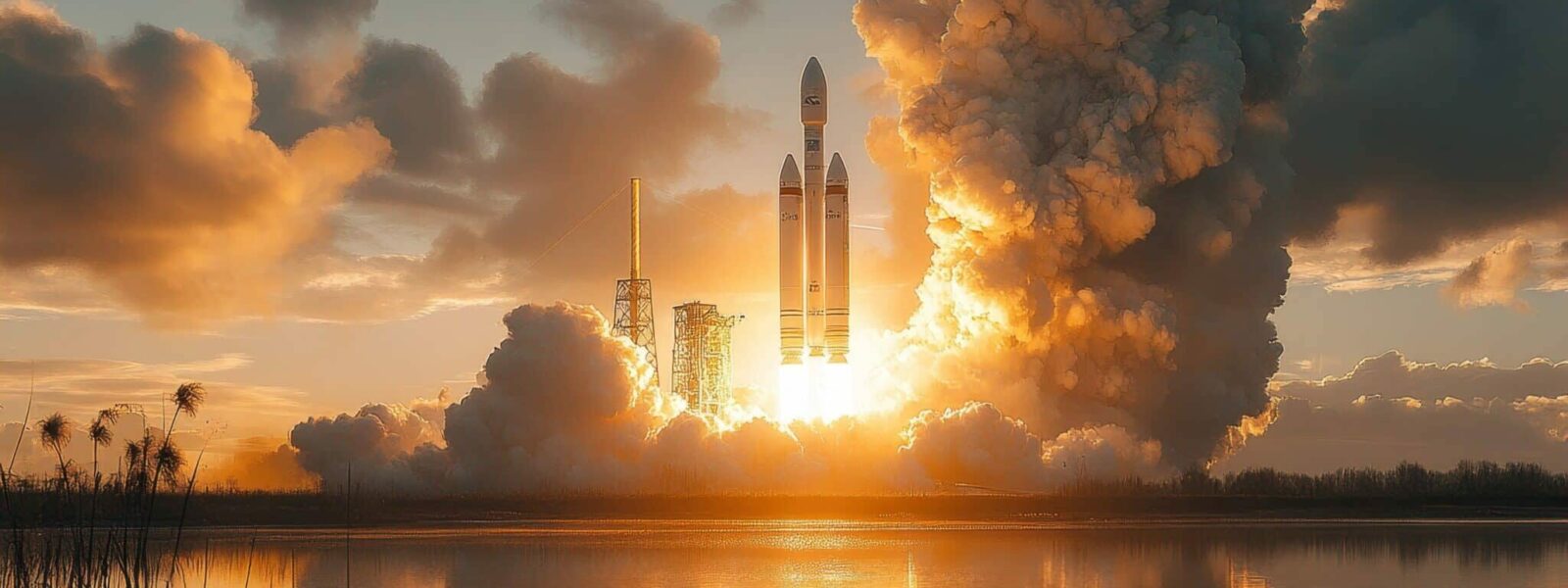
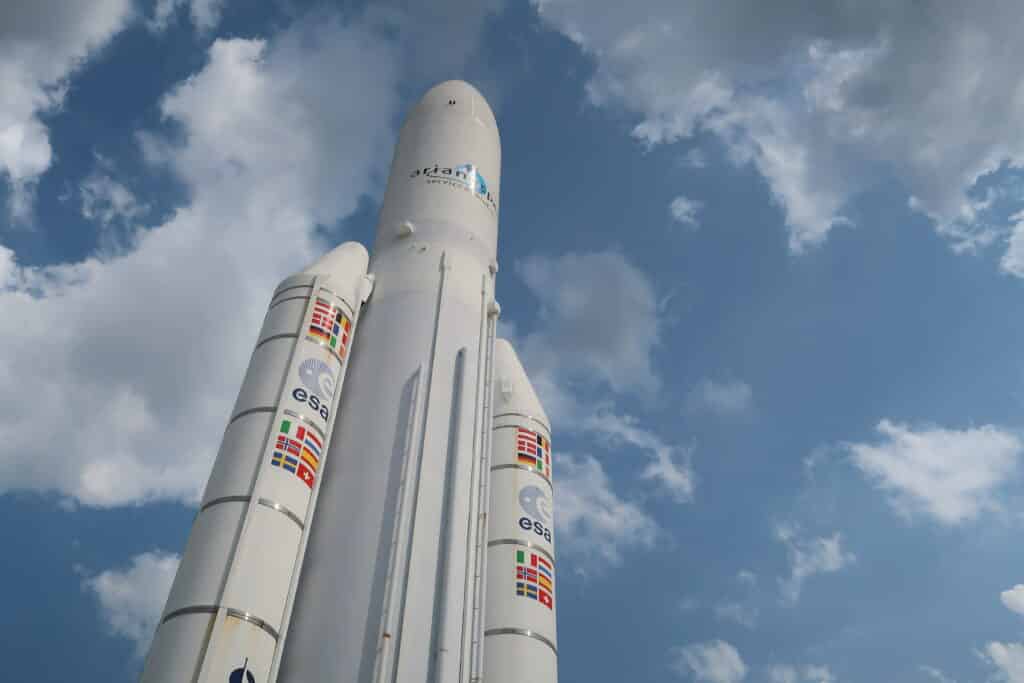
- The successful launch of Ariane 6 in March 2025 marks Europe’s return to full autonomy when it comes to access to space and its progress towards greater sovereignty.
- Europe, which has fallen behind the United States when it comes to reusable launch vehicles, is working on closing this gap, notably through the Callisto and Themis projects.
- The Guiana Space Centre now provides France with a strategic site, and modernisation programmes are expected to be completed in 2026.
- The European approach to space development differs from that of the United States in its measured and reasonable approach, particularly through the IRIS² satellite constellation.
- The question of using nuclear power in space in Europe is being considered by policy makers, who will have to decide at European level.
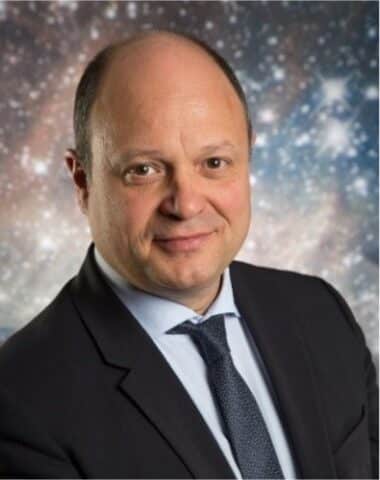
The delays accumulated by Ariane 6 and the launch failures of the Vega‑C light launcher had deprived Europe of autonomous access to space, which is crucial to regaining its sovereignty. Lionel Suchet, interim CEO of the French National Centre for Space Studies (CNES), looks back on the successful launch of Ariane 6 in March 2025 and outlines the prospects for the launch vehicles in Europe.
On 6th March 2025, Ariane 6 successfully completed its eagerly awaited first commercial flight. What were the challenges of this flight?
Lionel Suchet. This success follows on from the maiden flight of Ariane 6 in July 2024, which was already a near-total success. The deorbiting of the third stage, which could not be carried out during the first qualification flight, was successfully completed in March 2025. This is a unique feature of Ariane 6 compared to Ariane 5: in line with sustainable development principles, the upper stage is redirected towards the atmosphere to disintegrate.
The stakes were high for Europe. Firstly, because these flights, to which we can add the return to flight of Vega‑C, mark the return of full autonomy of access to space for the continent. Secondly, because Ariane 6’s first commercial flight enabled the launch of the CSO‑3 military observation satellite (Editor’s note: the third and final satellite in the MUSIS programme, marking the completion of the military space capability renewal cycle provided for in the 2024–2030 military programming law), at a time when the President of the Republic was discussing European sovereignty with his counterparts in Brussels.
Finally, from a commercial point of view, because Ariane 6’s order books are full, with customers from both Europe and outside Europe, particularly the United States, who did not want to rely solely on SpaceX. We have demonstrated that Ariane 6 is a reliable partner at a crucial moment in the history of international competition in the space sector.
Europe has fallen far behind the United States on the issue of reusable launch vehicles. Where does it stand today?
This is an extremely important issue, for obvious reasons relating to cost and sustainable development. We have been working on it for several years through the Callisto and Themis projects, and today there are no longer any major technological challenges to overcome. The first launches will take place very soon: first at low altitude next year, then longer flights, until we achieve a recoverable flight by 2030.
But we must bear in mind that it is not just a question of mastering the reusability of the launcher from a technological point of view: it also requires a profound change in the way we manufacture them. Today, production is scaled to produce a dozen Ariane 6 launchers per year. With the advent of a reusable launcher, the number of launchers produced each year will automatically decrease. It is therefore clear that the entire economic and industrial model, as well as the entire learning curve, will be impacted. Manufacturers are working on this, and we are supporting them.
Autonomous access to space also requires a sovereign launch base… France has the Guiana Space Centre (CGS), which is currently being modernised. What changes are being made to the site?
Europe, and France in particular, has exceptional resources, expertise and facilities, including the CSG, which is uniquely located. Its proximity to the equator means that launches to the east can take full advantage of the slingshot effect caused by the Earth’s rotation. Its location on the Atlantic coast also means that rockets do not fly over land, and therefore potential residential areas, when launching north or east. The base is also protected from severe weather phenomena such as cyclones.
We therefore have a very strategically located site. The modernisation programmes, which began two to three years ago and are due to be completed in 2026, aim to make the base more energy efficient, increase launch rates and enable the operation of different launchers, including Ariane 6 and Vega‑C, of course, but also reusable demonstrators and mini and micro-launchers, such as the partially reusable light launcher Maia, which is currently under development. The goal is to make the centre a truly multi-launcher port.
The United States carried out 156 launches in 2024, including 132 by SpaceX’s Falcon 9. The Kourou launch complex is designed for 12 Ariane 6 launches per year. Will this rate be sufficient to meet European needs?
The comparison is certainly striking… However, several factors must be taken into account. First, we could consider increasing the launch rate, which is always a possibility. But it is important to note that the European and American approaches to space are completely different. The United States wants to occupy the field in every sense of the word: setting foot on Mars, establishing lunar bases, increasing the number of satellites in orbit, providing commercial communication services to the entire globe, etc. This is leading in particular to Elon Musk’s mega-constellations. Let’s remember that not so long ago, only 2,000 satellites were orbiting the Earth. Today, there are 9,000, including 7,000 Starlink satellites, with plans to increase this number to 40,000. Europe, meanwhile, has a completely different approach to space development, which it wants to be both rational and reasonable. Meeting our needs in the coming years will therefore involve deploying a few hundred satellites at most, in particular the IRIS² constellation, signed by the European Commission at the end of last year, which will comprise 300 satellites. European launch capabilities will be sufficient for this.
The European Space Agency (ESA) is looking into the use of nuclear power, which is already operational on American missions, both for powering space systems and for propulsion. What is the CNES’s position on this?
The use of nuclear power would contribute to our sovereignty in the space industry, as some applications cannot rely on solar panels alone, for example, permanent installations on the Moon or missions to explore the distant solar system. As both a major space power and a major nuclear power, France has the technological and industrial capabilities to develop both small systems such as RHU (radioisotope heater units) and RTG (radioisotope thermoelectric generators) for producing heat and electricity, and micro-power plants for propelling heavy spacecraft or for producing energy on a possible future lunar base.
But other questions arise. Firstly, there is the question of societal acceptance of such launches, given their location in French Guiana, and secondly, there is the budgetary issue: the qualification of Kourou, but above all the development of the systems will require significant financial investment – several billion euros for the micro power plants. We will therefore need to seek to pool civil and military applications as much as possible, but also terrestrial and space applications.
How much priority should be given to this issue in the current context, which requires significant investment on many fronts? This is a question that political decision-makers will have to decide at European level.