
Everything you need to know about tokenisation of public assets



- The tokenisation of public assets involves representing government securities or rights to public assets as tokens on a distributed digital ledger.
- To date, several such initiatives have been carried out on a small scale by the public bank KfW and in Slovenia.
- The tokenisation of sovereign bonds serves more as a testing ground than a source of immediate economic gains.
- Traceability of the ledgers does not improve democratic oversight of public finances but does allow for more frequent updates of information.
- A large-scale issuance of tokenised French Treasury bonds (obligations assimilables au Trésor – OATs) carries a risk premium, as the infrastructure has not yet been sufficiently tested.
The tokenisation of public assets involves representing government securities or rights to public assets as tokens on a distributed digital ledger. This enables their issuance, holding and circulation. This approach remains experimental in Europe, within a recent regulatory framework. A pilot scheme adopted by the EU in 2022 temporarily authorises the issuance and trading of financial instruments on DLT infrastructures1, supplemented by the MiCA Regulation which entered into force in 2024 2.
The issue goes beyond mere digitisation. As government bonds are already dematerialised and integrated into proven settlement and delivery systems, the question is that of the real added value of an architecture unifying issuance, settlement and custody within a single register. Its proponents cite gains in automation and post-trade simplification; while uncertainties relate to start-up costs, operational security and the legal stability of the system. The entry into force of the DORA Regulation in 20253 serves as a reminder that this transformation concerns both the governance and the technical aspects of public financial infrastructures.
In his publications, Pierre-Charles Pradier, professor of economics specialising in payments, analyses the evolution of post-trade structures and the conditions under which technological innovation can generate a measurable collective benefit, giving him recognised expertise on the technical, economic and legal issues related to the tokenisation of public assets.
Understanding the European framework
- The DLT pilot scheme (EU Regulation 2022/858) temporarily allows certain market infrastructures to operate on distributed ledgers, subject to transaction limits and regulated exemptions.
- The MiCA Regulation provides a framework for crypto-assets and e‑money tokens but does not in itself create an obligation to use them or an automatic economic advantage.
- Since 2025, the DORA Regulation has strengthened digital resilience requirements for the entire European financial sector.
The tokenisation of public assets thus takes place within a structured, yet still transitional, legal environment.
#1 At this stage, the tokenisation of sovereign bonds is more of an experimental framework than a proven source of immediate economic gains: TRUE
Pierre-Charles Pradier. Converting OATs into tokens is not the same as securitisation in the traditional sense. OATs are already financial securities; this is simply another form of representing an existing security.
The central argument concerns efficiency. A blockchain would integrate settlement, delivery and custody, raising hopes of cost savings. However, current infrastructures already handle considerable volumes at a European level, with costs that have become barely noticeable. Creating a new framework generates further fixed costs, meaning that the short-term economic gain is not clear, and may even be negative. Technical progress remains a possibility in the longer term, provided reliability and security issues can be resolved.
The most tangible benefit arises if tokenisation opens up access to decentralised platforms such as DeFi4, via automated trading systems integrated into exchange platforms, saving time and energy. However, it is still necessary to be able to pay using electronic currency tokens. Yet euro-denominated stablecoins remain underdeveloped despite MiCA, and public authorities may be reluctant to accept them as a means of payment. The approach is therefore more experimental than immediately profitable, as the risks specific to DeFi are still poorly assessed, and security remains a key unknown.
As for transparency, French public debt is already strictly regulated through announced issuances, monitoring by Agence France Trésor and public monthly reports. Tokenisation would provide real-time information, useful primarily for research rather than for democratic oversight. As sovereign bonds have been dematerialised since 2007, there is also no identified problem of securities disappearing.
What distinguishes tokenisation from simple dematerialisation
Government bonds have been dematerialised since 2007. Tokenisation therefore does not involve a new “digitisation” of the security.
The difference lies in the infrastructure:
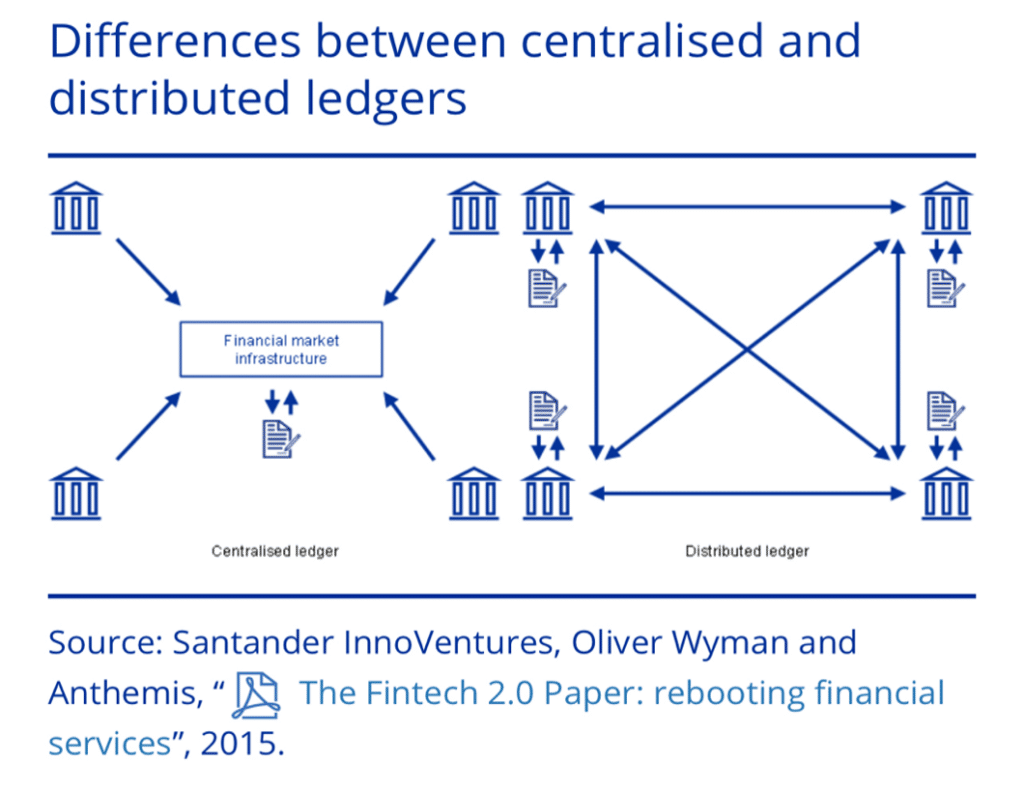
- Registration on a distributed ledger rather than in a traditional centralised chain;
- The ability to integrate settlement, delivery and custody within a single technical environment;
- Potential interaction with automated execution protocols.
The innovation therefore lies in the architecture, not in the legal nature of the security.
#2 The traceability offered by distributed ledgers tangibly improves democratic oversight of public finances: FALSE
There is currently no issue with the traceability of public debt in the sense of a loss of securities. Sovereign bonds, particularly OATs, have long been dematerialised and no cases of their disappearance have been identified.
The main benefit of switching to tokens would be the frequency of information updates. We would have a real-time view, rather than the monthly reporting published by Agence France Trésor. This improvement could be valuable for certain research projects. However, it does not alter the nature of democratic oversight. The public debate remains focused on the overall level of debt rather than on the details of its issuance schedule.
#3 The current European legal framework allows for a clear, stable and large-scale roll-out of tokenised public assets: UNCLEAR
A distinction must be made between the tokenisation of OATs and the tokenisation of currency. MiCA regulates electronic money tokens, which represent the monetary unit in token form. However, the existence of a MiCA-compliant framework for the euro has not triggered a massive boom. The reason lies in the fact that, within the European Union, paying one million euros via a SEPA transfer is already extremely efficient, instantaneous and reliable, with after-sales service and refund options in the event of fraud. Conversely, with tokens, a scam may be irreversible.
For OATs, the relevant framework falls under the 2022 European regulation on the pilot scheme for market infrastructures based on distributed ledgers. This is a testing mechanism, with temporary exemptions lasting three to six years and caps on amounts, notably an issuance cap of one billion. However, one billion is marginal on the scale of the OAT stock, which runs into several trillion.
The main obstacle lies in the transitional nature of the pilot. Between the standard regime and the pilot regime, there is some uncertainty about what will replace the pilot. No one knows which regime will succeed the pilot scheme, and this uncertainty is hindering progress. All of this confirms the logic of a technology demonstrator, in a sandbox environment, where security is paramount.
#4 Tokenised securitisation infrastructures are already fully proven in the face of cyber risks and public service continuity requirements: UNCLEAR
The private sector is already subject to stringent operational resilience requirements, particularly under DORA. It is therefore noteworthy that the public sector is engaging with an issue where, in the private sector, continuity and robustness requirements are already well-established.
It also cautions against the idea that a protocol such as Bitcoin is “absolutely” inviolable. Bitcoin is highly secure due to the energy expenditure involved, which is currently difficult to match, but it has experienced bugs, including the reversal of mined blocks. In practice, proof of security lies in its resistance to attacks observed to date, not in a theoretical guarantee of indestructibility.
In this context, the authorities are proceeding cautiously, using sandboxes and transactions between professionals, without the involvement of private individuals, to test functionality and security. The financial sector already carries out continuous and periodic checks, including penetration tests, even if the testing teams do not necessarily match the calibre of state-sponsored attackers. The approach is gradual. Following tokenised issuances by entities such as the Caisse des Dépôts, the Banque de France and Euroclear are planning to tokenise part of the commercial paper in 2026, i.e. short-term corporate debt, starting small with limited issuances.
It distinguishes between several layers of infrastructure: the chains carrying the tokens representing securities, those carrying e‑money tokens, and those hosting decentralised exchange protocols. At this stage, Agence France Trésor has not selected any infrastructure; public e‑money tokens remain at the pilot stage; and the use of DeFi protocols by Agence France Trésor is still a hypothetical scenario.
At the international level, there is a register maintained by the International Capital Market Association listing tokenised issuances. Sovereign issuances are rare in this register. It mentions an issuance by the Republic of Slovenia in 2024 and issuances in Germany, notably via KfW.
The three layers of risk
The tokenisation of public assets involves several distinct infrastructures:
1. The blockchain hosting the tokens representing sovereign securities;
2. The blockchain supporting the e‑money tokens;
3. Any decentralised exchange protocols that may be used.
Each poses specific challenges in terms of security, governance and legal liability. Overall resilience depends on the coordination of these three levels, rather than on any single isolated protocol.
#5 The tokenisation of government bonds alters the degree of financialisation of public finances: FALSE
A large-scale issue of tokenised OATs would currently entail a risk premium, as the infrastructure has not been sufficiently tested. The approach is therefore gradual. As perceived risk decreases, it becomes feasible to issue batches of tokenised OATs, or even the entire portfolio, following a gradual path of risk reduction.
When it comes to financialisation, the distinction is clear. Tokenising securities that are already financial instruments amounts to a technical change in representation, with no effect on the degree of financialisation. Tokenising non-financial assets, on the other hand, can become a tool for financialisation. Tokens could entitle holders to income from public infrastructure or to stripped rights over real estate assets, bringing future income from public assets to market without the need for shares. A new technique often broadens the range of tradable assets; some will see this as the financialisation of public assets, others as a financing tool made possible by the technique.
Beyond government bonds, other public assets could be involved, notably public property, network infrastructure, wind farms or transport, following a logic of securitisation and the bringing to market of future income.