Why is stabilisation of floating wind turbines holding back their development?



- By 2035, the Multiannual Energy Plan aims to increase electricity generation from offshore wind to around 59 TWh.
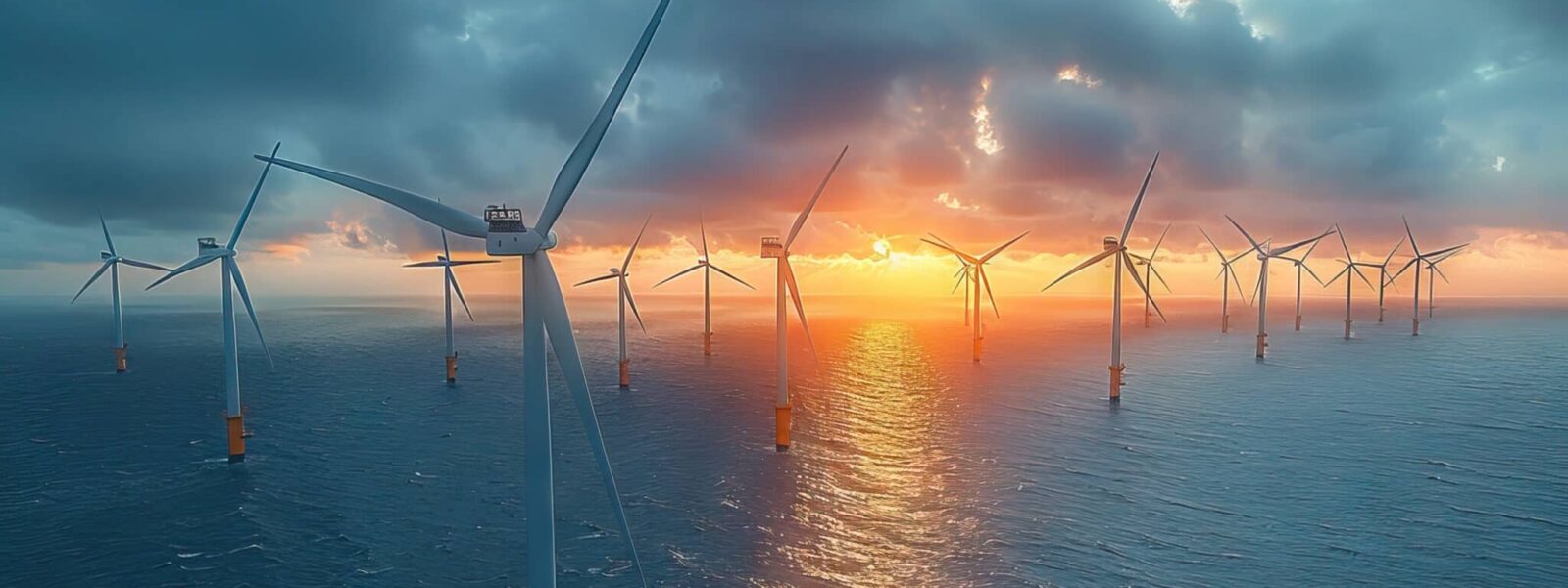
- Depending on the depth of the seabed, there are two main types of offshore wind turbines: fixed-bottom (less than 70 m) and floating (deeper than 70 m).
- Stabilisation is one of the challenges facing floating wind turbines, as currents, waves and winds cause the structure to move in various ways: rolling, pitching and heaving
- The heave of a floating or semi-floating wind turbine refers to a vertical movement of the structure.
- Active and passive techniques already exist to mitigate heave, such as heave plates or utilising the rotation of the turbine blades to counterbalance the movement.
The Multiannual Energy Programme aims to increase electricity generation from offshore wind to around 59 TWh by 2035, thereby exceeding current onshore wind generation1. At sea, whilst floating wind turbines offer significant potential for France, only a few pilot wind farms have been commissioned to date. France’s current wind farms consist of turbines fixed to the seabed. To better understand the maritime challenges facing the wind power sector, Luc Pastur, an associate professor at ENSTA and a specialist in fluid mechanics, answers our questions.
What technological barriers are holding back the development of floating wind power?
Luc Pastur. Floating wind power is not yet commercially viable, as stabilising the wind turbines remains one of the main challenges. Currents, waves and winds cause the structure to move in various ways: rolling, pitching and heaving – the latter being particularly damaging. This causes structural fatigue, thereby accelerating ageing whilst reducing energy production efficiency. Manufacturers are therefore seeking to minimise these movements, particularly to meet the performance requirements of operators.
Offshore wind farms
There are two main types of offshore wind turbine: fixed-bottom wind turbines, for sea depths of less than 70 metres; and floating wind turbines, which are the only viable option where the seabed is deeper than 70 metres2. Fixed and floating wind turbines can coexist within the same range of seabed depths, where these are between 50 and 70 metres. In total, there are four types of floating wind turbine, which differ according to the type of float they use. To date, floating wind power is not a fully developed industrial sector, and all installations currently in operation in France are fixed-bottom wind turbines. In the fourth quarter of 2025, 5.7 TWh of electricity was generated by offshore wind turbines, out of a total of 16.49 TWh produced by the various wind farms3.
What is heave?
Heave is a vertical movement of the wind turbine, which can be caused by adverse sea conditions or winds. A floating wind turbine is a structure that oscillates in the wave field at its own natural frequency. When the swell has the same frequency as the wind turbine [editor’s note: i.e. the same number of oscillations per unit of time], the oscillating motion enters resonance: the oscillations are then amplified. This becomes problematic when the motion exceeds a threshold amplitude defined by the manufacturer. Heaving affects all floating wind turbines, but semi-submersibles are particularly vulnerable.
Are there any solutions to mitigate these vertical movements?
Yes, one of the preferred solutions is the addition of heave plates. These large steel plates, several centimetres thick, are placed beneath the floats. When the wind turbine oscillates vertically, it drags a mass of water with it, which increases the turbine’s inertia, making it harder to set in motion. These plates also help to dampen the oscillations thanks to the flow patterns they generate around them.
So, what exactly is happening?
Two physical mechanisms are at work. On the one hand, the oscillating motion of the plate in the fluid [editor’s note: seawater] induces areas of low pressure beneath the plate. This generates an initial structure: what is known as form drag. On the other hand, plate-edge vortices are cyclically released above and below the oscillating plate. All these flow structures take with them a portion of the kinetic energy drawn from the plate’s motion, which helps to dampen the plate’s motion.
Why are these plates still being researched?
Scientists are working to gain a better understanding of the flow structures induced by heave plates. By improving our understanding of the physical mechanisms at work in damping the oscillations of offshore structures, we will be able to devise even more effective devices.
We have, for example, found that damping is optimal when the plate is perforated with holes covering 10 % of its surface area. The holes give rise to a new effect during the plate’s vertical oscillation: fluid jets are produced through the holes. The shearing resulting from these flow structures degenerates into turbulence and gives rise to a multitude of vortical structures, right down to very small scales. The smallest vortices are ultimately dissipated viscously. This cascade of energy, drawn from the energy of the plate’s oscillatory motion, is likely to constitute an important process in the damping mechanisms.
Are there other ways to reduce heave?
Heave plates are a passive damping technique that does not require an external energy source. Active techniques do exist; notably, it is possible to counterbalance heave by controlling the rotation of the blades via the rotor. This relies on an active control system, which therefore consumes energy, and acts on the turbine and blade shafts based on measurements taken of the floating structure’s movement. However, as this technique is more expensive and places greater strain on the rotor, it should probably be regarded as a supplement to heave plates.
Beyond these technological hurdles, the development of floating wind turbines requires careful consideration of the entire industrial chain. Production sites, the cost of materials, their transport, the assembly of the turbines, offshore mooring, etc. all these stages of the value chain must be carefully considered to ensure the commercial development of the sector.