
“Green finance” still a long way from the Paris Agreement


The concept of green finance has been around for about 20 years, but it only became mainstream in 2015 with the adoption of the Paris Climate Agreement. Its rise symbolises the moment when financial institutions woke up to the existence of climate risks; an event that has been strongly attributed to former Bank of England Governor Mark Carney’s ‘Tragedy of the Horizons’ speech. Since then, regulators have pushed financial institutions to recognise the climate risks borne by their asset portfolios and to communicate this to investors. It happened first in France, with Article 173 of the Energy Transition Act of 17 August 2015, and then on a global level with the recommendations of the Task Force on Climate-Related Financial Disclosures (TCFD) created by the Financial Stability Board – which includes 26 major central banks and international institutions.
Aligning finance and climate
In principle, the primary objective of green finance is to align financial flows with climate objectives by minimising the negative impacts and maximising the positive impacts of investments. To do this, there is a body of different tools: specific financial products such as green bonds, indices, the famous ‘Paris-aligned index’ and engagement policies with companies and policies to exclude companies that are harmful to the climate and biodiversity issues in their portfolios. Finally, there are specific markets: the market for CO2 emissions or the market for offsets of negative externalities, for example.
The second objective is to measure and mitigate the financial risks posed by climate change on the one hand and by the energy transition itself on the other. The former are called physical risks such as storms or forest fires, and the latter transition risks. Transition risks are caused by regulatory changes aimed at mitigating the scale and impact of climate change. For example, a coal-fired power plant or coal mine could become unviable due to the high price of carbon price or a change in consumer preference.
Lack of results
Over the past 5 years, a positive dynamic has been set in motion but, apart from a pause due to Covid, the global emissions curve is not yet showing any sign of slowing down. Investments in renewable energies are insufficient to reverse the trend and the commitments made by States in the framework of the Paris Agreement are insufficient to achieve the objective of this agreement. Global investment in renewable energy was $322bn 2018 (compared to $933bn invested in fossil fuels the same year)1. Meanwhile to prevent warming about 1.5°C by 2100 requires investment of $797bn each year between 2016 and 2050.
The results of green finance are not yet satisfactory despite the impressive figures. This is partly due to the lack of investment in renewable energy, especially in developing countries, which are still considered risky by private investors. Furthermore, the commitments made by individual investors or groups of investors are currently insufficient to trigger a transition dynamic and are also difficult to evaluate and compare.
Need for a global effort
Europe is ahead of the game with some model countries in terms of regulation such as France, the UK and the Netherlands. In the US, even though the exit from the Paris climate agreement had a significant negative media effect, the presence of a climate-denier as in the White House for four years has not quite reversed the established momentum. This is because the time for investment is long, and many initiatives are taking place at the corporate and state level. In particular, despite President Donald Trump’s efforts to support the traditional industry, 2019 saw a record number (after 2015) of coal plant closures. 15 GW were replaced by renewables and gas. It should be noted that the use of gas-fired power plants, even if it does not allow carbon neutrality and will eventually have to be abandoned, is a quick way to reduce emissions as coal emits almost 3 times more carbon dioxide than methane for the same amount of energy produced.
China, while still the largest emitter of greenhouse gases and with emissions still rising, is also the country that is investing the most in renewable energy. It is committed to achieving net zero by 2060 and is at the forefront of green finance both in terms of market development (“green bonds”) and participation in international initiatives (NGFS etc.).
Consumers also play a key role in the energy transition as they are the ones who ultimately make the decision to switch to electric cars or renovate their homes. Green finance can help finance these projects, and this concerns both public and private players, particularly banks. But also, to have an impact on the real economy, investors need to disengage themselves from assets that are harmful to the climate. As long as this is not the case, we cannot conclude positively on the real impact of green finance.
At Institut Polytechnique de Paris, issues related to sustainable development, energy transition and green finance are addressed at the ‘Energy for Climate’ Centre and in particular in ‘long-term sustainable development’, of which I am co-director. This line of research aims to characterise the sustainable evolution of energy and the design of energy markets that will accompany the transition to a decarbonised economy. We are also working on environmental impact measures and the alignment of investors’ portfolios with a temperature and climate risk scenario, in particular by using machine learning algorithms and big data. We rely on integrated economic-climate models to assess investment projects in the energy transition. A final important topic is the integration of ESG criteria into portfolio management.
Interview by Clément Boulle
Contributors
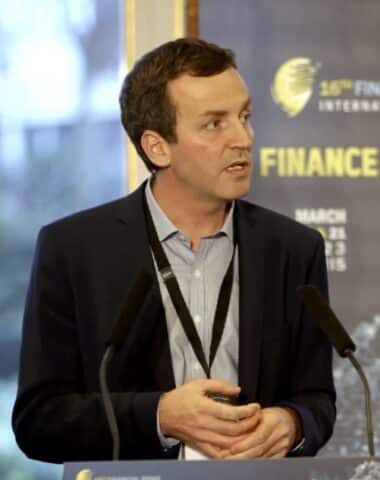
Peter Tankov
Peter Tankov is professor of quantitative finance at ENSAE, the French national school for statistics and economic administration, having previously worked at Paris-Cite university and Ecole Polytechnique. He is a mathematician, specialist in applied probability and quantitative finance. He received his PhD in applied mathematics from Ecole Polytechnique in 2004. His current research focuses on green and sustainable finance, where he aims to develop quantitative methodologies. Peter is the author of over 60 research articles on these and other topics and of the widely read book, Financial Modelling with Jump Processes. He is the recipient of the 2016 Best Young Researcher in Finance award of the Europlace Institute of Finance and the 2024 Louis Bachelier Prize of London Mathematical Society, SMAI, and Natixis Foundation. Peter is the scientific director of the Paris Agreement Research Commons foundation at Louis Bachelier Institute, where he leads data-oriented initiatives, and member of editorial boards of the main quantitative finance journals: Mathematical Finance and Finance and Stochastics.